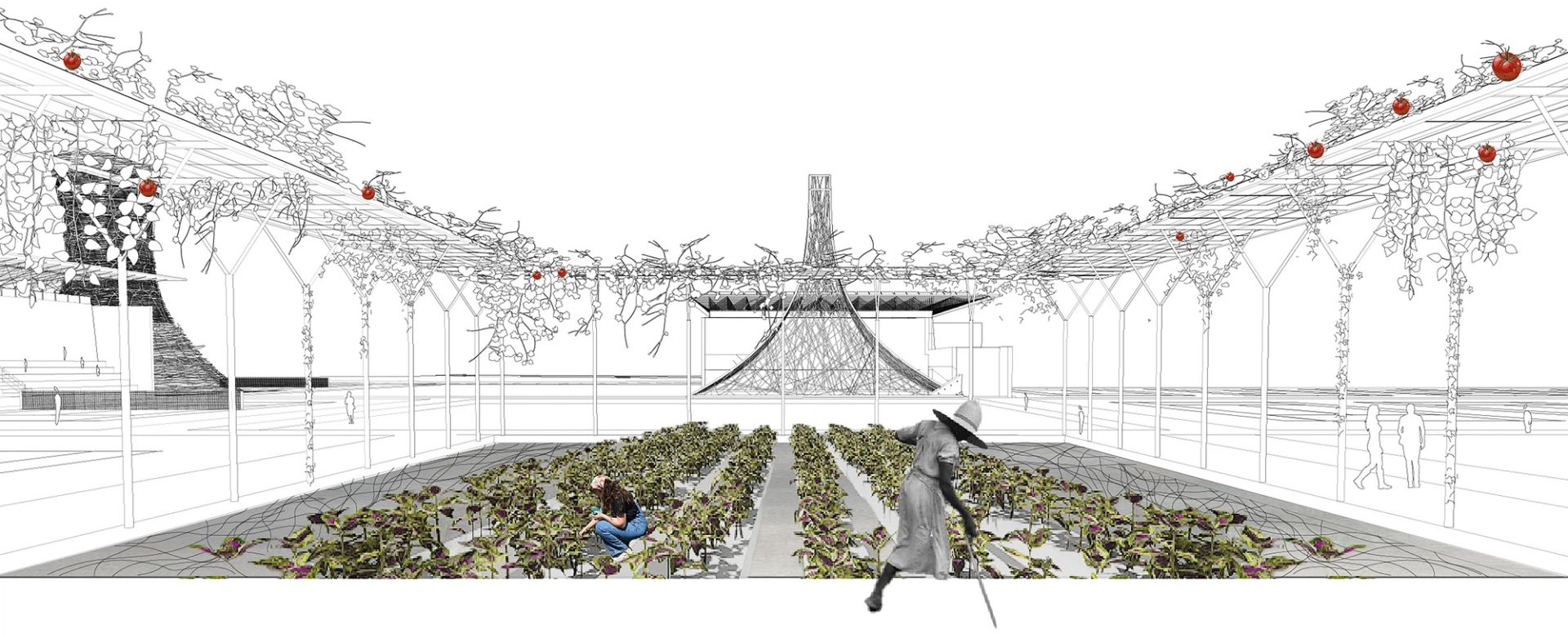
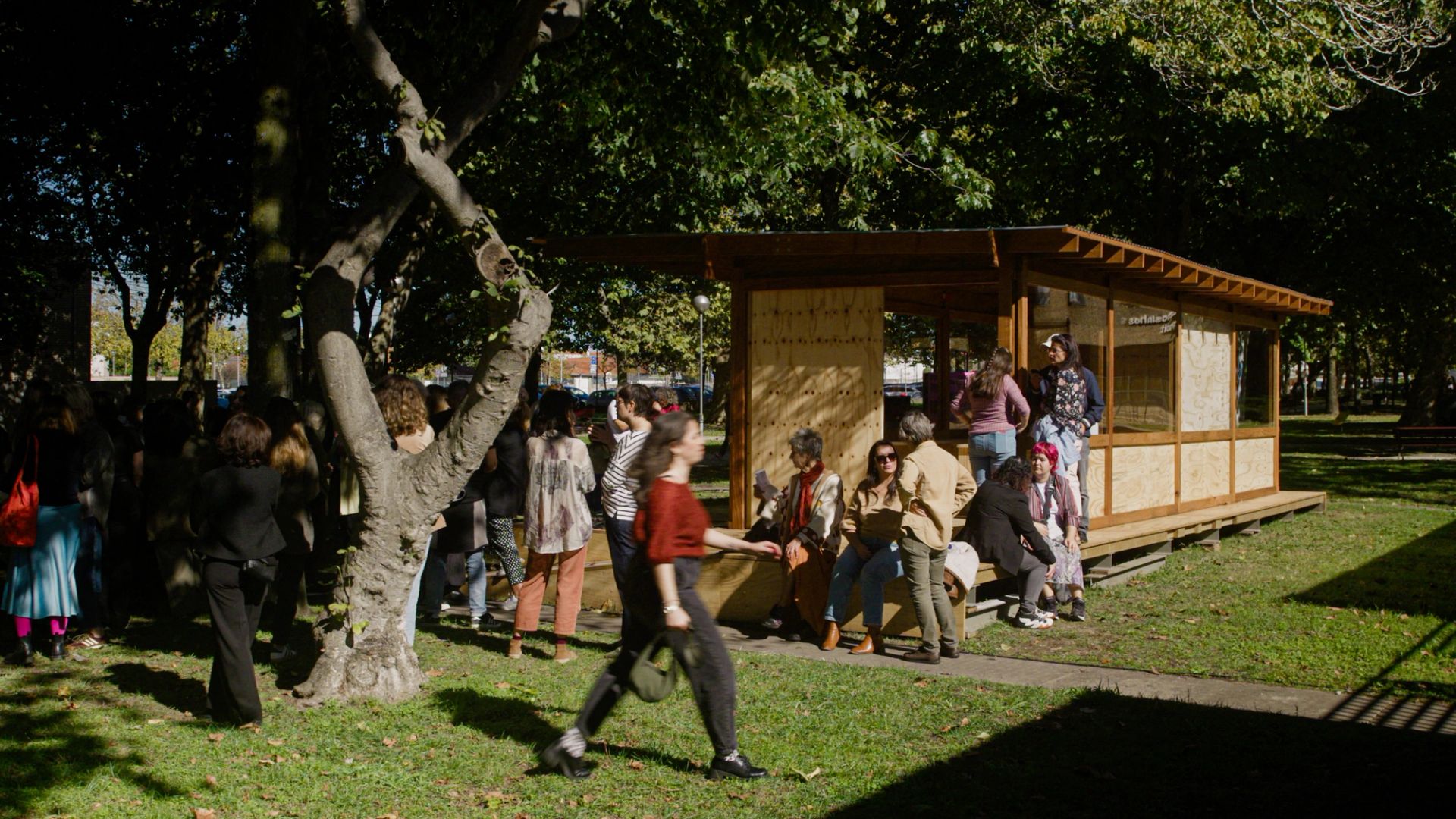
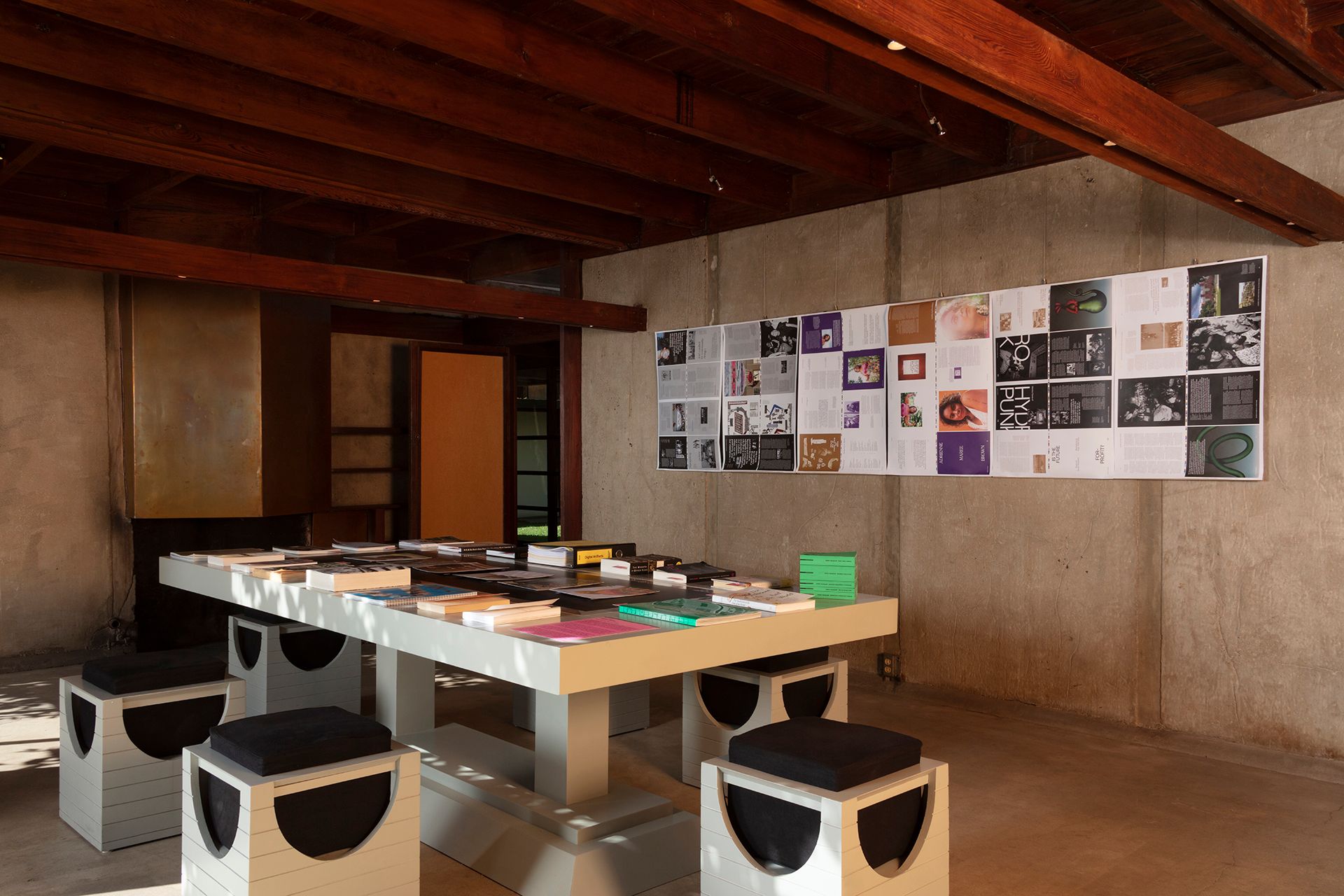
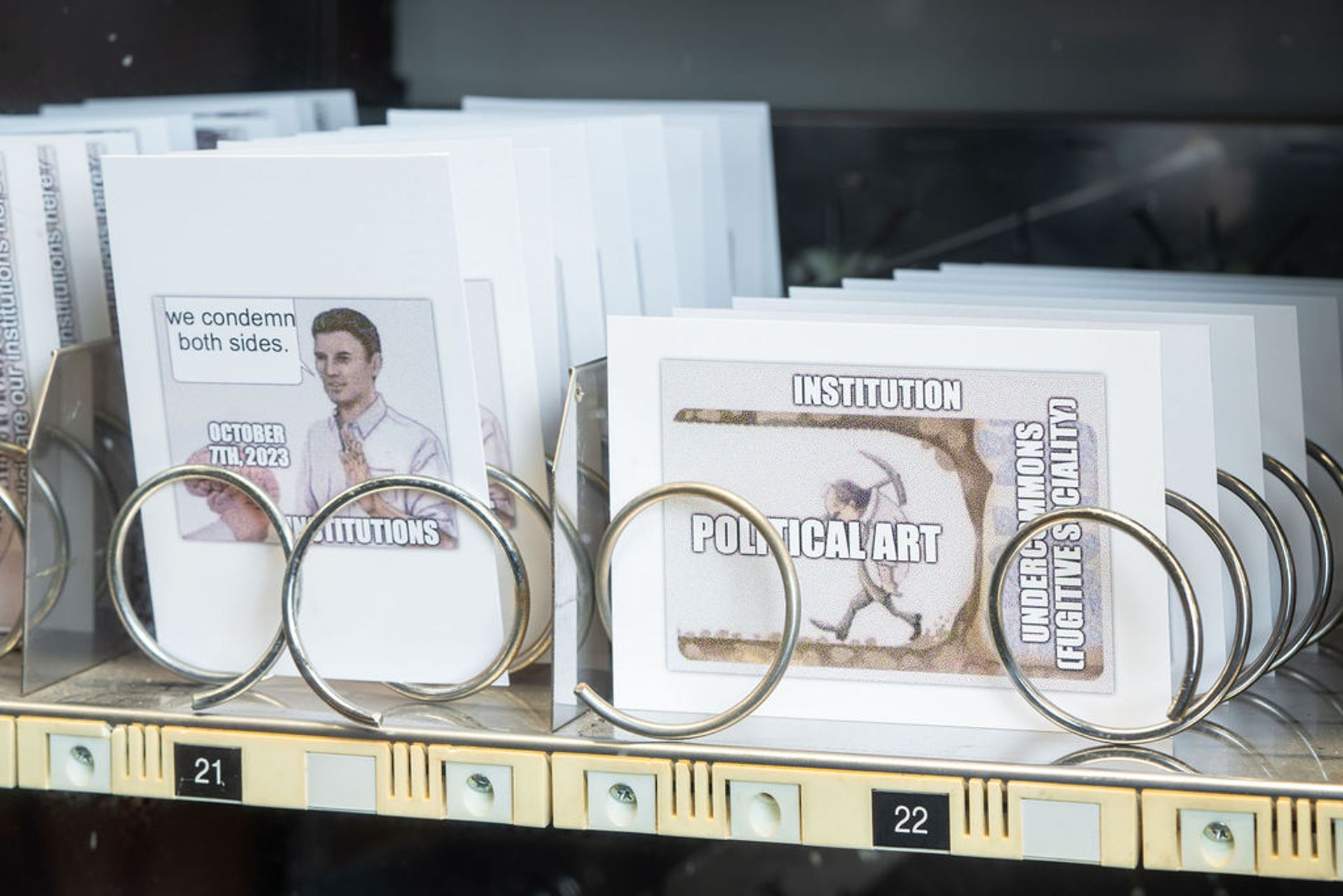
This conversation is an excerpt from the BUILT / UNBUILT: Building Participatory Infrastructures reader edited by KoozArch on occasion of the Public Programme accompanying the Pavilion of Saudi Arabia at the 19th International Architecture Exhibition which is available to download at this link.
Beatrice Leanza Thank you very much for being here. The start of this project feels like a lifetime ago; in reality it’s been little more than a year since we began concocting this process and today, while not ‘closing’ the project, we embark on a common and collective reflection on what we aimed to do. It has really been an enriching journey for me personally; I want to thank you, Sara and Nojoud — I've learned a lot and it's been truly incredible. I also believe that this is what these platforms like the Biennale can offer — the opportunity to build a network, creating new alliances and connections. I hope that this very last moment of the Pavilion is another embodiment of this effort.
We have some new guests with us today: Shumon Basar, an author and curator — among many things — and Noura Al Sayeh Holtrop, again an author, curator and architect. This event is an attempt to reflect over this six months’ programme, which has brought together over 50 practitioners from across Europe, the Gulf region and its adjacencies centring the idea that collaboration and interdisciplinarity are at the heart of future spatial practices. Moving back into the topics explored in the Pavilion: Sara, would you mind going back to the start, to remind us why you actually started the Um Slaim Lab back in Riyadh?
Sara Alissa I also want to share my deepest gratitude to every single person who has been on this incredible journey. The Um Slaim Lab started as an exploration, as an invitation to learn, to question, to build new forms of connection; through conversations, critiques and connections, this pavilion has become a true, live space of exchange, and you have all expanded the projects in a way that only a community can — so thank you so much for your commitment and for caring for this project so deeply. I hope that the questions raised here continue to resonate. How do we learn from context? How do we nurture spaces and environments of care? These are questions that we hope to continue beyond the pavilion, as both Nojoud Alsudairi and I started very small: in a lab that we turned into our space of exploration, just to open up to the small community where we were in Um Slaim. The name Um Slaim comes from the first area we researched: one of the nine districts in central Riyadh, named after the acacia trees which were abundant in that area. And Um means or suggests “mother” — I think we connected to that strongly because of the connotations of care and nurturing — and here we are. I would love to kind of open up these questions to Shumon and Noura, who have generously joined us today.
Shumon Basar I'm much more comfortable asking questions than answering them, so I'm going to hijack this. I was reminded yesterday that I got to know you almost four years ago. My first visit to Riyadh brought me to meet you and Nojoud at the space. One of the things I invest my time and processing power looking at is change, and the question of how change changes. For brief context, I’ll mention a project I've just done in Dubai for the Third Line Gallery, called ‘The Only Way Out Is Through’. It's a research and exhibition project to commemorate 20 years since they opened — but also 20 years since I landed in Dubai. The thesis is that so much of what we now see as blossoming within the region has grown from what began there, at the turn of the millennium.
When speaking of the region, we can also say that this is something much larger than the actual geographical description of what the region is. By this point, I mean that the region is as much an imaginary; it's a political and economic and complex territory. So many of these things that seem emergent — if you were to arrive now without any sense of the past, you might think wow, these amazing things are happening, they’ve come from nowhere. But I would argue that the seeds were planted roughly twenty years ago if not much longer. To be more specific, you know, something like Bidoun Magazine — that I’ve been a part of — celebrated its 20th anniversary last year Dubai. The Global Art Forum, which I've also worked on for a long time — we have our 20th anniversary next year. The Guggenheim Abu Dhabi — if it opens end of next year, as slated — will do so exactly twenty years since it was announced.
So I've been invested in the region as a place where change changes — not only at speed, but with a cyclicality, too. I wanted to ask you about the Riyadh that you were mapping — also thinking of the differences between four or five years ago and now. Some of this research feels familiar to me; at least the essence or the impetus, because of the period that I was introduced to the ‘region’. But in that short time, I think those of us who have been particularly involved in the Saudi scene have seen things change — again, at speed, but also in quality. I think the nature of change is changing, and part of how that has to work is through erasure. There’s a sense in which [new] things keep presenting themselves as though the current situation has always been like this. And that the sense in which what was there before, you know, is either intentionally or unintentionally overwritten. This threads into Noura’s story too, and the work she's done in Bahrain. Could you say something about the difference in how your research was both presented and also received five years ago, versus now where we are here.
SA I think the country is definitely going through a space where we are reimagining and rethinking; a space of reimagining culture education, and I think this is about regional identity, as well. Going back to central Riyadh, where everything really started, we needed to understand our history in order to create the contemporary architectural identity that we are designing today. That was the premise of our passion and research. We really had this question around how to build futures through connection, rather than division. I think this continues to be our main question, especially with things like large regeneration projects where ‘division’ seems to occur inherently. And it's something we haven't yet figured out. Starting this incredible program with everyone is, hopefully, the basis of change. We hope that this is just the beginning, a prompt — not just for the school, but for a larger movement.
"Going back to central Riyadh, where everything really started, we needed to understand our history in order to create the contemporary architectural identity that we are designing today. That was the premise of our passion and research."
Noura Al Sayeh Holtrop I was just thinking about the same thing: how can these processes of connection, collaboration and reflection — conversations that often start in instances like the Biennale or an exhibition — how can we provoke these to collude with reality and change? It's an open question and it's one I think about all the time. These things often exist in parallel, across two different realities: one that is archiving, surveying, thinking, wanting to connect, and another in which reality kind of continues at its own pace. How are we able to kind of create more moments of collusion between these two?
Speaking candidly, we've been here at the Biennale for fifteen years now, endlessly raising critical topics and discussions that we think are important. Sometimes they have materialised into something, and very often not. What tends to happen is that these visions, discussions and intentions then start to exist in a realm of their own, feeding into exhibitions and publications. I say this working within a governmental body where I constantly try to bring about these moments of collusion, as much as possible.
"I was just thinking about the same thing: how can these processes of connection, collaboration and reflection — conversations that often start in instances like the Biennale or an exhibition — how can we provoke these to collude with reality and change?"
SA I think what you're doing is precisely enabling talent across different communities to grow and thrive; here, I go back to thanking the Ministry of Culture, because if it wasn't for them, we wouldn't be here. The fact that the Saudi National Pavilion is called The Um Slaim School says so much about that; this is why it's so important to have supporters, enablers and to work together as a team. This is very basic, but I don't think we practice or acknowledge it so much; we need to remind ourselves of those connections.
BL I have a question that links to ‘Connections as Method’, the second book that accompanies this project; in it, there is a conversation with Shirley Surya, chief curator of design and architecture at the M+ museum in Hong Kong. As an institution, M+ doesn't work across silos of cultural production; rather, it looks through narratives of Asia in the 20th century, investigating a so-called transnational perspective. That’s really the mandate of the museum: to look through history, not at differences but rather with the intention of finding points of connection and convergence, to enable and empower new narratives. Many nation states in this region were founded upon the notion of ‘post’, as she puts it: post-independence, post-war, post-colonial. You are actively engaged bringing such narratives together. So I wonder if you can be a little bit more specific in terms of new narratives that are really emerging from the region — and to what extent are these informed by the framework of nation-states?
Sara AlMutlaq Right now, we're working on a residency programme, for which half of the three hundred applicants were Saudi, and the other half was international. It was really fun to see the data set we sifted through, trying to understand what people were talking about. The residency came about under the direction of the CEO of the Visual Arts Commission, and no specific theme was stipulated. We agreed to go in with eyes closed: whatever disciplines and thought processes that the residents had, we would create a programme that reflects them. It became really interesting to look at the Saudi applications and the issues they raised : the problems of identity, history and archive. I don't think that this is a symptom of 2025 or the present moment; rather one that stipulates deeper reflection.
If I take myself as an example: I'm 35, I belong to the contemporary generation of Saudi Arabia: 80% of the population is my age. I have lived in a city that changed rapidly in form. My grandmother lived in a house — or typology of house — to which I have zero relation — the very same typology that Syn Architects is looking to preserve and maintain. A lot of these histories were beyond my vision, they were invisible — and it was kept that way until 2019, when the Ministry of Culture came online. Suddenly there was this idea of a national identity, of a culture, of the creation of an “idea” of self and how we present it. This also relates to tourism, as a tool to foster a national brand, through which we are formulating the cultural symbols that would attract visitors here rather than elsewhere. These questions have caused everyone to reflect again as to who they are.
But — perhaps as you were implying, Shumon — it's a double-edged sword, because then you risk becoming a replica of yourself, a performance. In the process of trying to articulate who you are, culture is immaterial and so difficult to acquire. So I think this is the major thing that we're dealing with today. What is culture? How do you define it for yourself without allowing it to become performative? This has been a very interesting thought process for me recently.
"What is culture? How do you define it for yourself without allowing it to become performative? This has been a very interesting thought process for me recently."
SB Anecdotally, a few weeks ago, I was in London at a new institution that I've helped to set up, called Ibraaz. My good friend Payam Sharifi, of Slavs and Tatars came to visit so I could give him a tour. We reflected on the fact that twenty years ago, we were both living in London; neither of us live in London anymore. He said that twenty years ago it would be unimaginable to do what we do without being part of the circuit between London, New York, Paris, Milan. Twenty years later, Slavs and Tatars have detached from that network; evidently, their professional lives are entirely possible between Uzbekistan, Sharjah, Abu Dhabi, Saudi Arabia. This is exactly what I was thinking twenty years ago, and why I was seduced, in a way — not specifically by a Gulf narrative, but really by the promise of what I would a call post-Western 21st century.
At the same time, I think we are now seeing — particularly through the horrors over the last two years — I really feel like the West is finally feeling that too. I keep saying: it’s like the West woke up one morning and actually read all of the essays that we published twenty years ago, about the end of the West and the rise of the rest, and so on. The whole concept of the BRICs, for example — that's a concept from the late 90s, early 2000s. It is perhaps arbitrary to ask, when does the 21st century begin? Baudrillard might say it was with 9/11 — there are different ways of marking when the 21st century begins. But as we all know, empires are often at their most violent when they're at their end. But I really feel now that the potential power of this region, of these new centres — they hold the possibility and the responsibility to really reimagine what the 21st Century could be; to really create a new cartography of power and influence, many of which would actually reinscribe historic strongholds, whether the Chinese or Persian empires and so on.
But the prevarication, as many of us know, feels critical. Faced with the choice between building a new institution from scratch — an indigenous institution — versus bringing in a franchise from abroad: many of us would assume that to be a non decision, like it's so obvious what you should do. But the fact is that obviousness doesn't happen. I'm clearly doing a lot of looking back over the last twenty-odd years; I find that some of my kind of prognoses have come true, while others are a lot more precarious. I do feel that the successes of the region has to do with the strength of the role that culture is playing. This is one of the few places in the world where there is substantial faith in the power of culture — which is almost decimated everywhere else, particularly from the public sector. There are many reasons for it to be positive and hopeful, but these things are very delicate and they can be captured for the wrong narrative.
The last thing I would put forward is this phrase that Hans Ulrich Obrist uses a lot, which is “a protest against forgetting”. This is where I'd like to bring Noura to talk about the Pearling Path, on the insistence of holding different temporalities at the same time. I visited Bahrain sixteen years ago; Noura gave me the most amazing tour, out in the middle of nowhere to the very first oil well from 1932 — which is almost a little monument. This began my whole interest in how the timelines of GCC countries are intimately connected to the extraction of oil or gas, which is when modernity arrives. I'd love for you to share how you made the argument for the Pearling Path, and perhaps how that is specific to Bahrain. Would that have been a different proposition in Sharjah, in Kuwait, in Saudi Arabia?
NAS Yeah, it's interesting: as you were talking about Saudi, I was thinking about the context of Bahrain today, and how much the narrative has shifted since we first started working on the Pearling Path and the Biennale twenty years ago, where questions of history and cultural identity were really important.
When I first started working in Bahrain almost twenty years ago, it really struck me that there was a lot of talk about preserving the past — even a nostalgic view of how it was. Alongside this was a very bold discussion about the future, with real estate renderings, but somehow the contemporary situation did not exist; the present was not spoken about so much. People were always either projected in a possible future or looking back at the past – no contemporary “now”. Even on a project like the Pearling Path – which despite being an urban regeneration project, involved a lot of conservation, a lot of work related to the history of the pearl fishers, oral histories and all of that.
Today, the situation is very different. It's really a very contemporary project. The narrative has shifted a lot in Bahrain for various reasons, some that are specific to Bahrain itself. Bahrain is a very dense country where all of these things coexist; archeological heritage exists next to the contemporary, all of it is really close to each other. Unlike many of the Gulf countries, Bahrain doesn't have a hinterland, there is no space of reserve — even as an abstract space in the psyche of a society. Everything coexists on top of each other, and it creates this ultra-contemporary situation where today, even the Pearling Path — the way it's experienced, through its programming, the way it's being rediscovered and reinhabited by Bahrainis — has become a very contemporary situation. It is not looked at as something related to the past anymore.
SA This coexistence is why it's so successful. Every time people ask us about precedents, we always talk about the Pearling Path and how similar it is to central Riyadh; the currents of migrant workers, the typologies — it's very similar. We always return to the idea of small but impactful interventions, and I think this is what happened with the Pearling Path, and why it's so successful: it’s not super-scale mega regeneration, but really about meaningful interventions. And I think this is what we wanted to prompt in this pavilion — thoughtful, meaningful interventions.
NAS It's a small scale of intervention, but one that also weaves together the contemporary and the mundane. Often in regeneration projects, you're either preserving the old or building the new, and somehow there’s an in between that's not classified. Such a place might have architectural merit or value related to a national agenda or identity projected into it; it has no place to exist, so it's either removed and replaced with another narrative. That really is the contemporary context of the Gulf; it probably makes up 80% of the urban fabric across Gulf and Arab countries, and its importance is something that we don't voice or acknowledge very often.
SA This is also reflected in permits. For instance, the Shamalat project: we could not believe that a permit did not exist for an adaptive restoration project. We had to either completely dismantle and remove this mud house, or to completely restore it to its original state. So this tendency to romanticise the past is quite evident in these projects, but it’s not something we’d particularly advocate. We’d rather advocate for intentional interventions, really.
"This tendency to romanticise the past is quite evident in these projects, but it’s not something we’d particularly advocate. We’d rather advocate for intentional interventions."
BL Continuing on this idea of collapsing, colluding and coexisting: to what extent are these sorts of like, top down and bottom up narratives? Where are we now with these two elements?
Maryam AlNoaimi I've been thinking about this particularly because I work in the public sector, but I also work independently. So how do you bring these two that feel very alienated from each other together? For example, within certain public entities or institutions, it can be very hard for people to understand what the Biennale is; it's something like La La Land, or at least it's very disconnected from the goals and annual KPIs that they are concerned with for any given project. So I think there is that disconnect.
As Noura mentioned, platforms like the Biennale and also having the MOC’s support on such initiatives is very important, because it allows the discourse to be open to a public that does not necessarily know what happens on the other side of the public sector. It's something that I keep thinking about, because a lot of people want to propose things to be done through the public sector, but they find some resistance. Having people like Noura, for example, working in the cultural authority, allows that connection and the ability to be involved in such initiatives. And her Late Nights is an example that's happening in December, where people feel really part of it, not as visitors, but also as contributors to this project. That is a precedent for many places around the world.
SAM I'd be curious to find out how Dubai has figured itself out between the private and public sectors. I see certain individuals that are using the systems of the market itself, operating as grassroots initiatives that then use the very tools of real estate, or of procurement — the very rules of this chess board — in order to boost the grassroots conversation up one level. I really believe that there are ways for conversations that take place in rooms like this to arrive in spaces that are governed by a board and real estate; we need to use the various systems that they use. These things are happening right now, which I think is really powerful.
SB Again, if we go back to the 20th century, we can study models where — particularly after the Second World War, in both American public works projects, or the NHS in the UK — these gargantuan, practical utopias were born out of a genuine belief in the moral and social responsibility of the public sector. The caricature or stock narrative that follows from that is also pretty much accurate; you get to the 1980s, to Thatcher and Reagan and then you basically move into rapacious privatisation. Then there's the opposite move: the concerted dismemberment of publicness, which includes public space. By and large, that is the story, and there are very few exceptions to that. I've also been involved in places like Istanbul and in China, where if it wasn't for private philanthropy, contemporary culture wouldn't be on the table. It simply isn't on the hierarchy of needs, after Maslow, of many so-called “emerging economies”, both for economic reasons, but also for cultural reasons. So you see the private sector stepping in to fill that gap. Good or bad? We know that model even in Italy. I worked with the Fondazione Prada for a long time; you think about Pirelli, so much of contemporary culture in Italy has been funded through the largesse of private wealth — for 600 years, arguably, from the great families of the Renaissance.
Looking at Saudi now is very interesting, no, because we're technically back to what I call the government-as-client, and the public sector actually being the main engine of supporting and producing culture. As you said, this is only possible because of the Ministry of Culture. But I don't think anyone would disagree that a healthy ecosystem surely is always a mixture of these things; they feed back and feed forward. People forget that the Tate Modern only opened 25 years ago — again, it feels like it's been there forever. Something like Tate Modern could only have emerged through decades of activities at all kinds of scales: from the tiny, self-funded corner-shop space in South London, all the way up. I always say that the health of those cultural moves that are most prominent, and which seem to take up most of our attention, are directly dependent on that entire ecosystem — which, in turn, absolutely depends on schools and spaces of learning, pedagogy, to nurture the next generation. It is bewildering to me when certain leaderships can't see that to be the case, because it seems so obvious: this is how you create healthy and — to use a terribly boring word, but hopefully in a good sense — sustainable [societies?]. At some point, you don't need to keep things going through single source injections of resources; there are different forms of resource, different ways of feeding itself.
Things have changed a lot, but we're still very early. Maybe the pendulum swings, as they usually do, from one end to the other, to the other. We were talking about Jeddah, for example. But Dubai is quite unique. And when it comes to the UAE, I think you have to understand the whole of the UAE, because each emirate has its own modus operandi. So Dubai is a total free market; that’s why the exhibition is at The Third Line. But The Third Line is not just a commercial gallery; in the role that it played almost twenty years ago, it did the job of an arts centre; a school; an arthouse cinema. It had to do all of these jobs, in the same way that Dubai’s art fairs had to do all of the work that wasn't being done at museums. So I would say the entrepreneurial private sector has led culture in Dubai, because frankly, it was not at the heart of government. They're responding to it now, twenty years later. Sharjah is very different, almost akin to that post-war notion of the social good, for which the public sector has to pay and keep the private sector out. Then, Abu Dhabi is its own thing: closer, perhaps, to certain dynamics of Saudi Arabia, because ultimately it can sign very big checks. That's why I do think that studying the UAE and zooming out to the rest of the Gulf — it's one the most useful test cases for the world today, because you can see almost every single vector of faith in culture, right or wrong; good or bad.
Now we're going to have Frieze Abu Dhabi and Art Basel Doha, in Qatar. So maybe this is it. I think we always hope to see the perfect concoction, the perfect complement of public and private initiative in every country. Maybe that doesn't exist. Maybe it’s only visible when you zoom out and look at the region as a whole — then you can see public stuff happening here, while deeply private stuff is happening here. These things are beginning to feed back on themselves; that's what's happening now.
"Looking at Saudi now is very interesting because we're technically back to what I call the government-as-client, and the public sector actually being the main engine of supporting and producing culture."
SA Thank you for the honesty of this conversation, which really goes back to our first intention. It's very emotional and incredible for me, in this last hour of the pavilion, to share in this.
BL That's actually a perfect segue, reflecting on the possibilities of culture acting as an infrastructure in and of itself, rather than serving national or governmental infrastructures. What if we could start thinking of culture that goes beyond all these modern constructs, all of which are inherited from histories that were never inclusive, but always partial? This project has really tried to investigate the interstices, searching exactly for this potential connective tissue — what if that connective tissue becomes the organism?
"What if we could start thinking of culture that goes beyond all these modern constructs, all of which are inherited from histories that were never inclusive, but always partial?"
SA On the subject of learning spaces, maybe I could circle back to the inception of the Um Slaim collective. It was conceived as part of a Masters’ degree programme that Nojoud and myself were part of at the Bartlett School of Architecture, called Situated Practices — which was an incredible experience. One of the main reasons we initiated this collective was that we had shared questions and concerns around Riyadh, and one of our earliest aspirations was to create a school. We held this ambition, but we quickly realised that we had a 15 month programme to conclude, and we weren't able to initiate a school by the end of that time. So we shifted towards creating somewhere that is a space for learning, a space for experimenting, which became the lab. We then had conversations with Bea and the larger team around what the future labs look like, and what we have experimented with in our own practice — for instance the saudiarchitecture.org platform that we created in 2020, researching and documenting modernist and postmodernist buildings in the region that are either demolished or at risk of demolition. These practices, we felt, resonate with the idea of keeping things alive, whether through photography, through writings or other means. We really wanted to continue those methods into this — hopefully not-so-imaginary learning space.
MA We've spent some beautiful months here in Venice; we have learned a lot from all of the practitioners who put a lot of time and effort to come and share, and we still have a lot to do with Sara, Nojoud and Abdullah AlYahya. What I hope is just to bring some of these energies into realisation in Riyadh, so we can continue and apply what we have learned.
SA I echo your aspiration for all of this learning to come back to the Gulf. Perhaps our primary ambition was a selfish one: to learn, and create a space that we can learn from — but all so that we can help others, both regionally and internationally. I think we often have similar questions to which we need to find answers; this is just a gateway to that. Again, I want to thank everyone again for being here and for sticking through — it's been an incredible journey, to say the least.
BL These are conversations to be continued, in Riyadh and beyond. Thank you again.
About
The Um Slaim School grew from the research-driven work of Syn Architects and the Um Slaim Collective — originally focused on vernacular Najdi architecture — into an alternative pedagogical prototype to be established in Riyadh after the Biennale. Aiming to redefine architecture education in Saudi Arabia, it fostered transnational dialogue on practice-led and research-centered methodologies, exploring how architecture can recalibrate relationships among natural, social, and technological systems through regenerative and participatory approaches. Guided by terms such as Matrilineals, Situated Practice, DIY Archiving, Ritual Matter, Adaptive Reuse, and Sprawling Grids, the program developed a situated spatial vocabulary while pursuing actionable outcomes for the School’s future. The Public Programme Biennale sessions — titled BUILT /UNBUILT — were built around core thematic investigations which included: Archiving Otherwise; Material Ecologies; Pedagogies of Proximity and Relation and Building Participatory Infrastructures. The programme was curated by Beatrice Leanza and co-led by Maryam AlNoaimi.
This conversation is excerpted from one of four readers documenting the laboratory activities, conversations, and key participants of the public program organized in Venice from June to November, as part of the Pavilion of Saudi Arabia—The Um Slaim School: An Architecture of Connection. These readers serve as companion pieces to the two publications produced as part of the Pavilion project, both co-published by Mousse Publishing and Kaph Books.
The Um Slaim School: An Architecture of Connection – 19th International Architecture Exhibition. La Biennale di Venezia (Mousse Publishing & Kaph Books, 2025)
Connections as Method: Relational Pedagogies and Participatory Spatial Practice (Mousse Publishing/Kaph Books, 2025)
Bios
Noura Al Sayeh Holtrop is an architect and curator currently advising the Bahrain Authority for Culture and Antiquities on cultural and heritage policies as well as urban rehabilitation strategies. She has built a number of temporary and permanent architectural installations and in 2010 was the co-curator of Reclaim, Bahrain’s first participation at the Biennale Architettura — which was awarded a Golden Lion — and the deputy commissioner of Heatwave— also awarded a Golden Lion — at the Biennale Architettura 2025. Since 2015, she has headed Pearling, Testimony of an Island Economy, a UNESCO World Heritage project, which received the Aga Khan Award for Architecture 2019. She is a board member of the Palestinian Museum.
Sara Alissa and Nojoud Alsudairi cofounded Syn Architects in 2018, an interdisciplinary Riyadh-based practice with a focus on ecologically sensitive architectural design projects. Their projects include the award-winning Shamalat Cultural Center in Riyadh, a cultural space on the periphery of Diriyah developed through the adaptive reuse of a mud house. Alissa and Alsudairi are the cofounders of SaudiArchitecture.org, an independent organization that aims to research and archive modernist and postmodernist buildings in Saudi Arabia. In 2021, they launched the Um Slaim Collective, a critical investigation of the changing condition of vernacular Najdi architecture in central Riyadh, which was presented as The Um Slaim School: An Architecture of Connection, the Saudi National Pavilion at the Biennale Architettura 2025, realized with the support of Syn Architects design manager Abdullah AlYahya.
Maryam AlNoaimi is a Bahraini architect, researcher, and photographer. Her practice operates at the intersection of spatial documentation and cultural narratives, engaging visual storytelling, archival research, and knowledge production. She has contributed to research and programming initiatives with several institutions, including the Bahrain Authority for Culture and Antiquities, the Shaikh Ebrahim bin Mohammed Al Khalifa Center for Culture and Research,AA Visiting School Bahrain, and Bani and Al Culture. Co-leading the BUILT/UNBUILT programme, she is an assistant curator for the Saudi National Pavilion at the Biennale Architettura 2025.
Sarah AlMutlaq is a curator and cultural strategist based in Riyadh. With a background in architecture and critical theory, her pedagogical approach merges the theoretical with the theatrical, transforming the experience of space into a stage set for speculative thought. Almutlaq has contributed to strategy and cultural asset development for institutions including the Black Gold Museum, Fenaa Alawwal, and Diriyah Art Futures. As partner and creative director of Bureau Bayn, a MENA-based creative cultural consultancy, she focuses on creating radical synergy between design practices and curatorial perspectives. Her recent curatorial work includes Unfolding the Embassy (2024), an exhibition held in Riyadh’s Fenaa Alawwal; her creative practice was presented at Noor Riyadh, Misk Art Institute, and the Diriyah Contemporary Art Biennale. She is the assistant curator of The Um Slaim School: An Architecture of Connection, the Saudi National Pavilion at the Biennale Architettura 2025.
Shumon Basar is a writer, editor and curator. He is co-author of the books The Extreme Self and The Age of Earthquakes, both with Douglas Coupland and Hans Ulrich Obrist. Other roles have included Commissioner of Art Dubai’s Global Art Forum; founding member of Fondazione Prada’s ‘Thought Council’; Expert Advisory Group for the Royal Commission of AlUla, Kingdom of Saudi Arabia; Chief Narrative Officer and co-founder at Zien; and editorial positions at the magazines TANK, Bidoun, 032c and Flash Art. Shumon has both taught and curated at the Architectural Association, including programming events such as Clip, Stamp, Fold and The World of Madelon Vriesendorp. He is curator-at-large at Ibraaz, a space for art, culture and ideas from the global majority in London, initiated by Lina Lazaar and the Kamal Lazaar Foundation.
Beatrice Leanza is a cultural strategist, museum director and critic with expertise in design, architecture and the visual arts across Asia and beyond. Beatrice has served as director of both the Museum of Art, Architecture and Technology in Lisbon (MAAT) and the Museum of Design and Applied Arts in Lausanne (MUDAC), and also as creative director of Beijing Design Week. Her international projects include Across Chinese Cities, a research program presented at the Venice Architecture Biennale (2014, 2016, 2018), Visual Natures: The Culture and Politics of Environmentalism in the 20th and 21st Centuries at MAAT (2021–22) and the national pavilion of Saudi Arabia at the 2025 Venice Architecture Biennale. Her latest book The New Design Museum: Co-creating the Present, Prototyping the Future (Park Books) was listed in the Best Architecture, Arts, Design Books in the Financial Times (Summer, 2025).