This publication is part of Is This Seat Taken? (ITST) a situated conversation series hosted by KoozArch, convening lunchtime conversations between cultural practitioners around a shared table.
Federica Zambeletti/ KOOZ It’s so nice to be here with you. Thank you for making the time despite the busy schedule — ahead of the opening of Paris Internationale this Friday and Alcova thereafter — to have lunch here in La Latteria.
Valentina Ciuffi It’s a pleasure! I really love this place, I love the fact that it’s like going to your grandmother’s house and am really looking forward to this conversation with you Silvia. I visited Paris Internationale many times…
Maria Bambine, cosa ordinate?
KOOZ Prenderemo dei contorni da dividere e poi ognuno il suo. Quindi direi zucchine trombetta con salsina alla senape e cicoria per iniziare e poi prendiamo uno spaghetto al limone, un merluzzo con contorno di barba di frate e una vinarola!
Maria Ottimo, porto prima le due verdure e poi il resto.
VC … and I think Milan really needed the energy of Paris Internationale to wake us up a little bit.
Silvia Ammon I’m also very happy to be here, I visited Alcova last year and really enjoyed it. We’re incredibly excited to be here with Paris Internationale. We’ve received a lot of enthusiasm from the Milan community, which is really encouraging. So, why Milan? There are also some very personal and organic reasons behind it.
Paris Internationale was founded by three galleries — Ciaccia Levi, Crèvecœur, and Gregor Staiger — and two of them have a presence here in Milan. Ciaccia Levi is deeply rooted in Italy, and Gregor Staiger has had a space here since 2020.
More broadly, within our community of galleries, there’s a real excitement and a desire to connect more deeply with the incredible ecosystem Milan and Italy have to offer. There are so many wonderful institutions here, editors, galleries, non-profit spaces, artists, and a long standing tradition of collecting.
At the same time, there can sometimes be a bit of frustration from the international perspective in finding the right way to connect with this community. For us, this is also an opportunity to test whether our model, based on a more focused selection and an intimate format, can be successfully transferred to another city.
KOOZ And of course you would choose an architectural gem like the Palazzo Galbani to host the event, a 1950s modernist building near Milano Centrale — currently undergoing renovations by Park Associati.
SA It is a fantastic building and represents a type of architecture we have not explored before. We have done eleven editions in nine different venues, and they have ranged quite widely. We have worked in Haussmannian buildings, a former telephone exchange, a parking garage, and former headquarters. This is the first time we are working in a mid century building, and also the first time we are presenting the fair within an active construction site. For us, each edition is always an experiment, and this adds a completely new dimension.
VC It’s interesting that you mention the many institutions in Milan. From our perspective, we actually feel there is a lack of them, especially when compared to Paris. We do have some outstanding private initiatives, but overall, there is still a need to advocate for more institutional support.
Maria Ecco qua le verdure
KOOZ Beyond the lack of institutions, there is also unfortunately a lacuna in terms of management. It is quite striking that despite the large number of highly competent curators, the President of the Triennale has still not been appointed — leaving one of the city’s most important institutions for architecture and design without leadership.
SA If you look at publishing, for example, there is a very vibrant scene. A large number of European art magazines are Italian, which is something to be proud of. Paris is in a good spot right now, but this is relatively new. When we started a little over ten years ago, in 2015, it was just the beginning of what you could call a kind of reawakening of the city.
For a long time, Paris had been somewhat dormant, living off its past. The idea for ‘Paris Internationale’ grew from a need to create a platform for our generation, something that felt more international and more exciting for our peers. We were all traveling a lot, spending time at fairs around the world with friends and colleagues, yet at that time many of these galleries were not exhibiting in Paris — partly because FIAC [Foire Internationale d'Art Contemporain] did not have enough space to host younger galleries, but also because the city was lacking appeal.. There was an urgent need for something new during FIAC week, alongside the more established event. A desire to do things differently—to imagine a fair created by gallerists for galleries, one that would genuinely respond to the needs of our community and offer a more flexible and experimental format, built around a few key principles: affordability, a tight selection, and distinctive venues.
Beyond the October art week, what matters is the broader shift in the city. Over the past few years, we have seen many young artists graduating from schools across Europe and choosing to move to Paris. A decade ago, this would not have happened. In 2015, artists were moving to Berlin or Athens, not to Paris. Now, Paris has once again become a place where contemporary culture is happening on many different levels. There is sometimes a tendency to frame this shift as simply a result of Brexit or the inauguration of private foundations linked to major fashion houses, but it is much more multilayered than that. We feel that something similar might now be happening in Milan—and that is part of why we are here.
KOOZ Valentina, onto you and Alcova.
VC I think what we tried to do was, in a way, to bring back a format we felt nostalgic about. When Joseph [Grima] and I were working as journalists in the early 2000s — around 2005 to 2007 — it was still possible for independent designers to create their own platforms. They could rent a garage, collaborate with others and build a strong, self-organised community. There was a real sense of collective energy, especially in places like Tortona, where people would organically come together and create something shared.
Over time, that changed. Areas like Tortona became dominated by large companies, car brands and major industry players. It is a different, more corporate model, and by around 2018 it had become very difficult for a young designer to simply rent a space and participate independently. We started asking ourselves whether we missed that earlier format — one where many young, independent studios could come together, because as journalists we could no longer find it.
So the idea was to recreate that environment with Alcova. To make it visible and impactful, it needed to be collective, with at least forty participants. In our case, it even ended up being in a space without a roof, which added to the experimental nature of the project. The first edition of Alcova attracted around 20,000 visitors, and that is when we realised it was working. In a way, it was about returning to the origins of what the Salone once was, while acknowledging that since around 2008 to 2010, large brands have increasingly taken over — despite earlier alternative attempts like the Ventura projects in Lambrate.
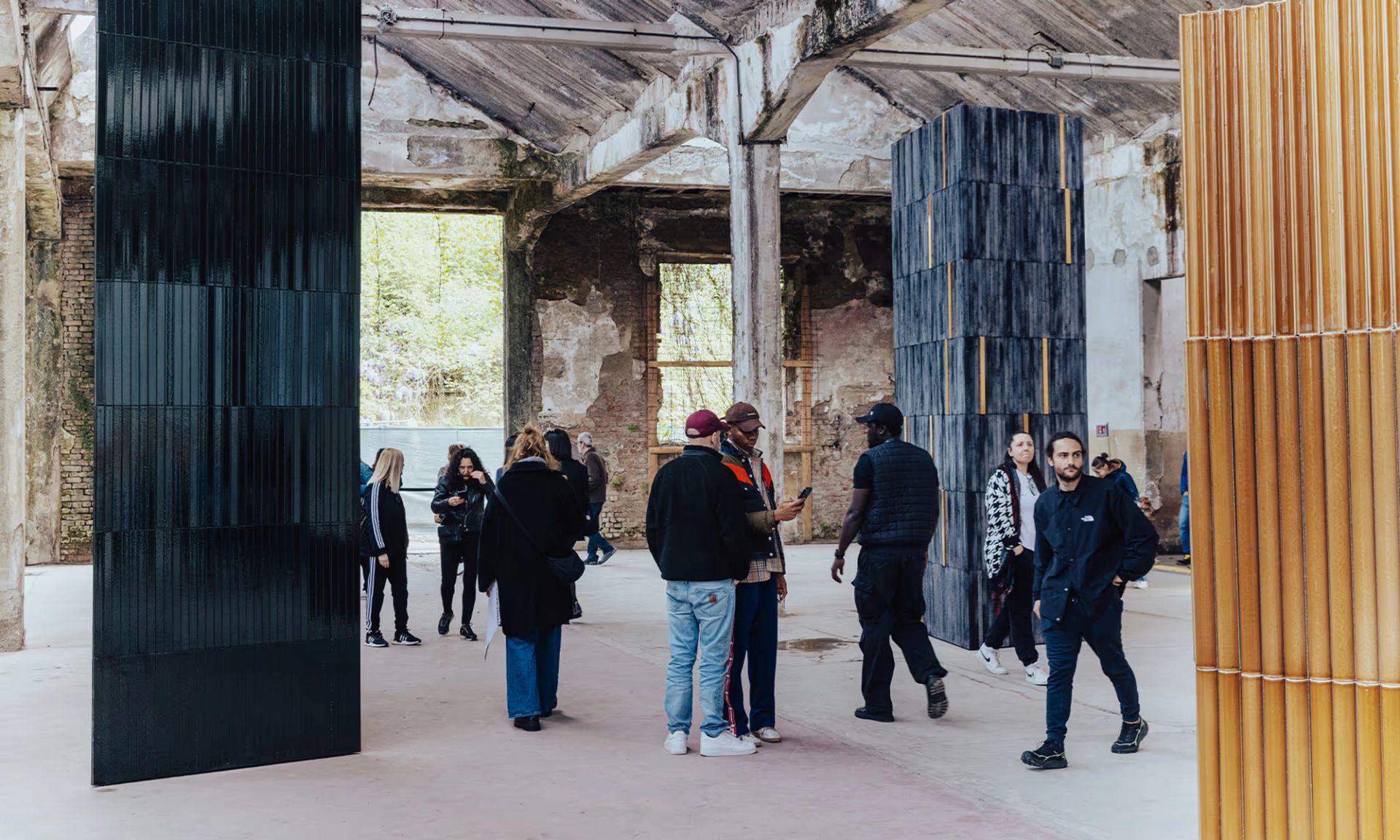
Ex Snia building, Alcova 2024, © Piergiorgio Sorgetti
Barnaba Fornasetti Ciao Regina del Salone!
VC Ciao Barnaba — how are you? You need to meet Silvia and Federica...
KOOZ La Latteria is a little bit of a cultural hotspot of the city which attracts some very interesting minds, which is why we decided to host the first edition of ITST here. Back to us, independence is often celebrated conceptually, but in reality fairs still depend on complex economic ecosystems — galleries, sponsors, collectors. Within that framework, what does “real independence” actually mean to you?
SA I wouldn’t describe working within an ecosystem as losing independence. Any fair is, by nature, a celebration of an ecosystem—a moment to gather, connect, and a time of intense collaboration. For us, independence is not something purely conceptual; it’s about freedom and the ability to make our own choices.
What matters most to us is maintaining artistic integrity and preserving the freedom of our curatorial decisions. That is something we would never want to compromise.
"What matters most to us is maintaining artistic integrity and preserving the freedom of our curatorial decisions. That is something we would never want to compromise."
VC This year, our main location is around 20,000 square meters; the scale is significant. To sustain something like this, you either have to raise prices considerably, which would mean losing independent designers, or find another balance. Our ticket price is 12 euros, and with the number of visitors we usually receive, it helps Alcova not to disappear. Both Joseph and I have second jobs, including a design studio, so this project exists alongside that. It may look large from the outside, but in reality it is still quite fragile.
Maria Fate spazio per i piatti. Ecco qua il merluzzo, gli spaghetti e la vinarola. Miraccomando per gli spaghetti mescola bene che tutto il sughino è sotto!
KOOZ As you mention it, I’m interested in the question of scale, particularly in the kinds of buildings or structures you’ve each chosen to inhabit.
VC In Milan, what we are trying to do is juxtapose an architectural gem, such as the Franco Albini house, with a larger venue. This is something we began exploring two years ago with our first edition outside of Milan, which was hosted in the Osvaldo Borsani house in Varedo. We have always been keen to engage with architectural masterpieces, but their reduced scale was sometimes a limitation. Pairing them with a larger venue creates a more balanced and dynamic format, and ultimately becomes a win-win situation.
SA For us, the primary focus is to find buildings that are exciting and inspiring for artists, and that carry a strong local specificity. Today, fairs can feel very similar, you could be in New York, Shanghai or elsewhere and have almost the same experience. There was a strong desire on our side to break away from that and create situations that feel unique, that inspire artists, and that are memorable for our audience.
Scale is important, but within each building we make a deliberate choice to keep the format focused and intimate. Here in Milan, we included 37 participants. Of course, we could have increased that number, create smaller booths, and fit 80 galleries into a space like this—but then the question becomes whether it would still feel like a thoughtful selection, whether it would remain an engaging experience for visitors, and whether it would truly work for the galleries themselves. So while we are attentive to practical considerations, we make a conscious effort to preserve a certain balance and atmosphere.
In Paris, depending on the space, we usually work with between 50 and 70 galleries. Maintaining that scale is both a luxury and a statement. It is a deliberate choice, even if it leads to a certain degree of financial risk and fragility. We strongly believe this is the right format—one that remains navigable and enjoyable for visitors.
"There was a strong desire on our side to break away from that and create situations that feel unique, that inspire artists, and that are memorable for our audience."
KOOZ How does that work in practice? At Paris Internationale the exhibition design is centrally developed by Christ & Gantenbein, whereas with Alcova, participants typically rent a space and then create their own installation. What informed the decision to introduce a more unified exhibition design across exhibitors?
SA In 2022, we came across a venue that had hosted the first Impressionist exhibition in 1874. We immediately knew we wanted to inhabit it, but faced with a large, open space—very different from the more domestic venues we had worked with before—it also became clear that we needed a more considered approach. We wanted to articulate the space in a way that would avoid a conventional booth-based format.
This is when our collaboration with Christ & Gantenbein began, and they have since become an essential partner for Paris Internationale. Their experience in exhibition architecture and display has been invaluable, and we feel very fortunate to have been working with them for over four years now, in Paris and now also in Milan.
Together, we have not only defined the overall spatial organisation, but also fundamentally rethought the booth format. By introducing parallel walls instead of closed three-wall boxes, we were able to move away from the central aisle that typically structures art fairs—an approach that aligns closely with our non-hierarchical ethos. Visitors are encouraged to move more freely through the space, engaging with the works in a less linear and more immersive way.
The aim has been to rethink circulation and create a more fluid experience that fosters a deeper connection between visitors and the art. And in practice, it works: one of the most frequent comments we receive is about the quality of the encounters and conversations that take place within the fair.
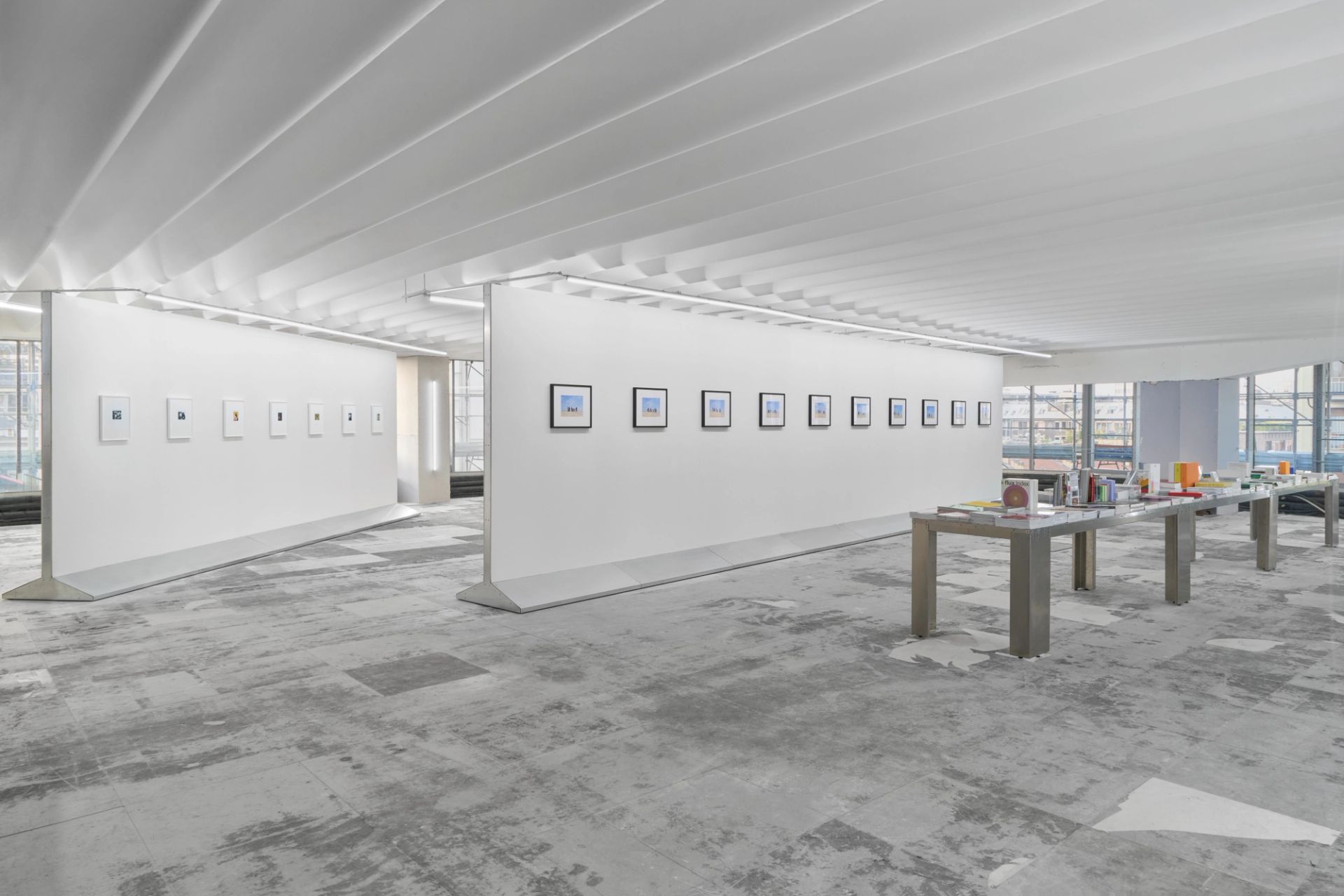
Installation view of Paris Internationale, © DSL Studio; Image courtesy of Paris Internationale
VC For us, the subdivision in rooms within existing structures really helps the individual designers in terms of the diminished investment they need to make in setting up the space. Then there is also the broader question of the white cube. For art, I still think the white cube works very well. It provides a neutral environment that allows the work to stand on its own. This idea of factories becoming museums and the rise of the white cube, really comes out of the 1990s. Design, on the other hand, often benefits from a different approach. It tends to feel more natural outside of the white cube, in spaces that are already articulated, with a more domestic or lived in quality.
"Design, on the other hand, often benefits from a different approach. It tends to feel more natural outside of the white cube, in spaces that are already articulated, with a more domestic or lived in quality."
KOOZ Going back to this nomadic format of the fair, could you share a little bit how this edition in Milan differentiates itself and what happens when fairs travel?
SA The main pillars of the project have been transposed: a strong international selection of participants; a focus on curated solo and duo presentations; affordable rates for galleries, enabling experimentation; and a considered scale within unique venues, creating a memorable visitor experience.
In terms of gallery selection, the Milan edition actually helped to clarify our identity. While Paris Internationale was initially conceived as a generational project—a young art fair—it has, over the past ten years, grown into something much more multigenerational. We continue to work with very young galleries, often presenting their first fair, while also welcoming more established galleries with 10, 15, or even 20 years of experience, who deliberately choose to show with us despite having access to larger, more corporate fairs.
More than a stepping stone towards more established fairs, Paris Internationale operates as a complementary alternative, giving galleries the opportunity to present another side of their program—often in a more focused and sometimes riskier way, with fewer artists rather than broad presentations.
VC For us, it has always been about staying true to our identity and trying to recreate what we do without simply replicating it. We realised that doing the same thing in a different context can be challenging, but also very revealing.
In that sense, it felt natural to look beyond Milan, since the design scene has its roots here. At a certain moment, other cities felt like they were declining or lacked the right context, and we wanted to experiment elsewhere. What was important for us was not to compromise our identity. Even with the challenges, we made a strong effort to invite the same kind of designers and maintain the same curatorial approach.
Of course, the practical aspects quickly became clear. The business model had to adapt. For example, relying on ticketing alone was not viable, so we had to be much more proactive in seeking sponsorship. In some cases, this worked well, especially when there was a strong connection to local heritage.
At the same time, each city comes with a different level of engagement with contemporary design, and that inevitably shifts the project. The context, the audience, and even the atmosphere change, and that, in turn, influences the overall identity and experience.
Maria Bambine volete un dolce’? Caffè?
VC Purea di mele con pinoli. This is so comforting.
SA I’ll have one as well! And a coffee.
KOOZ A coffee will do it for me!
KOOZ Valentina, I’m curious about this new venture, without going into anything confidential. What interests you about bringing Alcova to another context? When you first saw this happening, what made you think that Alcova could take place here as well?
VC Miami was complicated. We approached the first edition with a very Italian perspective — almost a romanticised vision shaped by modernist architecture and even by the imagery we had seen in films. For many Americans, the venue we chose carries very different connotations, and not everyone appreciated our approach. For the second edition, we found a location that we have now used for three years, which became an important anchor. It took some time, and some courage, to move beyond the obvious areas and really understand how people experience the city. Eventually, we began to connect with its atmosphere. These projects require a huge amount of effort, especially as we both have other jobs. Strategy often comes later. When we first started in Milan, it was not strategic at all. Alcova was a very instinctive, almost elemental project, and in many ways it still remains so.
"It took some time, and some courage, to move beyond the obvious areas and really understand how people experience the city. Eventually, we began to connect with its atmosphere."
KOOZ Can you think of something that didn’t work — and what you learned from it? How much room do you leave for things to go wrong?
SA For me, this question really points to the imperfections that come with a nomadic model. Even after ten years of experience, we often find ourselves securing a venue only three or four months in advance, which means we don’t always manage to fully realise everything we would like to.
Despite that, we still manage to create editions we truly care about. A lot of passion goes into each one—it’s very much a labour of love. When you love an adventure, it becomes both addictive and deeply rewarding. You go through all the stress and uncertainty, but in the end you create something unique, and almost a little miraculous.
VC I am actually not allowed to go to the site in the days leading up to the opening. We are two partners and we have realised that it is better if Joseph takes care of those final days and keeps me away. If I go, I tend to panic rather than be helpful, so it is a way of protecting the process. This year, I am trying to handle it a bit differently but it is still a challenge.
KOOZ Well I can’t wait to visit both adventures in the coming days! Thank you both so much for your time and energies.
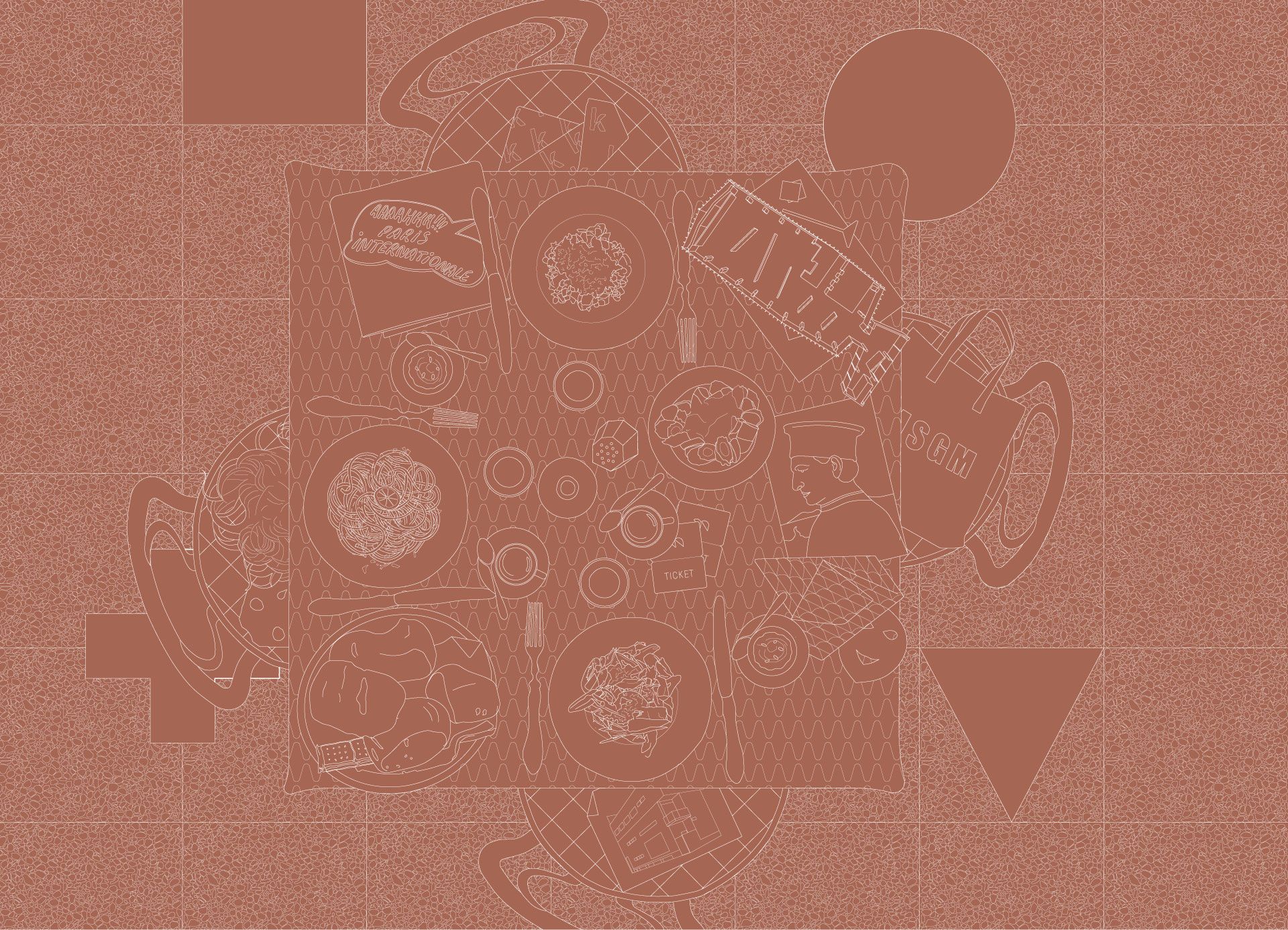
Each conversation is accompanied by a drawing of the table conceived as its imaginary map, depicting the food, references, tableware and talk shared over that particular meal. Drawing courtesy of Andrea Derni © KoozArch
The conversation took place over a table at the historic Latteria di San Marco in recognition of its domestic scale and convivial spirit—a setting where the shared table becomes a site of encounter, exchange, and unexpected dialogue. Founded in the 1960s in Milan’s Brera district and run for decades by Maria and Arturo Maggi, La Latteria remains a discreet institution, known for its intimate atmosphere and daily handwritten menu shaped by seasonality. With only a handful of tables and a steadfastly simple approach to cooking, it endures as a quiet landmark in the city’s culinary and cultural life.
Is This Seat Taken? (ITST) is a situated conversation series hosted by KoozArch, convening lunchtime conversations between cultural practitioners around a shared table. ITST understands the particular pleasure of ‘debates over plates’ as a cultural act — a space of slowness and attention that is by turns critical and casual. ITST holds a seat at the table for contexts where creative energies converge, capturing and catalysing the exchange of ideas through dialogue over food.
Each lunch is accompanied by a drawing by Andrea Derni.
BIO's
Silvia Ammon is an art historian and director of Paris Internationale, the alternative art fair she launched in 2015 together with a group of gallerists as a more accessible and experimental counterpart to FIAC. Paris Internationale brings together galleries in informal, often repurposed spaces, fostering a more intimate and discovery-driven environment. Through this work, Ammon has contributed to reshaping how younger galleries and artists engage with the fair model.
Valentina Ciuffi is a curator and co-founder of Alcova, the itinerant design platform she launched in Milan in 2018 together with Joseph Grima. She is also co-founder of Studio Vedèt, a Milan-based creative studio working across exhibitions, research, and strategic projects in design and culture. Alcova has quickly become one of the most dynamic and anticipated events during Milan Design Week, known for activating abandoned and historically significant sites and bringing together experimental designers, independent studios, and research-driven practices. Through her work, Ciuffi has helped redefine how design is exhibited and experienced, positioning space and context as central to its curatorial approach.
Federica Sofia Zambeletti is the founder and managing director of KoozArch. She is an architect, researcher and digital curator whose interests lie at the intersection between art, architecture and regenerative practices. In 2015 Federica founded KoozArch with the ambition of creating a space where to research, explore and discuss architecture beyond the limits of its built form. Parallel to her work at KoozArch, Federica is Architect at the architecture studio UNA and researcher at the non-profit agency for change UNLESS where she is project manager of the research "Antarctic Resolution". Federica is an Architectural Association School of Architecture in London alumni.
Andrea Derni is an emerging curator and architecture graduate based in Milan, working at the intersection of architecture, exhibition studies, and curatorial practice. He holds a Master’s degree in Architecture from the Politecnico di Milano, with a thesis examining the exhibition as a platform for political and critical debate in complex cultural and geopolitical contexts. He currently works as Curatorial, Research, and Development Assistant at DROPCITY – Centre for Architecture & Design and has collaborated with (AB)NORMAL on exhibition projects, including the XIV Triennale International Exhibition at La Triennale di Milano.