Nina Bassoli I'm very happy to be in this temporary occupation of a beautiful building-in-transformation with Fabio Cherstich, Simone Farresin from Formafantasma and Emanuel Christ from Christ + Gantenbein, designers of this beautiful, experimental infrastructure. These three voices occupy quite specific roles: Emanuel is an architect, Simone is a designer, and Fabio is a director of theatre and opera. Yet they share an experimental practice of crossing disciplines and pushing narratives, to show how space can be a performance in itself, across scales. Let’s start with the idea of your ‘discipline’, in professional terms —
Fabio Cherstich You mean how I would define my work? That's a very good question, and it’s a very simple exercise: I ask my mother, can you please tell me what I'm doing? She has never given me the right answer, because I'm a director and there is actually a lot of ambiguity in what I do. What I normally use as a definition of my work is that of a storyteller — using bodies, space, words, sound, sometimes music — but I am a storyteller, that's how I define my work. In my own practice, I try to develop storytelling through different media; for example, I'm a theatre director, so I work with actors; I work with singers when I direct opera and with graphic designers when I'm designing a book. I work with architects or designers — for example, with Simone and Andrea of Formafantasma — for design brands, and with fashion designers when I work for fashion brands. Normally I receive something like a concept, some words — and then I stage it. That's it. My mother still is not able to define it that way, but what can I say?
Emanuel Christ For me, it's a very universal notion: architecture as a discipline sees itself as a form of cultural production, to put it in the most abstract terms. More concretely, we're solving all sorts of problems related to space and the physical environment — from a small piece of furniture to entire parts of a city. And since we are sharing stories about mothers… We started our office quite ambitiously, and immediately entered competitions. Even after quite some success, my mother would still ask, “But do you actually know how to design and build a window?” Apparently, she had a certain mistrust in the lofty ambitions of our discipline. So why not come back down to earth and simply fix the things that need to be fixed? Architecture is both very down to earth, and perhaps the most ambitious discipline — and as you know, architecture is called the ‘mother of the arts’.
Simone Farresin Good luck — fortunately, I don't operate in architecture but in design! Of course I'm kidding… I think that design is one way of making sense of the world. Again, to be a little bit abstract, we are trying to make sense of the world, while operating within an economic system that would apply design as a means to escalate economic growth. On the other hand, we are personally and deeply interested in aesthetic, political and ecological questions. So our way of making sense of the world is affected by all these different interests, which are both personal and naturally informed by our clients.
"We are trying to make sense of the world, while operating within an economic system that would apply design as a means to escalate economic growth. On the other hand, we are personally and deeply interested in aesthetic, political and ecological questions."
NB It's interesting to be inside an art fair which precedes Milan Design Week, which is in turn absolutely full of architecture. Right now, we’re inside a construction site, within an architectural project that faces historic buildings of the city. This being-inside and crossing-over of conditions feels very contemporary. Personally, I believe that all three of you push your disciplines beyond their borders. Perhaps you could share one challenging example of operating in the in-between.
EC Going back to the previous question, I think that what belongs to one’s discipline is not always so clear, in terms of where it starts or ends. I would like to speak a bit about our experience of disciplinarity in relation to the field of scenography. Early on, we had the opportunity to design the extension and transformation of the Swiss National Museum, an institution focused on art, history and crafts. It was all about the architecture: the building itself, the technical systems, renovating an old structure and adding many new layers. Our attention was fully directed towards the physical space, the materiality, the presence and almost the physical resistance of this built environment. And here is a very personal confession: to a certain extent, we had almost abstracted the fact that there would eventually be an exhibition within that space. After all, the architecture was already so rich in that particular case, loaded with historicism, mannerism, and so on.
So after years of endless toil, when the first exhibition was about to take place, a scenographer was invited to work on it, and we had no say on who this would be or how the process would unfold — which was at the time, quite traumatic. I'm not being ironic or cynical, but as an architect speaking about the limits of discipline, the fact that somebody could enter the space and, as their first act, erect a second wall right in front of the walls that we spent years calibrating, felt genuinely disruptive. We really had some trouble — and of course, now I'm being a bit ironic — to reassess this relationship between our understanding of an architectonic space and its temporary use. I offer this as an anecdote, but over time we came to understand the potential of this dialogue between an existing building and its intervention. With Paris Internationale, we effectively swapped roles; here we could take on the role of the scenographer, reacting to something that is already there.
We are intervening quite significantly, but at the same time — and that’s interesting when we speak about disciplines, there is autonomy, but also empathy. Over the years we have developed not only an interest but also a method of engaging deeply with specific contexts. So maybe we could also talk about how the things we bring to the table are always related to what's already here; it’s about contrast and tension.
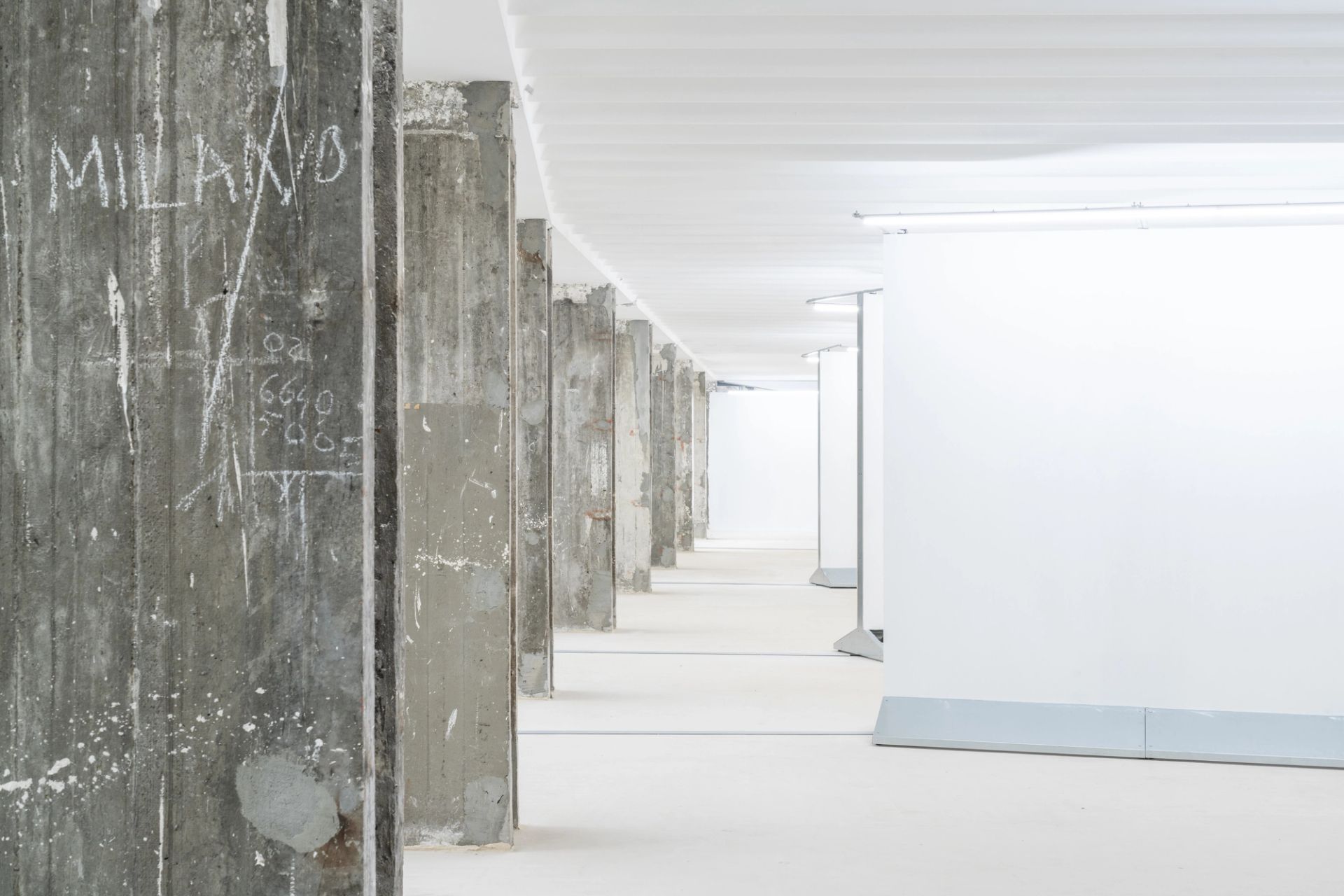
For its first edition in Milan, in between MiArt and Milan Design Week 2026, Paris Internationale takes over Palazzo Galbani, currently under renovation by Park Associati, with exhibition design by Christ & Gantenbein in collaboration with with NM3. Image © DSL STUDIO, Delfino Sisto Legnani
SF It’s tricky, I really sympathise with what you just said. In fact not long ago, we too produced an intervention within a new piece of architecture — Jean Nouvel Fondation Cartier in Paris — in that case, we made an exhibition design. But I never wanted to speak with Jean Nouvel about it. That’s not to suggest in any way that we do not respect his work, but it's important to allow ourselves the opportunity to look at the space from our own perspective — indeed, in the hope to have been respectful. We prefer to operate in what we call exhibition design, rather than the term scenography — because scenography seems connected to fakeness, at least in my understanding of the word. I prefer to think that exhibitions, while they are staged, are actually part of reality. In fact, in our line of work, there is one object that acts as a test, which is the plaster or stud wall — it pretends to be a real wall, but in fact, it's purely fake. And that's why we love exhibition design; you can read a construction against the fakeness of its reality, which is real in itself. It is a real struggle to work within a specific discipline. What we are interested in as designers is to have a very clear sense of where the boundaries are, also in order to deliberately cross them — though this does not mean that design can do everything. For example, ‘Staging Modernity’ — our collaboration with Cassina, in the Teatro Lirico Giorgio Gaber — was very productive. The client asked us to address the heritage of the company in relation to works by Pierre Jeanneret, Charlotte Perriand and Le Corbusier. The location was a theatre and at one point, we thought about producing a theatrical performance — but we had never done that. So of course, we reached out, because we must be respectful of the knowledge of others. As authors and as professionals, we would like the freedom to do things that sit outside of our strict realm, while acknowledging the lived experience and knowledge that others have, and hence collaborating with them.
FC On the subject of our collaboration for that exhibition, ‘Staging Modernity’ carries that definition of ‘the staged’ very clearly in the title. It was also a way for us and for the audience to approach the project itself. We met and they explained the concept to me, they showed me the layout of the show: they gave me the ingredients. I simply tried to add action — in this case, the action of real bodies, moving in space. I thought that maybe they should sing and not just speak; I think that when you listen to someone singing, you enter into their world already. In a musical or in opera, we do not ask ourselves why this character is singing; they are talking, and then they start to sing. We accept the fact. I think that is quite poetic; then too, I had this idea of a crowd — not just two or three performances, but seven or ten or maybe twelve performers with different skills, like singers, dancers, actors. It was a way of bringing my language, using all the tools. I love to tell a story to an audience, to work atmospheres and emotions, all the things that normally scare people — that's what I have tried to do, and develop. The incredible thing was that they trusted me. Simone and Andrea came to our rehearsals; there was a dialogue, they gave feedback and I modified what I was doing. As a theatre director, I'm normally quite open to understanding what people need from me, and my first priority is the audience. For example, I couldn't exist without an audience. I can't do what I'm doing alone in my room; I might have a mental image, but I don't have a studio — I need a stage, a lot of people to work with me, and I need to have an audience. So that's a question that I have for you: do you think about an audience? I always ask myself, who are these people? What is the audience? It’s an abstraction — but at the same time very necessary because without an audience, very simply, I don't exist.
EC This is a very interesting question. The essence,— the most beautiful aspect about architecture, but also its inherent weight — is its duration over time. Maybe that’s one of the nice things about the temporary nature of the project that we are sitting in right now. Nevertheless, within our own working process, there is a continuous dialogue. We are not trying to find the minimal common denominator for ourselves; rather we try to imagine what could ideally be understood by many people across many generations. This is, admittedly, a bold statement: we are addressing an audience that does not yet exist. From this perspective, architecture can be understood as a discipline — or even as an artistic and operative practice — that mediates between, on the one hand the individuality of the author and individual experience of space, and on the other hand the collective dimension of the city or the community. That’s one reason why I’m happy to sketch out this figure of the individual and the collective, because sitting or standing in these rooms, with views into the city and even the audience of other buildings and the intimate realities of one person, or even one artwork — that's where our audience actually is.
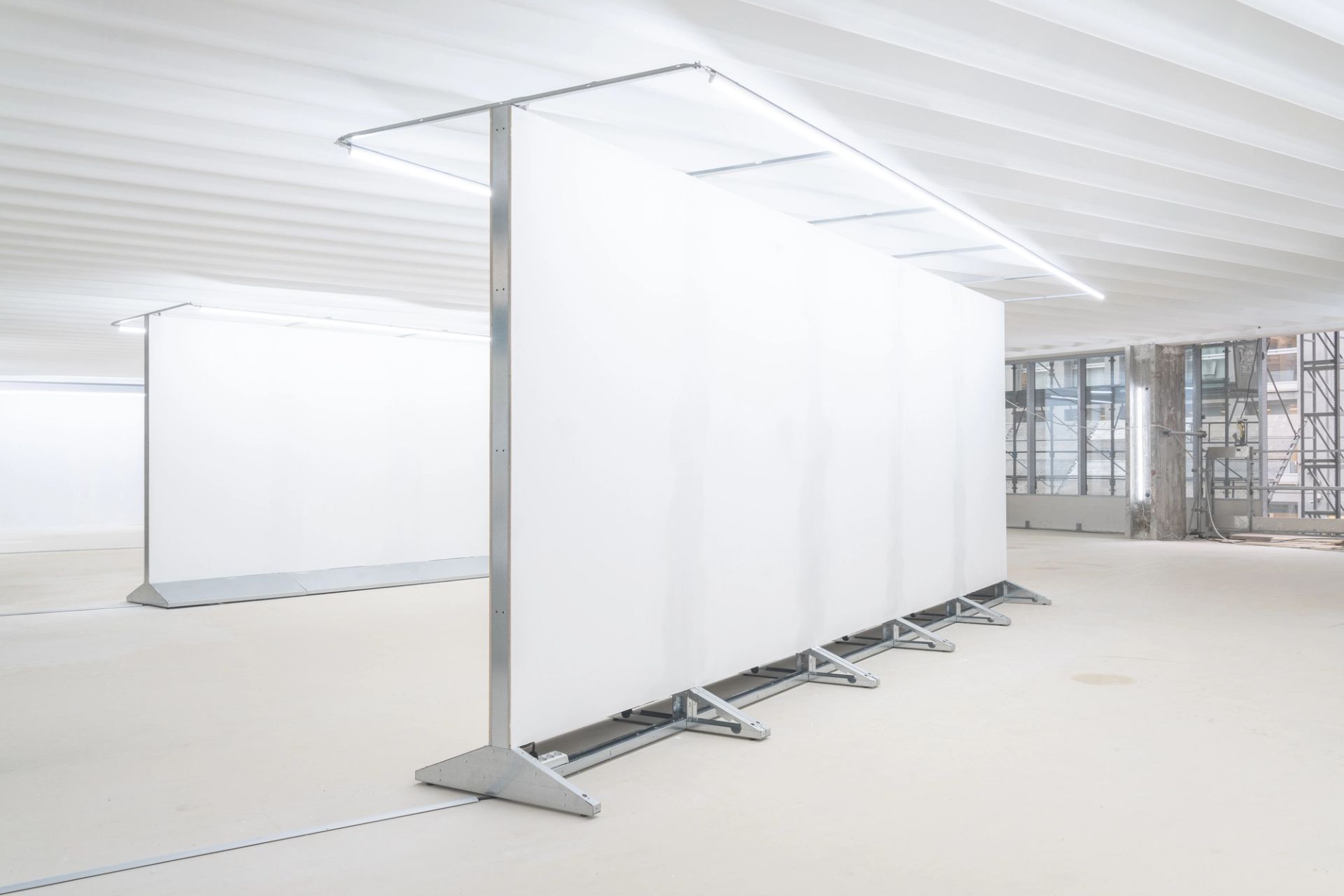
Exhibition design developed by Christ & Gantenbein in collaboration with NM3. Image © DSL STUDIO, Delfino Sisto Legnani
SF I’ll give you a practical example. When we do an exhibition design, we inevitably think about routing, clarity, legibility — all these questions. But to be sincere, I don't think about the audience — at least not in a traditional sense. At this moment, I think the people who really consider the audience are those involved in marketing — and I really have no intention to think like marketing people. I don't know my audience because I cannot know them. I can have empathy, and I can rely on myself; I trust that we are not so special as to be vastly different from the potential audience. So generally, I design the show or the object that I want to see, and for me that's the most intellectually honest way to approach what you do. Of course, if you design specifically for people that are very different, or for those with different abilities, you have to consider those possibilities and limitations — that's a different story. But I think one personal principle — and it's very important to me — is to never try to understand or comply with what I imagine people might think, because that's a complete disaster. I don't want to know. I don't want to think in that way. It's really dangerous.
FC The Polish theatre legend Jerzy Grotowski defined himself as the first spectator — by which he meant, of course, I am in front of someone who is performing for me. Which is exactly what you are saying. I need to like what I'm looking at and then I need to trust that people will understand. But the idea of actually being the first spectator is really important. As the first one, if I don't like what I see, I should be the one who change it — first for myself, and then also because I don't want to show something that I don't like to other people. That is something that you learn through experience: you can't keep going with mistakes, you need to make changes until the minute that you go on stage.
SF It happens very often that people tell us that we cannot do something or other because people don't understand it, which is awful. And usually that feedback comes from a person who themselves does not understand something, not ‘people’. To me, that's the worst way of thinking, because it leads to a dumbing down of the content. We see a lot of that in journalism, where simplification is not a form of clarity; rather, it's a way of dumbing down ideas.
EC It brings us back to the question of how elite we are, as designers operating in influential positions. In projects that are meant to be seen, visited, experienced by many people, this is a tricky position to be in. There are, of course, different possible approaches. One is to simplify to the point of reduction, or even to become somewhat vulgar, in order to ensure that everyone understands. The world of commerce and marketing can sometimes lean in that direction. But we don't want to assume people are dumb or vulgar or incapable of understanding complexity. We want to lift people up. We want to be egalitarian and inclusive, but on a high level. This is, of course, an ambitious project. We are humble because we are aware that we can fail, but in our ambitions, we try to be as bold as possible, and we want to include everyone in this experience. Whether this works or not is hard to say, but we cannot compromise on our own judgment; that is not possible.
"We are humble because we are aware that we can fail, but in our ambitions, we try to be as bold as possible. Whether this works or not is hard to say, but we cannot compromise on our own judgment."
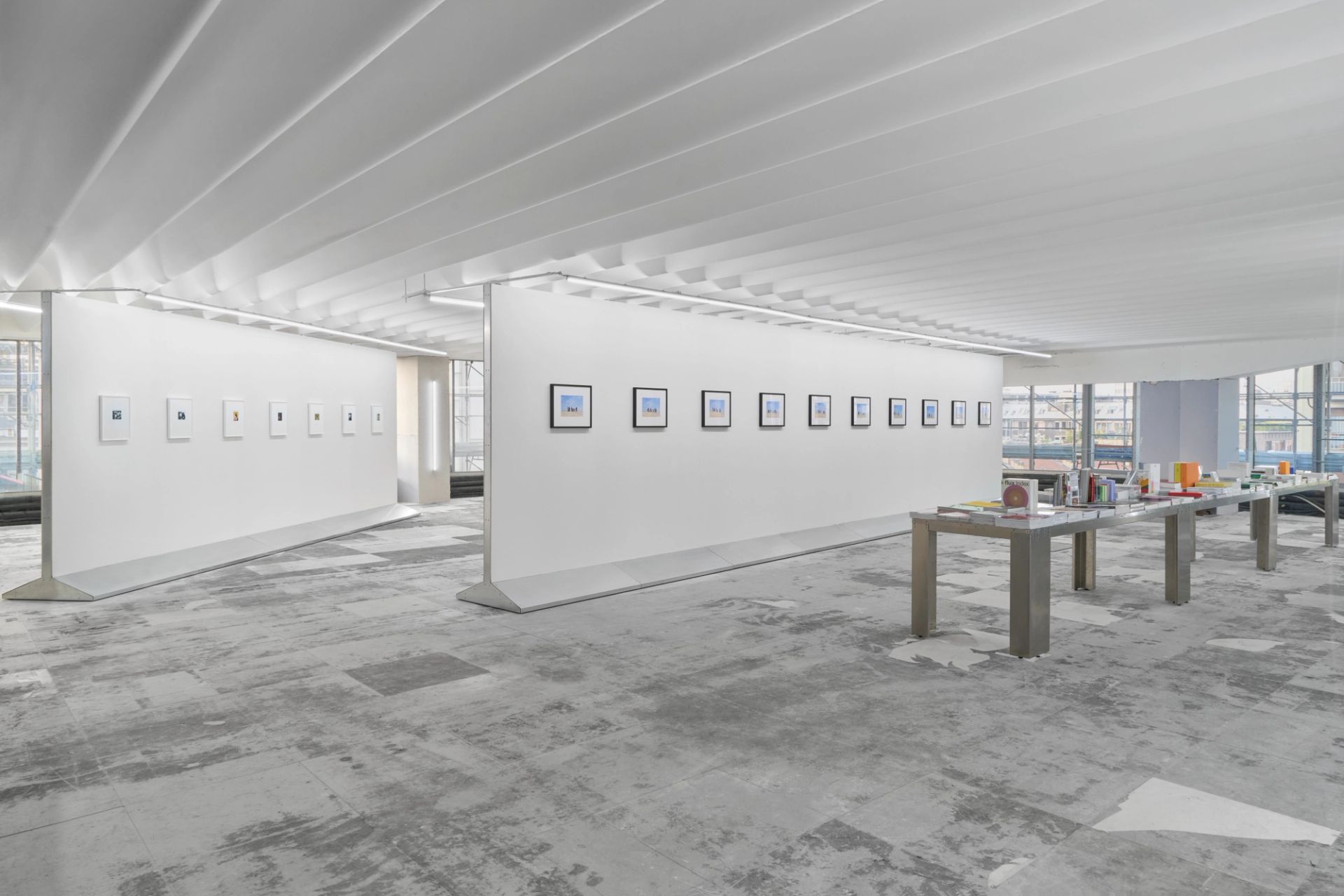
Installation view of Paris Internationale at Palazzo Galbani. Image © DSL STUDIO, Delfino Sisto Legnani
NB There are two critical threads here. The first one is to do with being loyal or responsible and to whom; to an audience, to yourself, or to the context. The other thing is a sense of coherence: a coherence between the logic of design, the work and yourselves as authors. Does that ring true for you?
EC For me — and I'm speaking again in terms of architecture — in the end, it doesn't matter whether this is a wall made of plasterboards or a whole building. In any case, we are always limited by what we are able to do here at Paris Internationale in Milan, as in any project; there is always an economy of means. In the first place, our intervention is considered an independent, autonomous gesture. We are reorganising, changing, transforming a place and a space. By reflecting on our own working methods we have realised that we find the greatest satisfaction when we can feel a certain reverberation, a resonance that comes from the space and the place. In that way, we are not making a spatial statement limited only to ourselves, but in the hope that the things we do can start — and forgive me for the simplicity of the metaphor — to speak to what is already there. This dialogue between things might find an accord between forms, shapes, materials, and ideas start to radiate. We love that because we think it means our work goes beyond intervention into a kind of dialogic engagement or resonance — this is what informs our design and pushes our interest.
SF That’s really beautiful. I think it's the desire to perform a reality, which really resonates with our interests as well. I think you can be autonomous and at the same time, enter into a conversation with the world. I find this to be the only way of acting at this moment, within the form or forms of reality in which we practice. So I guess the idea of autonomy and being loyal to your own work is important on a multiple level. It is not an action of extreme ego. The idea of authorship is interesting because it is also about total accountability. When you are an author, you're also accountable for what you say, for what you do. At this moment, being accountable is extremely important: it is a form of responsibility, not only to your own work, but also to people to have the possibility of reading it and understanding it according to somebody who stands for something, and I think that’s a beautiful thing.
"I think you can be autonomous and at the same time, enter into a conversation with the world. I find this to be the only way of acting at this moment, within the form or forms of reality in which we practice."
EC Architects are also often asked this question about authorship, and I would completely follow what Simone just said. What is important is not to confuse authorship with ownership. There is, of course, a form of ownership during the creative process, and with that comes accountability and responsibility. But at a certain point you have to let it go. It relates to the way we see the world; if you are sincere about moving beyond your own intervention, then the work must be released and allowed to belong to everyone. It's not primarily a moral conversation, but rather a cultural and political position.
FC Speaking of authorship in my profession — being a director — I work with so many different kinds. When I direct opera, I have a composer who is an author. I have singers who define themselves as artists; they are plug-and-play performers — they are human beings, who sing with their own technique and sensibility. Then, I have a conductor, and all the other people that work with me who are authors: the set designer, the costume designer and so on. I'm constantly trying to communicate not only my own authorship to people, but also trust and react to other authors who bring their ideas and suggestions. Sometimes we have huge fights! But I’m constantly dealing with multiple authors at once. Of course, I'm the director, so I have the last word, because there's no other way forward. You won’t have a premiere if there's no one able to say, “We’re doing it like this.” But I do need to trust others and react to their authorship.
NB I do think there are parallels within the fields of architecture and design — as Sergei Eisenstein suggested, architecture is perhaps a more ancient version of directing cinema. You have all implied a sense of dialogue, whether between audience and creators, or past and present; I wanted to bring up the dimension of memory and the archive.
FC In parallel to my work as a theatre director, and for many years now, I have been taking care of several archives of artists who died in the 1980s. It happened by chance, through friends. Actually, I discovered a painting through a friend’s phone and starting with this image, I did some research online. I found the artist’s mother living in Arkansas. I went to Arkansas, spent three days at her place and ended up with many of his paintings. Through this painter, I discovered another; I have since become very close friends with his ex-boyfriend, who lost him when he was very young in 1984. So I’ve inherited all these works, and I'm dealing with this archive here in Milan, at my place.
Two years ago and for the first time, I developed a theatrical project that involved telling the audience what I'm telling you now, but with images behind me. For me — and also for Formafantasma, I believe — archives are things that are still alive, and it's important to consider how they can be made legible, tangible. In my case, the only way was to be on stage and act as the narrator of my own history. I became a tool, a medium in the hands of these dead artists, allowing them to be rediscovered, for example. I also had a responsibility. For me, that was about the necessity of sharing their names, their stories, with someone. So in a way, I'm curating, but in the sense that I'm mostly taking care, giving attention, trying to preserve. Curation for me is more to do with taking care; I didn't study the history of art, so that’s not my approach. I discovered it through this passion and maybe it's a little bit naive, but I'm like that, so it's like that too. Bringing the narrative on stage was a way of bringing these private things to a public and shareable dimension. That's it.
"Curation for me is more to do with taking care; I didn't study the history of art, so that’s not my approach. I discovered it through this passion and maybe it's a little bit naive, but I'm like that, so it's like that too."
SF Firstly, I would have to agree that we are truly fascinated by archives, for two reasons. One is that when we encounter an archive, we find ourselves consulting things that were created in the past, even a recent past. And two, archives are especially fascinating because they hold certain pretensions of organisation, even an aura of objectivity. There is something existential about their supposed authority that I find really fascinating, also because they can tell us a lot about particular worldviews. It is revealing to observe the practice of archiving — looking at what is archived and what is not — because it says a lot about the specific context. That's why we find archives interesting.
In terms of the idea of acting as curator within an archive, that’s a different story. Of course we are not curators, even if I do think the practice of exhibition design is a form of curatorial practice — at least in the way we do it, because it’s never neutral. It's never about serving the artwork; rather, we think about understanding the exhibition as an object in itself, composed of different artworks. This might even interfere with an artwork in itself, but that is not necessarily negative. It’s also witnessing the strength of an artwork. With very good artworks, you can really put them under stress in the context of the exhibition design — and they remain amazing.
EC There’s a beautiful conversation to be had here, about the archive and storytelling. To put it simply: as much as I spoke about the many authors and voices we engage with, I do believe that every project needs a clear story, and a story is not a sales pitch. A story is a line of argumentation. It's an invitation to dream and to understand what you're doing. This is true for every project, regardless of any preexisting archive of forms or elements. Actually, our archive is the city. Over more than 15 years, my professional partners Christoph Gantenbein, Victoria Easton and I have been collecting and documenting buildings — ordinary buildings, everyday architecture — that we love. This is not particularly original, architects have been doing the same for centuries; nevertheless, we developed a kind of typology of buildings, and it became our archive. Even in new-build projects, we use this archive or repository of solutions and ideas. I believe every creative practice must have its archives, and every author — both individuals and collectives — can cultivate and build up their own. We are so proud of our archive that we published a book about it; and the third volume was released only recently.
NB It might be worth addressing the space between the idea of being popular with that of being accessible; there is a definite ambiguity between these terms.
EC You alluded to the role of the mediator and engaging in forms of dialogue, in order to make the content — be it a place, an architecture, an exhibition, a play — accessible. But maybe it is not so much about being popular. Ideally, what we try to do as humans is to be understood, we want to engage in a dialogue. What I often observe— and I'm including myself in this — has to do with our expectations of attention. If I start speaking about ‘likes’ and similar things, it may sound somewhat trivial but in that sense, attention is fleeting: you are there for one moment, and gone the next. If instead we are able to say something, or make a gesture that is intriguing, that causes a few people to start wondering and eventually understand something, that is fantastic. Again, I do not mean this in a snobbish or elitist way, but the deeper people can engage and understand, the better. The goal is not simply that more people look at something or see it, but that more people truly understand it.
"But maybe it is not so much about being popular. Ideally, what we try to do as humans is to be understood, we want to engage in a dialogue."
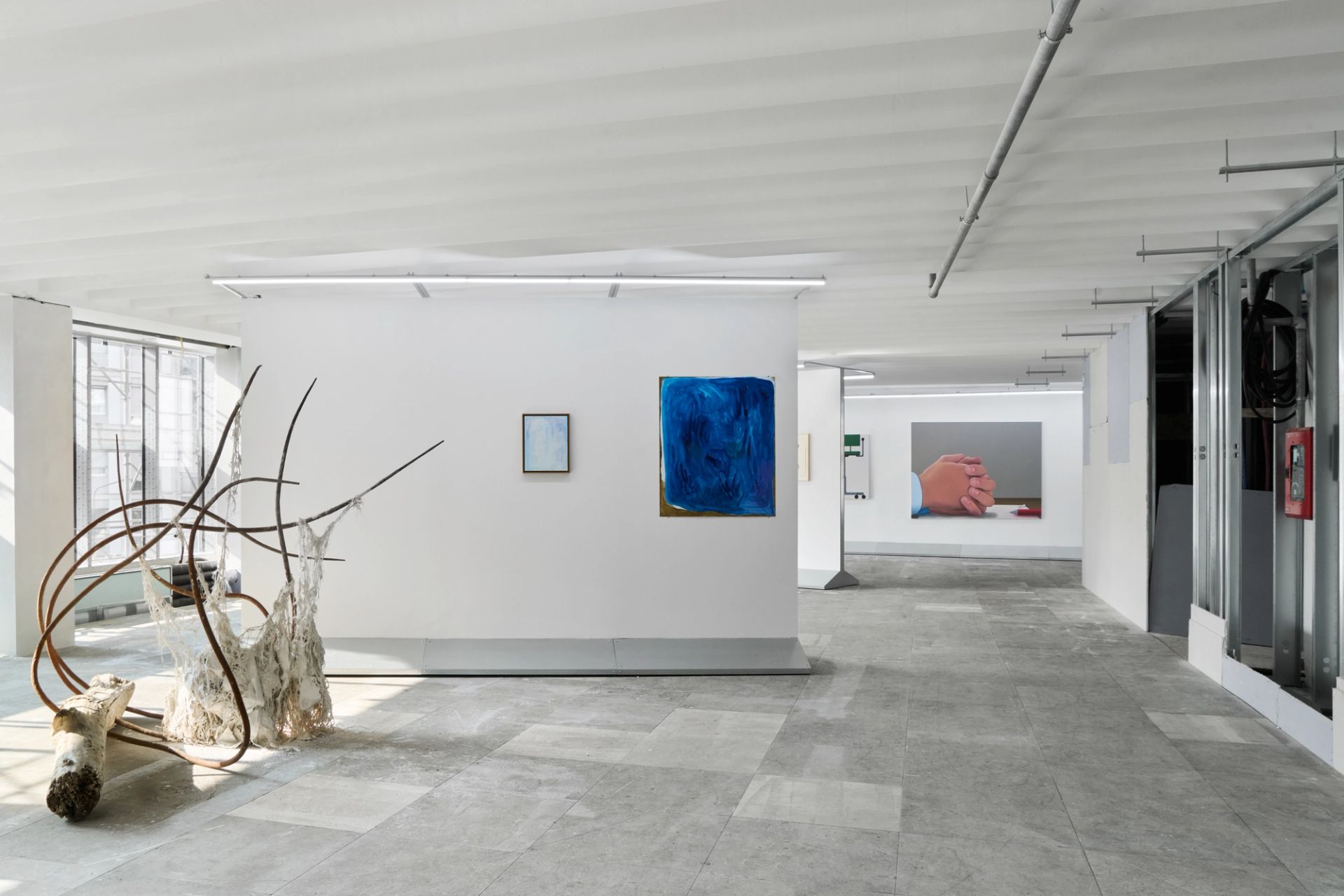
Installation view of Paris Internationale at Palazzo Galbani. Image © DSL STUDIO, Delfino Sisto Legnani
In the case of the National Museum, this was particularly tricky. It is a very charged place, and the Swiss National Museum carries an ideological problem from the start, because the Swiss nation is not really a nation — the idea is a highly artificial projection of a place created in the nineteenth century. At the start, there was a conversation as to whether the building should simply be demolished, and whether a national museum was still necessary at all. What we brought to the table was, in a way, something unusual: an addition. It was an affirmation: yes, the National Museum is something which should exist — it should even be extended and continued. At the same time, our design stood in stark contrast to what was already there. Speaking for myself, but I believe I can also speak for Christoph: at that time, we were not fully aware of the impact it would have on the people in Switzerland, and we were confronted with some very harsh reactions. Immediately it became very political because again, architecture communicates a message. Am I understood? How am I understood? We also realised that being popular is, in the end, a question of values and it is political. That's not necessarily an answer to the question, but it's a reflection on what it means when one believes one wants to be popular.
SF It's a complex subject. I am very interested in the notion of success and popularity as being connected to clarity, and the misconception that totally evident readability will render something as appealing to all. We don't often encourage or recognise the process of moving towards understanding — even in education. When I read a book, I very often understand only half of it; after many years, it reveals something more and I start to understand it anew — because there is a process of digestion. So for me, skipping that process is really a pity. I grew up in a village, and the first time I encountered contemporary art, I loved it because precisely it was mysterious and I didn't fully understand it. For me, things that I don't understand can also be beautiful, and I design for that. We design for this beautiful moment in which you might encounter things that are also mysterious — and that's really fine, because you will understand with time.
" We design for this beautiful moment in which you might encounter things that are also mysterious — and that's really fine, because you will understand with time."
FC I totally agree with you, perhaps because I come from a similar background. This brings me to the opera truck, or the OperaCamion. That project came almost from an intuition, after the Opera House of Teatro Massimo in Palermo and Teatro del opera di Roma asked me to work on a project to entice a new audience. How to bring a new audience to the opera house? The first thing that I came up with is that one should not need to ask people for money to give them a performance. Secondly, I thought that instead of running shows inside the theatre, why not bring the theatre stage outside? So I just used a truck as the main stage and we ran performances for free, produced with the public money that is offered to every town square outside of the city centre — which was quite a challenge. It was not about being populist, not at all. It was about trying to do a nice project with great singers, live music, and working with an artist, Gianluigi Toccafondo. The result was really incredible. Firstly, the audience was always very happy about what they saw at the end of the show. Then there’s the fact that they engaged with the possibility of fine opera as entertainment, which is a definition that is very important to me. I'm not scared about doing entertainment, as an intellectual. I'm very lucky to have the chance to be an intellectual. I can decide to play with the fact that I'm an intellectual and do something which is very conceptual — but I do think that this project is extremely conceptual.
So the OperaCamion or opera truck was really for everyone, in squares outside the city center of Rome; there were people having lunch or dinner, taking a stroll while they encountered the show. Of course, conceptually, I think it was quite complex, but the result was also really readable and very simple, considering opera as entertainment — so that Il Barbieri di Siviglia (The Barber of Seville) by Rossini is something that people can enjoy in the square, instead of staying home. It was an important project that, again, was borne of intuition; for instance, the theatres were very scared, because people might scream or use their phone — absolutely not. Again, we said something to this effect earlier, that you should trust the audience. People are not stupid. If they recognise something that is interesting, that has quality, maybe they don't have to understand it. In the case of Il Barbieri di Siviglia, it’s so simple that the question hardly arises — but to allow people to discover that opera can be a nice way of spending an hour and a half was already a great result. The question then is how to bring these people into the theatre. This project allowed me to bring the content out from the packaging, but the building itself is very scary. That's the big problem of opera houses, of the architecture itself.
EC This is a very beautiful story, because there is a transfer and a shift in perspective. It brings me back to the question of whether and how to make architecture popular. One important stage of architecture is when it's being conceived, during the design process. Since architecture is always a public matter, even when it concerns a private house, it is still an intervention into an existing condition and therefore announces change. That's when architecture is typically very unpopular. When the project in question is a national museum, it becomes even more complicated, because then you start to face referenda and public confrontation. Interestingly, once this new reality exists and is no longer simply an intellectual idea, it becomes a matter of fact — and from that point on, it is about life and human acceptance. To put it more clearly: within intellectual discourse, architecture does not need to be popular or populistic; ideally once it is built, it is popular. That's what also happened with the Swiss National Museum. In the end, and perhaps fortunately, it's not in our hands — the audience is the one in the position to decide. It is important that it works this way, because architecture is public.
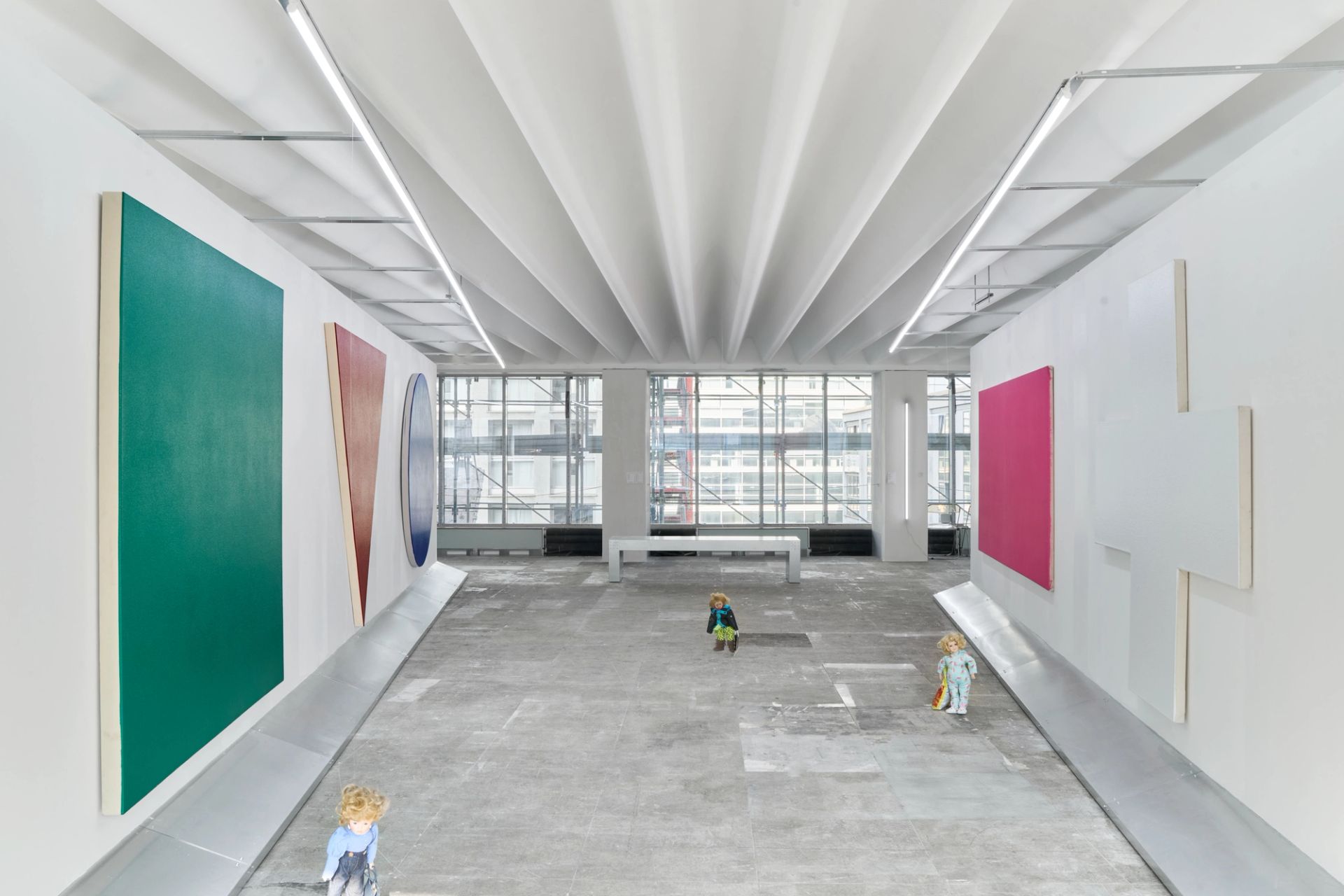
Installation view of Paris Internationale at Palazzo Galbani. Image © DSL STUDIO, Courtesy of Paris Internationale
This conversation was originally convened as part of the public programme for Paris Internationale, and took place in Milan on 22 April 2026.
BIO
Nina Bassoli is curator for Architecture, Urban Regeneration and Cities at Triennale Milano. In 2025, she curated the exhibition ‘Cities’ as part of the 24th International Exhibition ‘Inequalities’. Her previous exhibitions at the Triennale Milano include Gae Aulenti (2024), with Giovanni Agosti and Nina Artioli, and Home Sweet Home (2023). Bassoli teaches at the Polytechnic University of Milan; her field of research focuses on themes of crisis, ruin and waiting spaces, and architecture as an event.
Fabio Cherstich is a Milan-based theater and opera director, scenographer, and curator with a multidisciplinary approach to storytelling. His practice extends across performance art, exhibition design, and archival research, with a focus on unearthing and contextualising narratives within queer art history. He is the creator and director of the acclaimed on-the-road opera project ‘Operacamion’. Cherstich has collaborated with brands including Cassina, Gufram, Memphis Milano, Fay, Hermès, Off-WHITE, and Acne Studios.
Emanuel Christ is a founding partner, together with Christoph Gantenbein, at Christ & Gantenbein, an international practice dedicated to the broad realm of architecture. Operating from Basel since 1998, its built work includes the renovation and expansion of the Swiss National Museum in Zurich and the Kunstmuseum Basel, and the Multifunctional Workspace Building for Roche in Germany. In 2018, Christ was appointed Full Professor of Architecture and Design at ETH Zurich; he has also taught at HGK Basel, Harvard GSD and Oslo School of Architecture and Design, among others.
Simone Farresin is co-founder of FormaFantasma, an award-winning research-based design studio investigating the ecological, historical, political and social forces shaping the discipline of design today. Set up by Farresin and Andrea Trimachi in 2009, and operating from studios in Milan and Rotterdam, the practice embraces a broad spectrum of typologies and methods, from product design through spatial design, strategic planning and design consultancy. Formafantasma’s analytical nature translates in meticulous visual outcomes, products and strategies.