Federica Zambeletti This past year — as ever — metrics, trends, and the relentless churn of the built environment have produced a pace that feels increasingly exhausting — a steady pressure to quantify and keep moving anyway. Against this fatigue, I am pleased to safeguard Koozarch’s editorial project as a deliberate pause: a space for slower and more collaborative forms of thinking. An independent arena where numbers fall short and other forms of value surface instead: intergenerational conversations, disciplinary crossings, and projects that choose depth over volume.
What does a year look like when measured by the cultivation of a critical space? By the weaving of networks of solidarity across geographies and borders? To review this orbit around the sun is to continue questioning whether our mandate — to nurture a more generous, inclusive, and collective spatial discourse, an editorial refuge, even — has been met. Our mission persists, not as an encyclopedic ambition to give voice to everyone, but as a thoughtful and rigorous cohort of voices that continue to question, challenge, and expand our understanding of the built and spatial environment.
We have been delighted to support and platform emerging researchers and practitioners such as Jingru Cyan Cheng and Chen Zhan, and to build bridges between practitioners and practices — from Olga Subirós’s Matter Matters in Barcelona to Kate Yeh Chiu and Jia Yi Gu’s Material Acts research in Los Angeles; as well as projects such as Water Parliaments and Water Pressure, seen through the perspectives of Eva Franch i Gilabert, Mireia Luzarraga, Jane Withers, and Marlies Wirth respectively.
"Against this fatigue, I am pleased to safeguard Koozarch’s editorial project as a deliberate pause [....] an independent arena where numbers fall short and other forms of value surface instead."
Shumi Bose It has been our privilege to hold space for conversation across borders. In Polyglot — Koozarch’s annual issue for 2025 — we explored the notion of language, not only in terms of the various idioms spoken across nations — such as the political realities brought forward by Cambodian political activist Mu Sochua and her daughter, multidisciplinary practitioner Monica Leiper — but also disciplinary languages, such as the field of curation, cinema and other visual vernaculars.
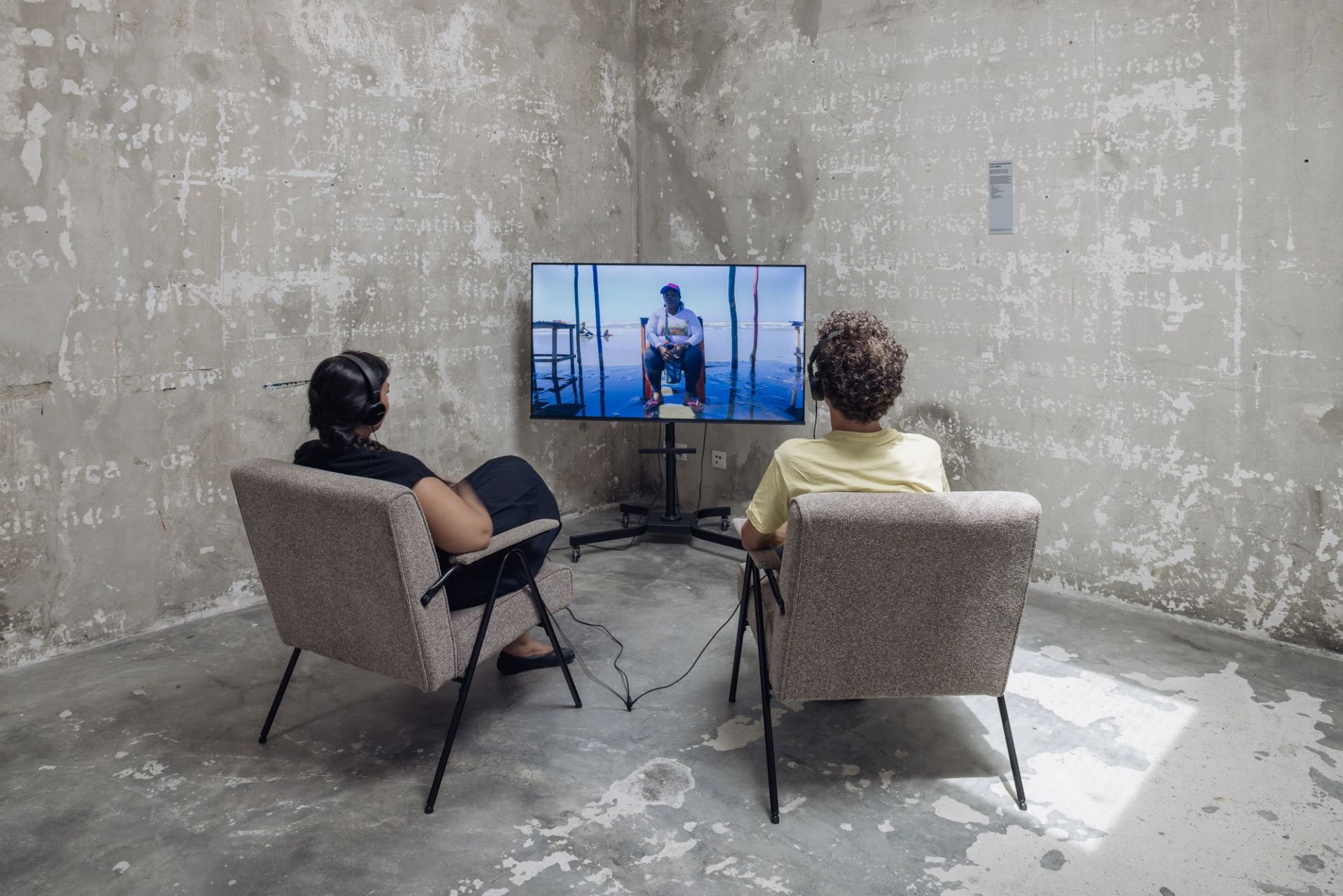
Speaking on dialect, colloquialisms and vocabulary, both the contributions from Rural Futurisms and the conversation between Mpho Matsipa and Thomas Aquilina look at how communities of the global majority utilise language and literature to express and elaborate rich and complex cultural lives. Likewise, the dialogue between Catalina Mejía Moreno and Antonio Bermúdez Obregón takes on indigeneity in Colombia and the ways in which literal translations may exclude cultural resonance. Sabina Andron and Tom Dyckhoff discuss the city in terms of visual mediation, signifying agency and freedoms in the way that one might read a city's surface. On digital technologies, coding and technical protocols, contributions from Kiel Moe, Manolis Stavrakakis and Mario Carpo address future frontiers as well as present realities.
These and several other conversations, as well as selected book extracts, make up the Polyglot issue, in which language acts as a seed to propel debates, arguments, concerns and creative practices forward. This issue — and all our thematic issues — are available to download as single PDFs, as valuable compendia on a theme that hopefully you can enjoy for years to come.
It has been a real honour to host and platform two unique voices through Koozarch’s Column series. This spring, in the series Oscillations, Asia Basdyrieva explored complex environments through the technical, epistemic mediation of space without shying away from emotion and experience. Her poetic prose illuminated Koozarch through some of the most turbulent periods that the current generation has experienced in terms of global unrest, genocide and war.
The second half of the year saw the reins passed over to Ivan L Munuera. His column series, Sonic Kinships, used a playlist as its basis, taking us on a musical and anthropological journey through landscapes as diverse as Chilean folklore to Factory Records from the sounds of Johannesburg to Romani rumba. Munuera’s column aligns civic and political agency with the human capacity for joy.
"It has been our privilege to hold space for conversation across borders."
Federica Zambeletti Beyond our own editorial agenda, we were delighted to collaborate with organisations deeply invested in intellectual and spatial inquiry. Partnerships with the Nieuwe Instituut, OBEL, and the Pavilion of Saudi Arabia at the 19th International Architecture Exhibition have been especially rewarding. Together, we carved out spaces for thoughtful reflection while forging new alliances — reaffirming the vital role institutions and foundations play within the cultural and spatial ecosystem.
From taking the time to explore and critically question the research fellowship format of the Nieuwe Instituut, to weaving new and diverse narratives around OBEL's annual theme of the Ready Made, and hosting the voices of the practitioners that were awarded the Ammodo Architecture Award 2025, we engaged in meaningful collaborations with institutions that see themselves not merely as custodians of content, but as engines of critical discourse — shaping questions, narratives, and the futures we imagine.
It has been a privilege to bring these collaborations together in a selection of open-access documents: the recently launched KoozArch Readers. This new format emerges from the need to gather reflections into easily printable materials — documents one can underline, scribble on, and annotate freely. Not everyone has the capacity or desire to sit in front of a screen and scroll; the Kooz Reader responds to this necessity through an accessible, open-access format.
Within this broader context lies the question of accessibility and our ongoing commitment to working with audio as a medium. We closed 2024 by actively experimenting with sound, resulting in two new podcasts, and we were delighted to expand this format not only through collaborations with partners, but also through our own productions. In 2025, we launched the first season of Space Between, our flagship podcast grounded in the belief that conversations bridging different spheres can expand our capacity to imagine better futures.

A snapshot of Kooz Readers realised throughout 2025 for partners which include Ammodo Architecture Award, OBEL Foundation, Nieuwe Instituut and the Pavilion of Saudi Arabia at the 19th International Architecture exhibition
Shumi Bose This year, episodes hosted on Space Between have been illuminating — ranging from urgent and unthinkable concerns around reproductive justice, with scholars Kadambari Bakshi and Lisa Maillard, to the value of cultural and disciplinary interplay between architectural practices Assemble and AAU Anastas, the team behind Radio Al Hara. This year, we’ve shared heart to hearts with critical researchers DAAR and Anooradha Iyer Siddiqi on encampments and temporal dwelling; on architectural publishing with editors Cynthia Davidson, AJ Artemel and Isabelle Kirkham Lewis; with Sammy Baloji and RESOLVE Collective on communal solidarities, as well as curator Beatrice Grenier and artist Goshka Macuga. Space Between continues to open our eyes and our ears to predicaments that are both distinct and shared between practitioners in diverse situations; we hope you enjoy the series as much as we do!
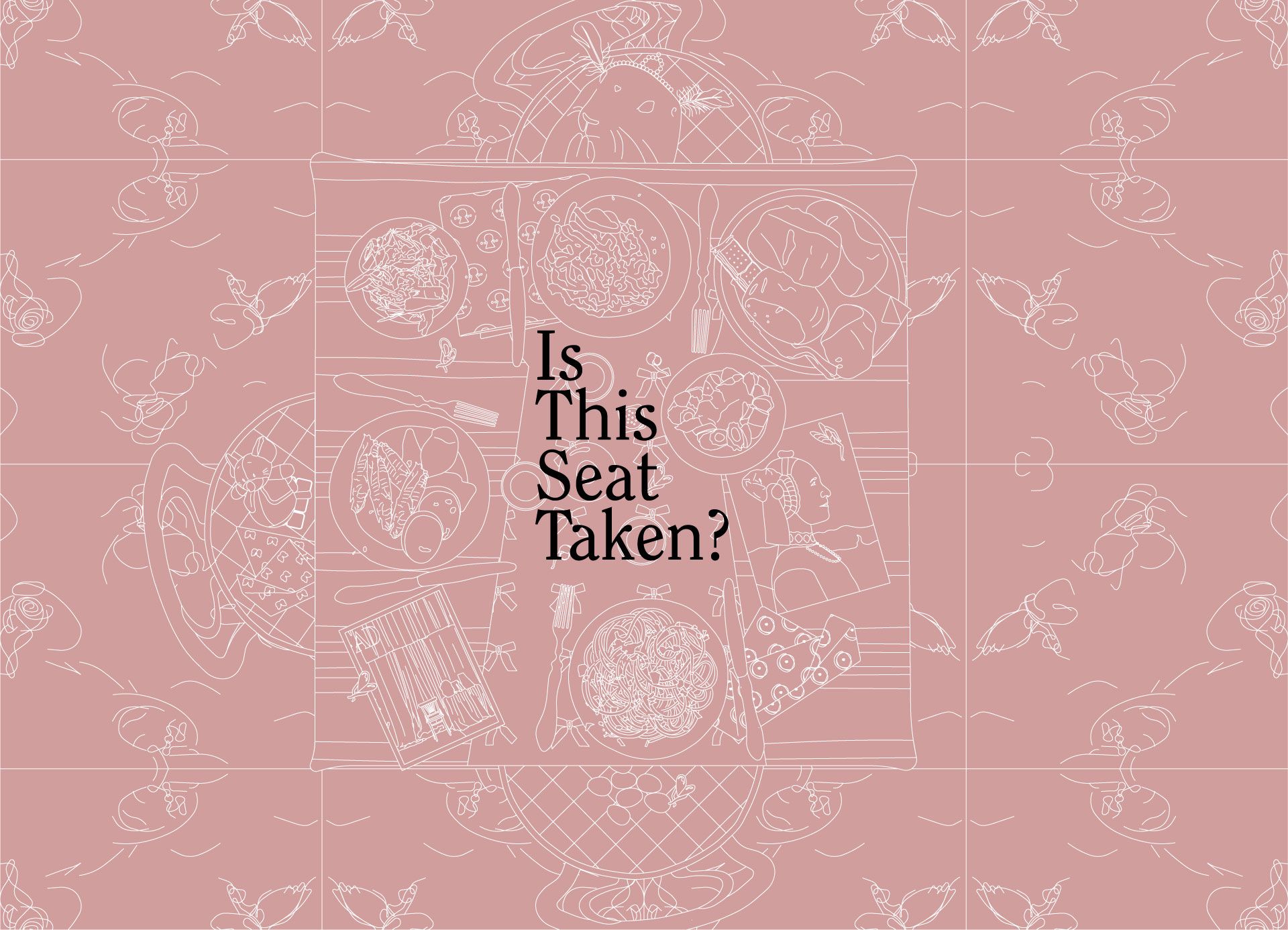
Federica Zambeletti To counter the sound and fury of Milan Design Week, we also launched the first season of LESS NOISE — a project and podcast at the intersection of design, fashion, and publishing that carved out a space for slower, more deliberate reflection. We transformed the MSGM flagship store into a cultural salon, hosting a you read me?! a pop-up where books became vehicles for ideas and research.
In a moment shaped by both real and unreal narrators, LESS NOISE… talks explored how independent publishing, architecture, design, and fashion intersect amid shifting digital, collaborative, and material conditions. Over coffee and within the intensity of Milan Design Week, these exchanges foregrounded pivotal projects and reaffirmed the enduring relevance of thoughtful publishing.
Shumi Bose We're very proud to continue building the Koozarch library, which hosts a growing selection of essays and extracts taken from some of the best and most thoughtful books published over the last year. Our goal with the library is to make available that which is otherwise held in valuable and substantial publications which nevertheless may remain inaccessible to some readers in their entirety. We hope by providing extracts as tasters of these publications, their critical contents may be more widely appreciated and shared; we are indebted to the publishers, editors and authors who have kindly allowed us to host their work.
"We're very proud to continue building the Koozarch library, which hosts a growing selection of essays and extracts taken from some of the best and most thoughtful books published over the last year."
The Venice Biennale of architecture brought forth a kaleidoscope of catalogues and compendia crafted to complement the exhibition. Several of these are featured in the library — including a glossary of water from the Pavilion of Catalonia, ‘Bodytopia’ from the Nordic pavilion; an extract from Portugal's ‘Pursuing Paradise’; future speculation from the UAE; monumental ambiguity from Uzbekistan; a look on the politics and policing of Vienna's housing sector in Austria; ‘Making Matter’ from Denmark, and the Estonian Pavilion with an excerpt from its publication, Let me warm you.
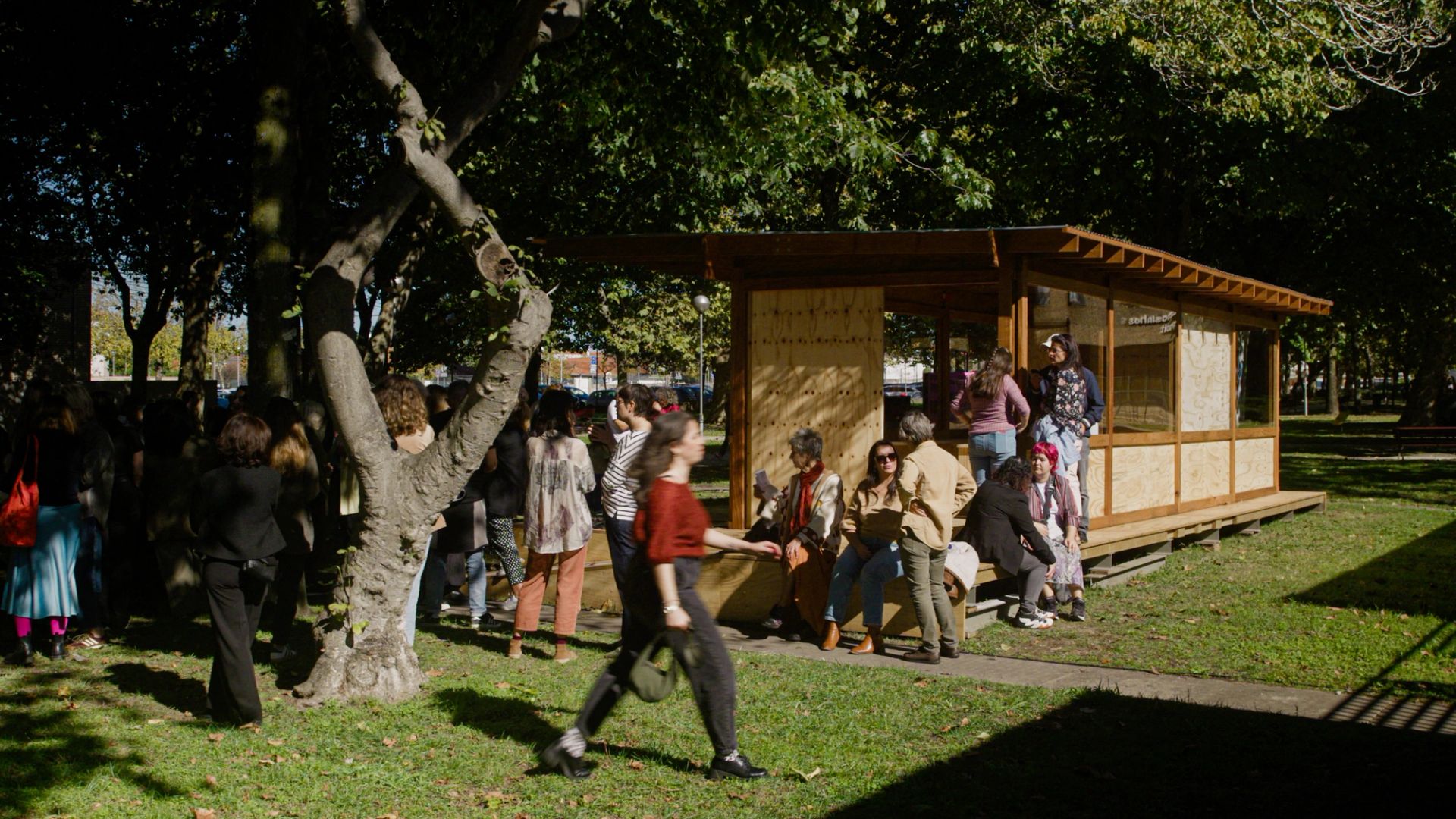
We've been fortunate to collaborate with BUILT/UNBUILT, the public program from The Um Slaim School at the Pavilion of Saudi Arabia. Curated by Beatrice Leanza, Mariam AlNoaimi and SYN architects, the public programme of the Um Slaim School gathered a diverse range of critical voices from the Gulf region and beyond, reflecting on alternative perspectives on education, knowledge-sharing and collective learning.
These voices are featured in three standalone Readers, under the title BUILT/UNBUILT, compiling conversations which took place across the public programme during for the duration of the Venice Architecture Biennale — featuring such voices as the Institute for Postnatural Studies, Bricklab, Studio Ossidiana, Shumon Basar, Noura Al Sayeh, Jia Gu, Rosario Talevi and many more. These compilations are available as PDF downloads from the Koozarch library.
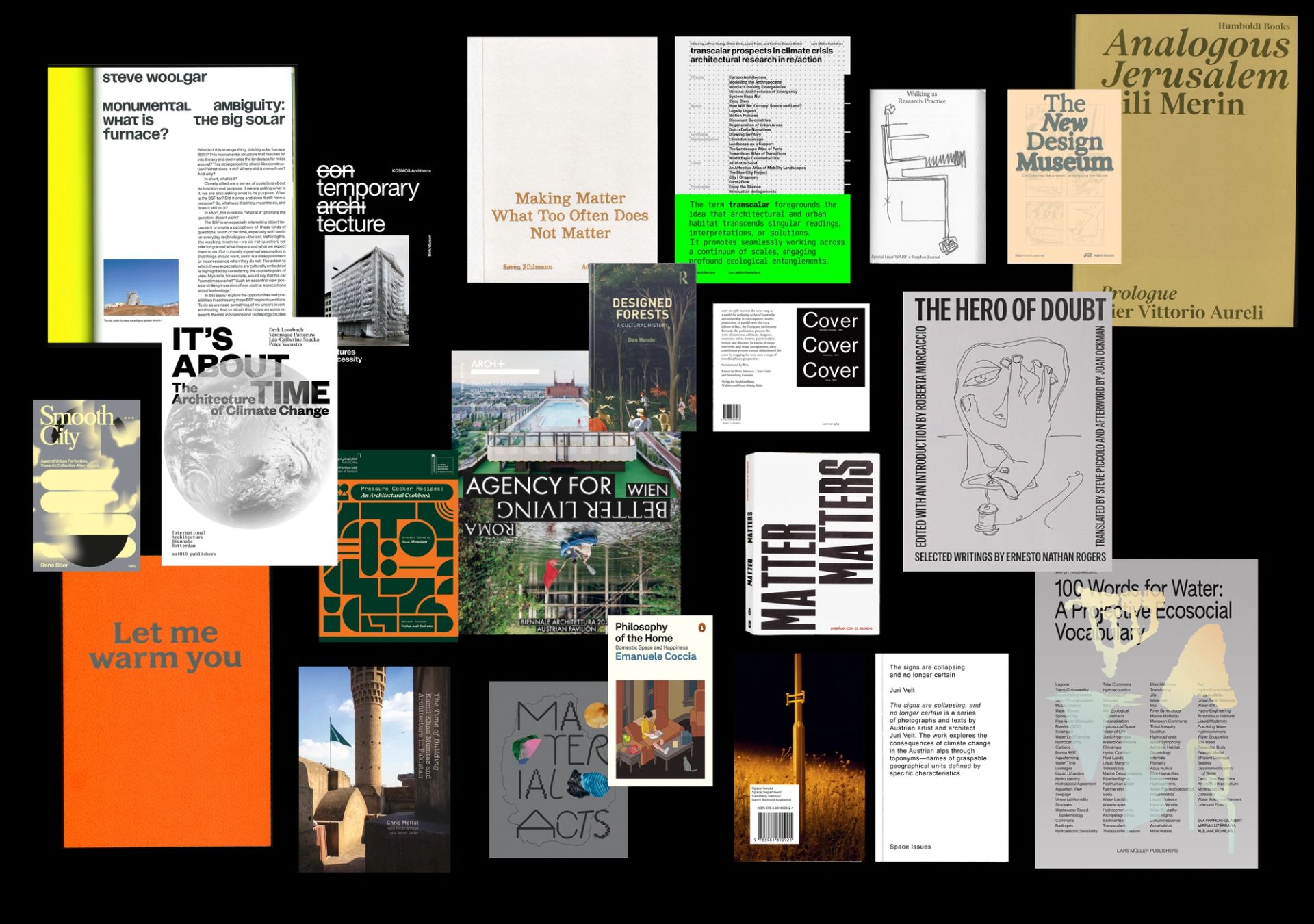
Collage of a selection of books made open access through the Koozarch Library format throughout 2025
Federica Zambeletti | Accessibility, however, is not only a matter of format — audio versus written — but also of ensuring access to discourses that would otherwise remain out of reach for those not physically present. In this regard, we were pleased to eavesdrop on, document, and hold conversations hosted across multiple international contexts: Jil Sander Design Talks at Matter & Shape in Paris, curated by Dan Thawley; the Fondation Cartier Conversations, curated by Béatrice Grenier during the Venice Biennale vernissage; the Building Architecture Culture Talks, curated by Anneke Abhelakh as part of the Albanian Pavilion; and the Assemble! Conference at the inaugural Copenhagen Architecture Biennial, curated by Josephine Michau.
These gatherings spanned a wide terrain—from material, philosophical, and conceptual engagements with design, to reflections on the museum’s role in shaping the future of architectural discourse, to dynamic exchanges on how architecture can influence cultural policy within institutional contexts.
Looking ahead, we are delighted that the Graham Foundation has generously chosen to support the production of Space Between Season 02. Through this next chapter, we will continue to build knowledge, uncover common ground, and inspire action in the real world. The upcoming season will feature voices such as Daisy Ginsberg, Lina Ghotmeh, Lucy McRae, Filipa Ramos, SITU NYC, Simon(e) van Saarloos, Will Wiles, and Jordan Whitewood-Neal, among many others.
Shumi Bose | To end on a note of gratitude: we are indebted and thankful for the many collaborations and contributions that allow the Koozarch team to bring what we feel may be illuminating to our community, in terms of spatial design, architecture and planetary concern. Most of all, we are grateful to you as our readers, listeners and supporters, for your generous engagement and responses… much more to come in 2026.
"Most of all, we are grateful to you as our readers, listeners and supporters, for your generous engagement and responses."
*Cover image still from The Terminal Beach, courtesy Anna Moreno and Bernardo Zotta
Bios
Shumi Bose is chief editor at KoozArch. She is an educator, curator and editor in the field of architecture and architectural history. She is a Senior Lecturer in architectural history at Central Saint Martins and also teaches at the Royal College of Art, the Architectural Association and the School of Architecture at Syracuse University in London. She has curated exhibitions at the Venice Biennale of Architecture, the Victoria and Albert Museum and the Royal Institute of British Architects. In 2020 she founded Holdspace, a digital platform for extracurricular discussions in architectural education, and currently serves as trustee for the Architecture Foundation.
Federica Sofia Zambeletti is the founder and managing director of KoozArch. She is an architect, researcher and digital curator whose interests lie at the intersection between art, architecture and regenerative practices. In 2015 Federica founded KoozArch with the ambition of creating a space where to research, explore and discuss architecture beyond the limits of its built form. Parallel to her work at KoozArch, Federica is Architect at the architecture studio UNA and researcher at the non-profit agency for change UNLESS where she is project manager of the research "Antarctic Resolution". Federica is an Architectural Association School of Architecture in London alumni.