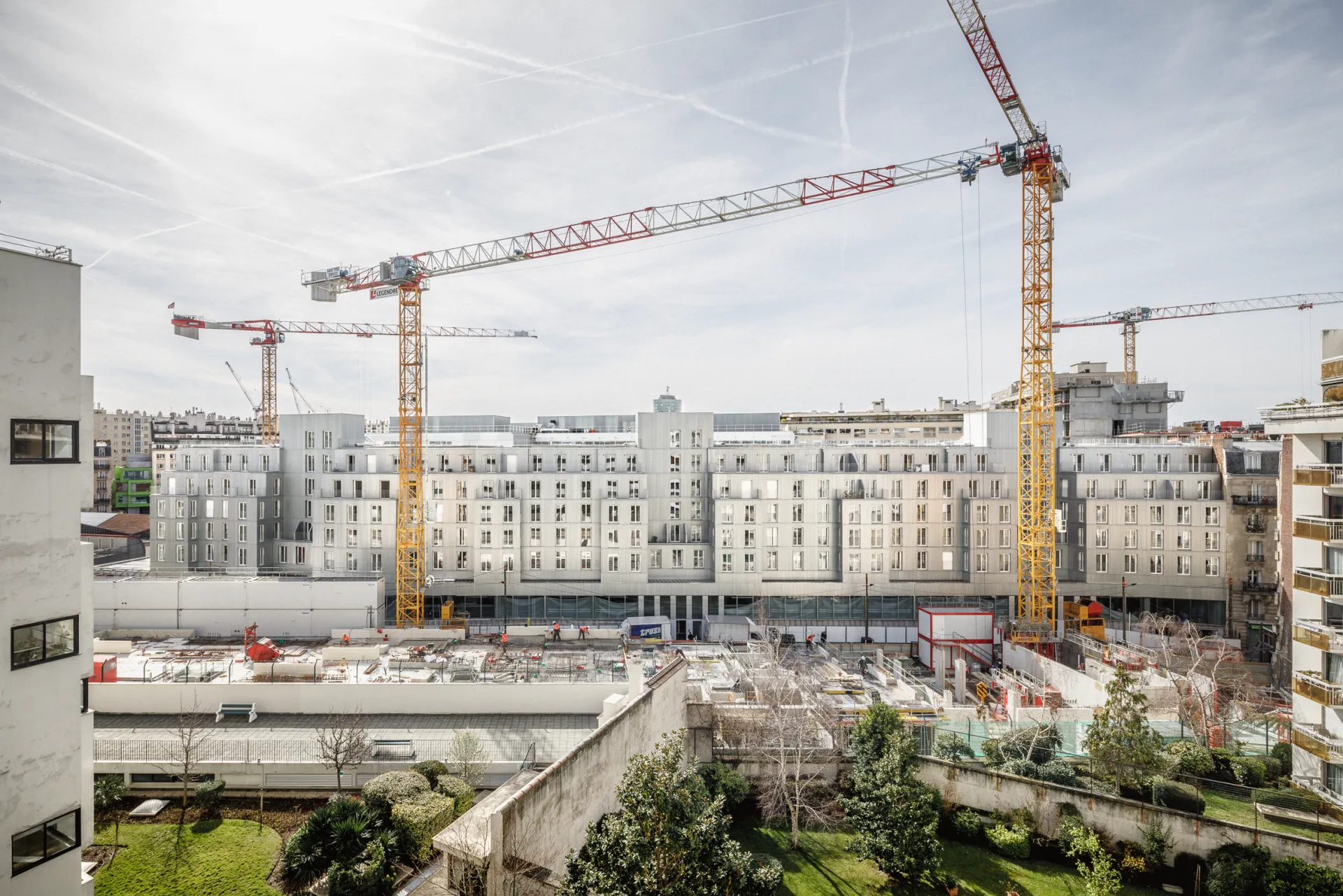
León is a city that has changed very quickly over the past few decades. With the rise of manufacturing, especially in the automotive industry, there has been a strong demand for affordable housing. Much of what has been built in response is fast and inexpensive, but often disconnected from the city. These developments tend to lack infrastructure, with limited access to schools, healthcare or public services.
The city recognised that this model was not sustainable. Instead of relying entirely on federal systems, León began to take matters into its own hands. They introduced city-backed mortgages for low income families and made inner city plots available for development. The idea was simple but important: housing should not sit on the periphery, but be part of the city, connected to its existing life and resources. We became involved through a series of workshops with the city and local residents. From the beginning, the project had to balance a number of challenges. It needed to be very affordable, it had to be built quickly, and it also had to shift expectations. Many residents were used to living in houses on the ground, so the idea of apartment living required a different kind of spatial and social approach.
Our initial proposal was quite direct. We imagined a building made from a single prefabricated concrete panel that could rotate to create variation. The logic was that one element, used in different orientations, could produce a richer form without increasing complexity. It also meant that we could simplify the construction process, almost reducing it to a set of instructions rather than a full set of drawings.
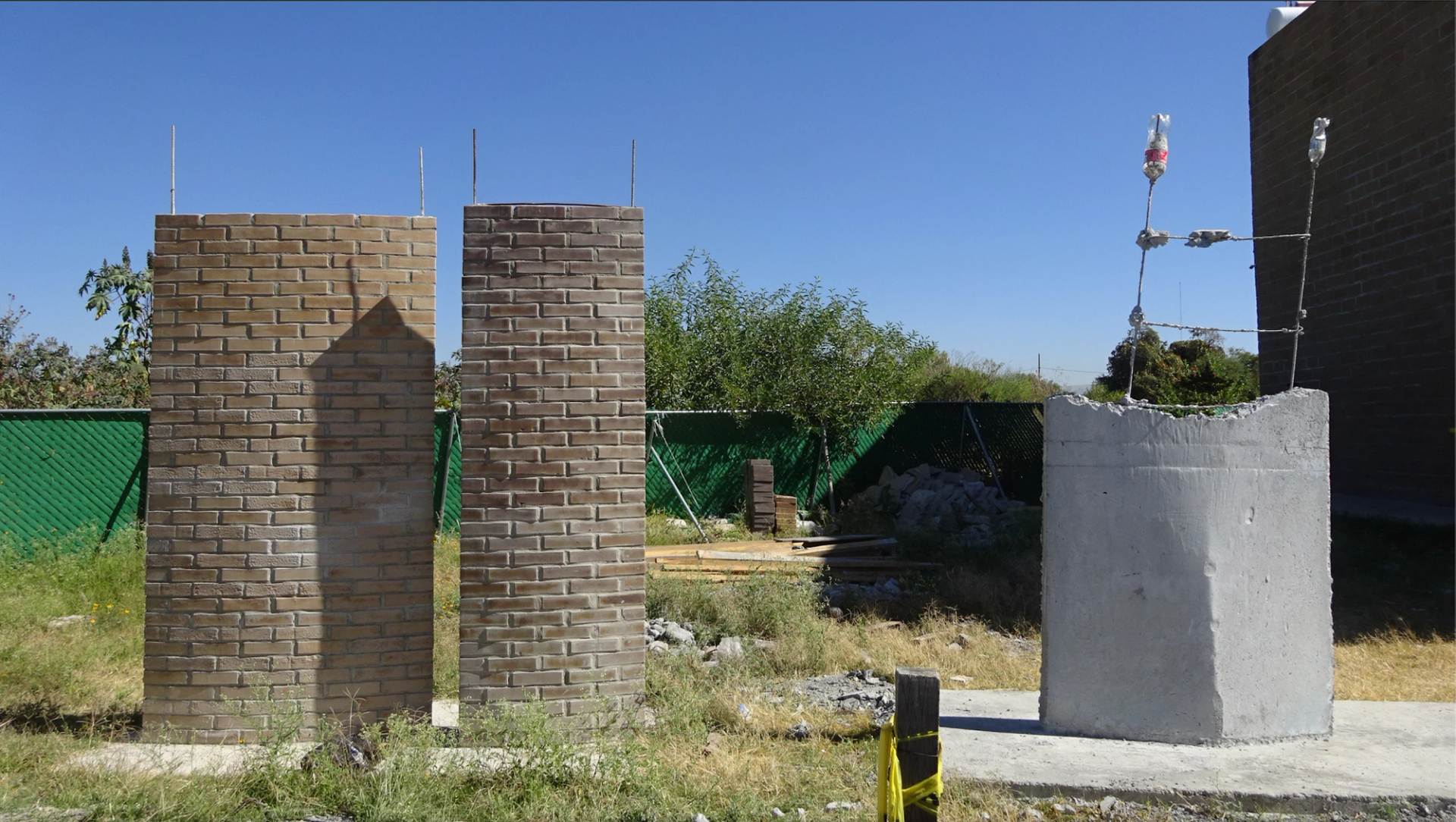
At that stage, it felt like we had solved the problem. But very quickly, the reality on the ground changed things. The local team came back to us and explained that prefabrication was not feasible. The nearest facility was several hours away, and it would have taken the project outside the local economy. More importantly, it meant that construction would not involve the community in the same way. Instead, they proposed working with brick. It is a material that is widely used and well understood locally. Everyone knows how to build with it, and it keeps the labour and resources within the community. But at the same time, brick made it difficult to achieve the kind of variation we had imagined. It required more coordination, and the precision of the original system became harder to maintain.
"At that stage, it felt like we had solved the problem. But very quickly, the reality on the ground changed things. [...] So we had to rethink the approach. Rather than insisting on the original idea, we started looking for a middle ground."
So we had to rethink the approach. Rather than insisting on the original idea, we started looking for a middle ground. That is when we turned to concrete masonry units. In a way, they sit somewhere between prefabrication and traditional construction. They are modular and repetitive, but also accessible and familiar. We developed two types of blocks, a standard unit and a corner unit. By rotating them and placing them in sequence, the façade could begin to shift and open in different ways. The system remained simple, but it allowed for a certain degree of variation. Windows could be angled, surfaces could catch light differently, and the building could respond more directly to its context.
What I find interesting is that this change did not reduce the architectural quality of the project. In some ways, it improved it. The CMU blocks created a texture that was more tactile and more responsive to light. The building became less about a fixed form and more about a field of relationships, between units, between light and shadow, and between the building and the street.
The project was completed within a very limited budget, around two million dollars for roughly seventy units. The construction process was also quite fast, partly because the system was straightforward and could be executed by local builders. Even before the building was finished, small markets and activities started to appear around it. It became a civic place, instantaneously.
BIO
Jing Liu is an architect in practice; as co-founder of the New York-based architecture firm SO-IL, she has working on a wide range of projects both in the US and abroad for more than 15 years. Liu has led SO–IL in the engagement with the socio-political issues of contemporary cities. She brings an intellectually open, globally aware, and locally sensitive perspective to architecture; projects range from artistic collaborations with contemporary choreographers to masterplan and major public realm design. Liu believes strongly that design should and can be accessible to all, and that architecture offers us an open platform to nurture new forms of interaction. To that end, Liu sees community engagement and collaboration across disciplines as central to her role as the design lead.