In a way, we could talk about every project. Because if there is no unexpected element as part of the process, then for me it's not a good project. That’s really the basis of our work: the openness of our approach, until a project is realised, allows for developments that we cannot predict. Even if the building is complete, I'm focused on finding ways to allow the situation to remain unstable — for example, how a particular materiality will develop in space. I think that's interesting.
For instance, I was thinking of the Pearl Museum in Bahrain, which is now complete; it carries this approach in the oxidation room, which is covered with silver leaf. By definition, the materiality of silver leaf is completely unstable; it was quite a madness to put that together. But then there’s the building for the MiSK Art Institute in Riyadh, Saudi Arabia — currently under construction — where we worked with cast glass: a material that we naively walked into using before realising that it has never been done, anywhere in the world. If we had really known that, we may have hesitated; eventually, it was to cost us five years of non-stop research and testing to be able to grasp the material.
For the Art Institute, the main requirement in the brief was for a daylight museum. There was also a given condition in how the building could act as a bridge or a connection in the city, between the upper level and the bottom of a valley. I like to work with materials that are fluid; materials that, when I start working with them, are as yet formless. Form is imposed by constraints, or by the way a material flows, how it sets and hardens. I think a lot of people think that I love form when they see my work, but I really do not like to define form by myself. I build an engagement with the process, rather than its outcome. That's absolutely key — I do not know the outcome. That doesn't mean it's a process driven by chance, but more about the changing conditions of materiality; we are trying to understand different states of matter, to see how and where we may intervene.
"I think a lot of people think that I love form when they see my work, but I really do not like to define form by myself. I build an engagement with the process, rather than its outcome."
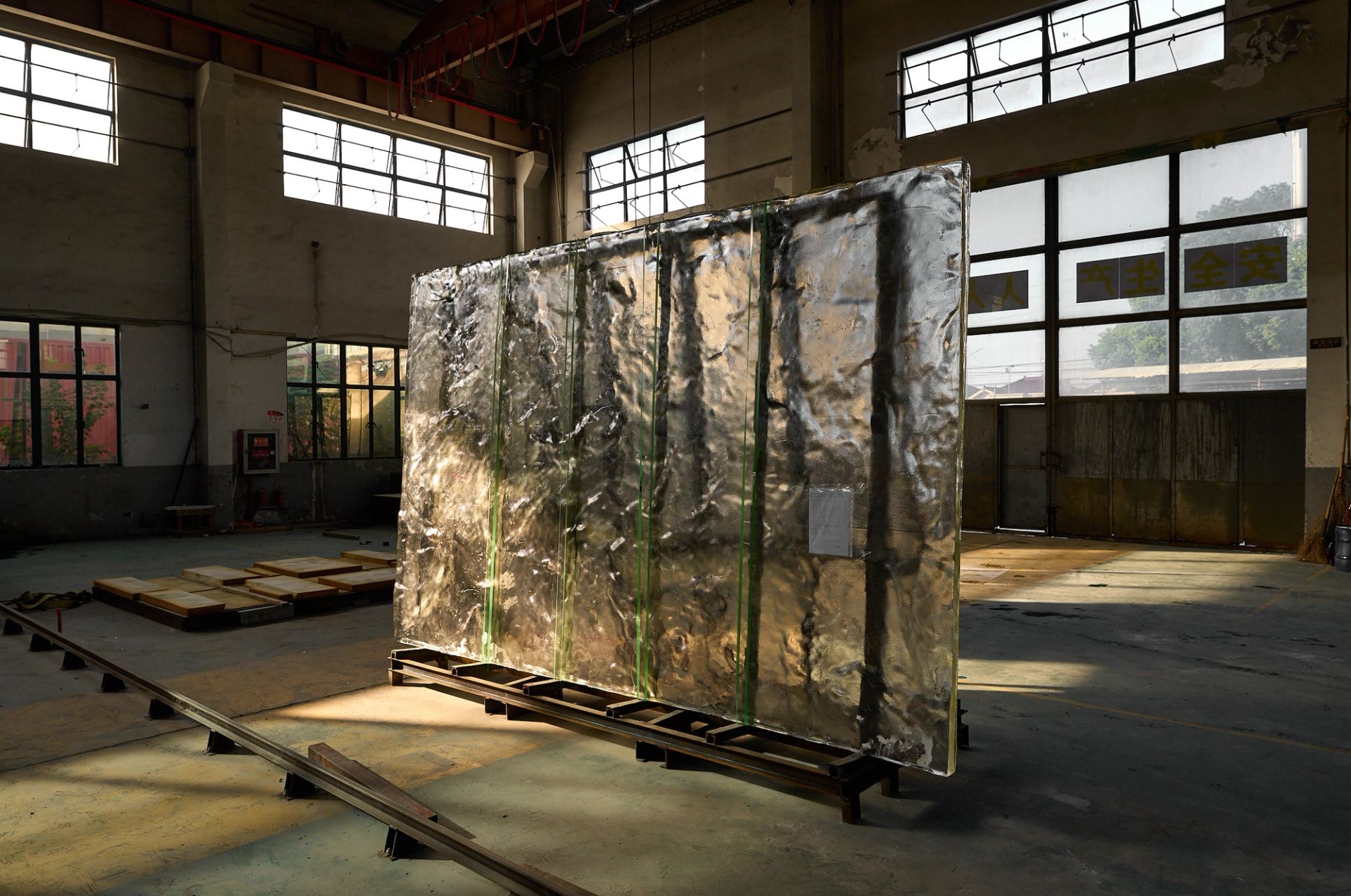
We have done this with much simpler materials, like concrete or gypsum, and with more advanced materials like aluminum. The more heat that a material can withstand, the more complex this casting process becomes, in terms of how to control and manage heat in that process. Concrete is very easy, the mix works at room temperature — you just throw it in and it sets. With aluminum, we are at 800 degrees but glass — and the glass with which we are working — takes up to 1700 degrees celsius. The moment you mismanage it, the material cracks and shatters; it’s done. But we didn't know all that; we just thought hey, instead of concrete panels, let's cast it in glass and build a facade out of that. These are not flat panels, they have relief; the form would be defined both by the process of casting, but also by the limestone surfaces on site.
Anyway, we started on this glass casting production. We had found an expert from the UK, Francis Ellington, who specialised in the casting of glass — we didn't know how small of a niche that kind of production is. Hardly any one casts glass at the industrial or architectural scale. We have cast glass bricks, of course, in beautiful historic examples like Maison de Verre by Pierre Chareau, or the Maison Hermès by Renzo Piano in Ginza, Tokyo. But our design involved ten-metre square panels: thick, solid, large panels. We started looking for producers and also the technical properties that the glass should have, what its performance should be. Of course, it's completely insane to put a material like glass in an environment like the desert — not only because of the heat, but especially in the winter, when it freezes. We have enormous thermal differences that the material would have to withstand.
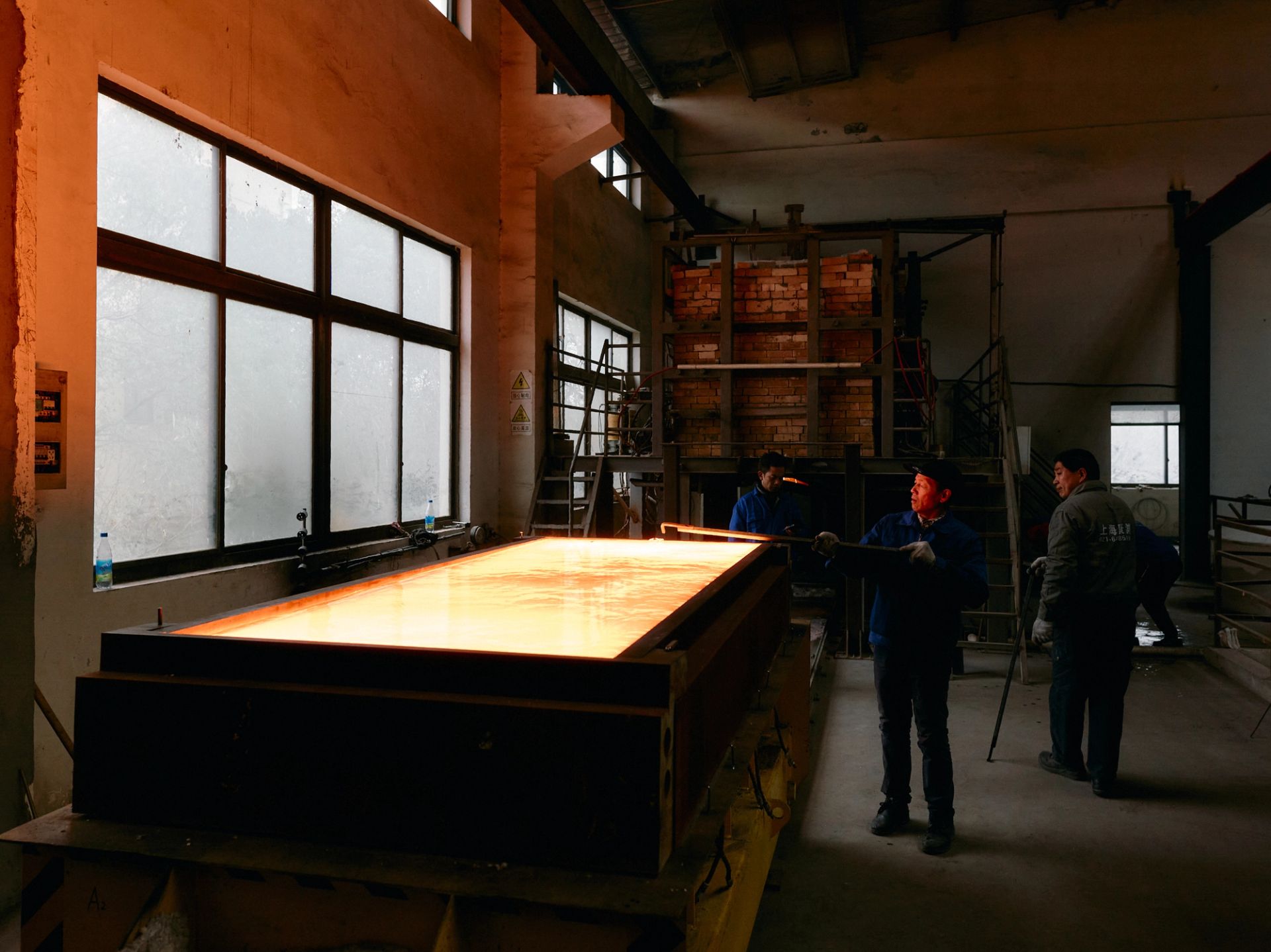
So we had to consider the enormous thermal pressure while the glass is being made, and also heat gain and material strain in situ. In short, we had to invent a new raw mixture for glass. We had to invent a new oven. We had to invent a new casting process. We had to invent a new annealing process. We had to invent a new testing laboratory process, because the glass is so uncommon that the standard laboratory tests for glass in construction cannot handle this material, all of this with no real precedent.
If something is unknown in size, but you know what you are working with as a material, you can calculate that test. Without knowing the material, without existing information, you are confronted with something new. The whole world helped to develop this process, from the Dutch glass laboratories to the British building codes that are used in Riyadh. In fact, RIBA is writing a new building code for construction using cast glass, based on this project — we’re actually contributing to British bureaucracy!
When you have full knowledge of a material, you can apply that but there is no unexpected factor. If you apply knowledge to something proven, it has a defined and set outcome — whereas knowing remains open, is still being defined. But the outcome in architecture is not a fixed design; it is a realised building, you know? The sculptor Eduardo Chillida makes a distinction between knowing and knowledge. He says, you can know something, but knowing is so open that it can still take many forms — whereas knowledge is the opposite of that. I find that very beautiful, and my interest is also to work in that field of knowing. It comes with a lot of openness, but also quite an intense or precise engagement. It's not that we have invented something by chance, that just appeared. In the pursuit of knowing, you look for the errors, the unexpected developments.
In the act of knowing, the steps that you make are consequential to that intense engagement. It took four years before we saw the first cast panel completed. At the end, the glass is being produced in China with a family glass foundry. The father started an art glass foundry because he's a sculptor, while his son became interested in producing glass for more industrial applications. Actually, the father was really sweet; when he saw the design, he said, ‘I've been waiting my whole life for this project.’ We had to invent everything with them.
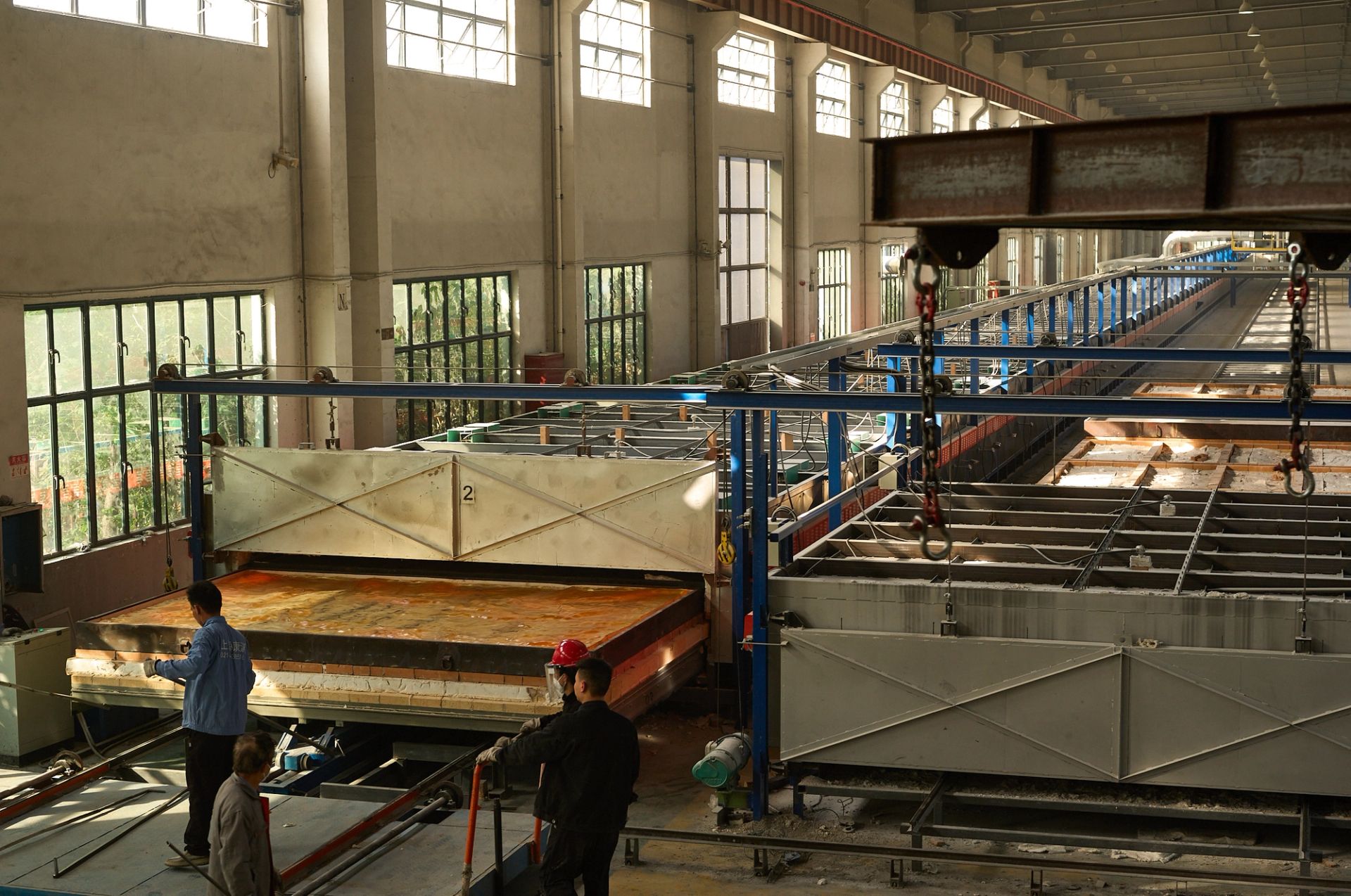
In a critical meeting where the client had to assign the producer of this glass, it came down to them and one other competitor. This foundry was only able to present a broken fragment of the glass that we wanted, because it still broke. The other had a full panel, at exactly the size we needed — but it was not cast. It was a type of fused glass, made to look like a cast. Oh, that was dangerous; the acting project director was ready to go with the second option and it was hard to oppose. I had to find a way to continue arguing for the broken piece, explaining that the process was moving in the right direction — but fused glass has a totally different performance, and the quality of desert sunlight would be lost… It took almost two more years to develop the casting, even after that point.
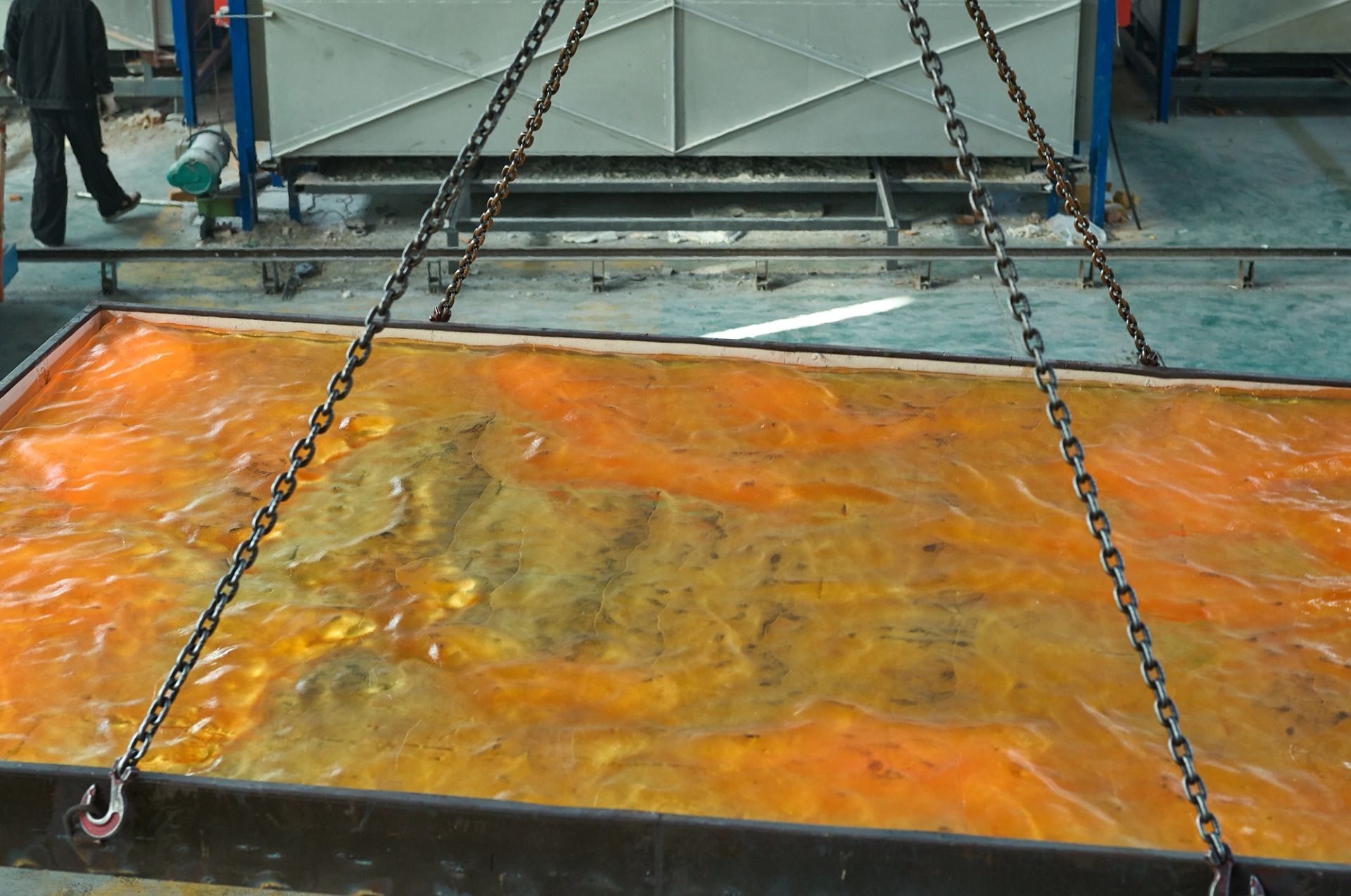
Things finally started to fall into place when the first unbroken panel came out, after we thought we had got there so many times before. Imagine this fluid mass of molten glass at 1700 degrees celsius. That's made by throwing raw material — silica and other additives — into an oven where it starts to cook and mix together. It pours out from the bottom, which is amazing to see — it's tremendously hot to stand in front of it, this very thick honey. The way you pour it defines everything about the result. You pour this super hot glass into a steel box, which you then have to flip around, otherwise it will cool down unevenly and crack. So you flip something that is at a thousand degrees and plastic in its state, then put that through the annealing oven — basically a long train track in a tunnel, where the temperature comes down gradually. That whole journey takes between ten days and two weeks, depending on thickness. Then it comes out, and that's the first time you see it — when the result is broken, you just have to start all over again. You are constantly confronted with an enormous delay by your own actions. It's a continuous process; you have to cast constantly, but only knowing what you tried three weeks ago.
"It pours out from the bottom, which is amazing to see — it's tremendously hot to stand in front of it, this very thick honey."
In terms of the really unique and intimate moments on site, the person with whom I shared that most intensely is with Remco, who works in my studio and who has been in charge of following the glass casting process. Remco has been flying to Shanghai, each time with the hope of it being the final visit: the one where the foundry has it ready. The emotional connection and release that you feel when you're all the time trying to achieve something, but you're never quite able — every time, you find something you didn't know yet — it was amazing to feel that intensity together. One day around the foundry, we were looking for a place to eat. We are in the industrial outskirts of Shanghai and we found an open spot where some plastic chairs and a wooden panel were quickly arranged, at the back of an improvised kitchen between the garbage and industrial refuse — not such an appetising environment, maybe. Then they bring out the food. The Chinese are amazing in how quickly they can provide food of an amazing quality. Some might find this horrifying, but they cooked a little turtle, which is a very symbolic thing to celebrate that moment.
Surrounded by trash, we were eating the most delicious and somehow daring food, crunching the meat out of the shell. We felt like we had finally got there somehow — to the reward of trying to keep faith in ourselves, and to trust in a process that feels like it might explode in your face. When you take risks like this, you can’t just walk out free, without consequences. This is the biggest project we have ever done, and we took the most risk; there were so many moments where everything could have gone really badly. That's the intensity, so if there's a moment where we felt the release of that tension — as with the turtle that we were munching on — that's a release that is super intense. A rare victory that we could enjoy.
"We felt like we had finally got there somehow — to the reward of trying to keep faith in ourselves, and to trust in a process that feels like it might explode in your face."
But about this moment where you feel that you have made it somehow: what I struggle with is that when a building reaches a certain point, it almost dies on you —that's where it stops. I find it very unpleasant to visit my own work; what becomes alive for everyone else is taken out of my hands, and I cannot actively take part anymore. It's not about making some ideal; I just don't want the process to end. For instance, Anselm Kiefer never signs his work, for the very simple fact that he doesn't want it to be finished. I like keeping this element of the work that is very unstable; an unfixed element in architecture that is, by definition, without end.
"I like keeping this element of the work that is very unstable; an unfixed element in architecture that is, by definition, without end."
Right now we finally have all the glass that has been cast, but we have entered a war at the beginning of March, on top of everything else. That war that the US and Israel has imposed is blocking the Strait of Hormuz, as geopolitical conflict disturbs every material process. It's not only the oil that can't get out; we can't get anything in. We got one container released — I don't know how that happened, but as a result we have two panels of cast glass fixed on site. The rest are either floating in the ocean, or held in China. Of course I have my opinion about the political situation, but that's also part of it. We were supposed to finish the whole project by June; it's a bit uncertain now but I think everyone is hopeful.
All images © Anne Holtrop Studio
BIO
Anne Holtrop is an architect and educator. Since 2014, his main studio has been based in Muharraq, Bahrain, where he lives. Recently realised projects include the Green Corner Building in Muharraq and the Siyadi Pearl Museum, part of the UNESCO-listed heritage site The Pearling Path. The studio has completed new stores worldwide for Maison Margiela, with flagship stores in London, Paris, Osaka, and Shanghai. The new MiSK Art Institute is currently under construction in Riyadh.
In parallel Holtrop holds the position of titular professor at the Accademia di Architettura di Mendrisio in Switzerland. Previously, he has taught at the ETH Zurich and the Rietveld Academy Amsterdam.