How do resource depletion, socio-economic inequalities, and climate alter-actions intertwine at different scales? How do we transform a fragmented linear system characterised by a hegemonic and excessive use of resources into a circular holistic system that holds a greater and deeper balance between communities, resources and processes? Chief Curators of the 2022 Lisbon Architecture Triennale,1 Cristina Veríssimo and Diogo Burnay tried to answer these questions through “Terra”, a three-year-long collective exploration of practitioners that are imagining a more sustainable future, where they invited eight curators to dig into several themes within four different exhibitions (Cycles, Retroactive, Multiplicity, Visionaries). In this conversation with Koozarch they explain what moved them towards this particular theme, and how the Triennale can be a place for change-making and a call for action.
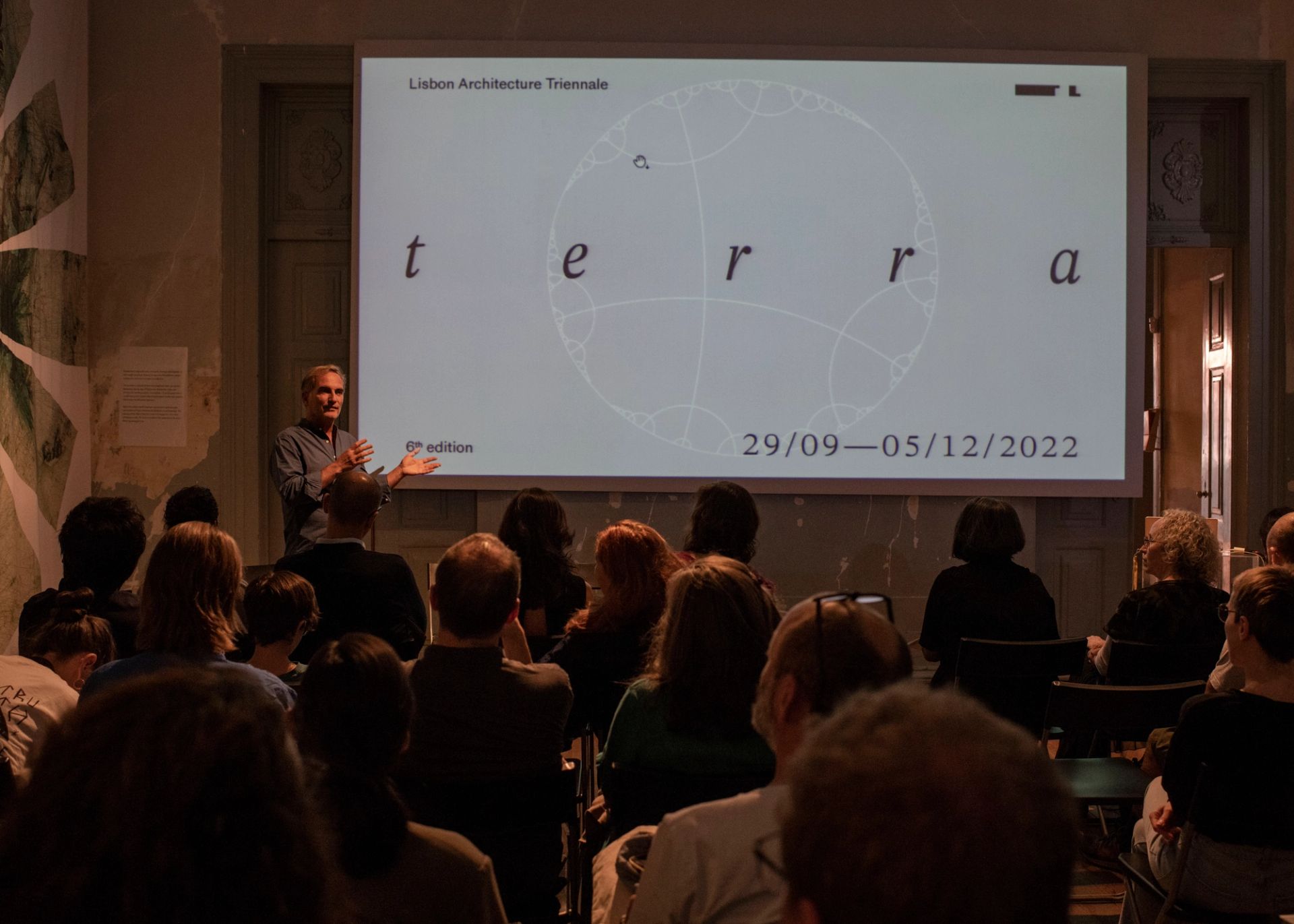
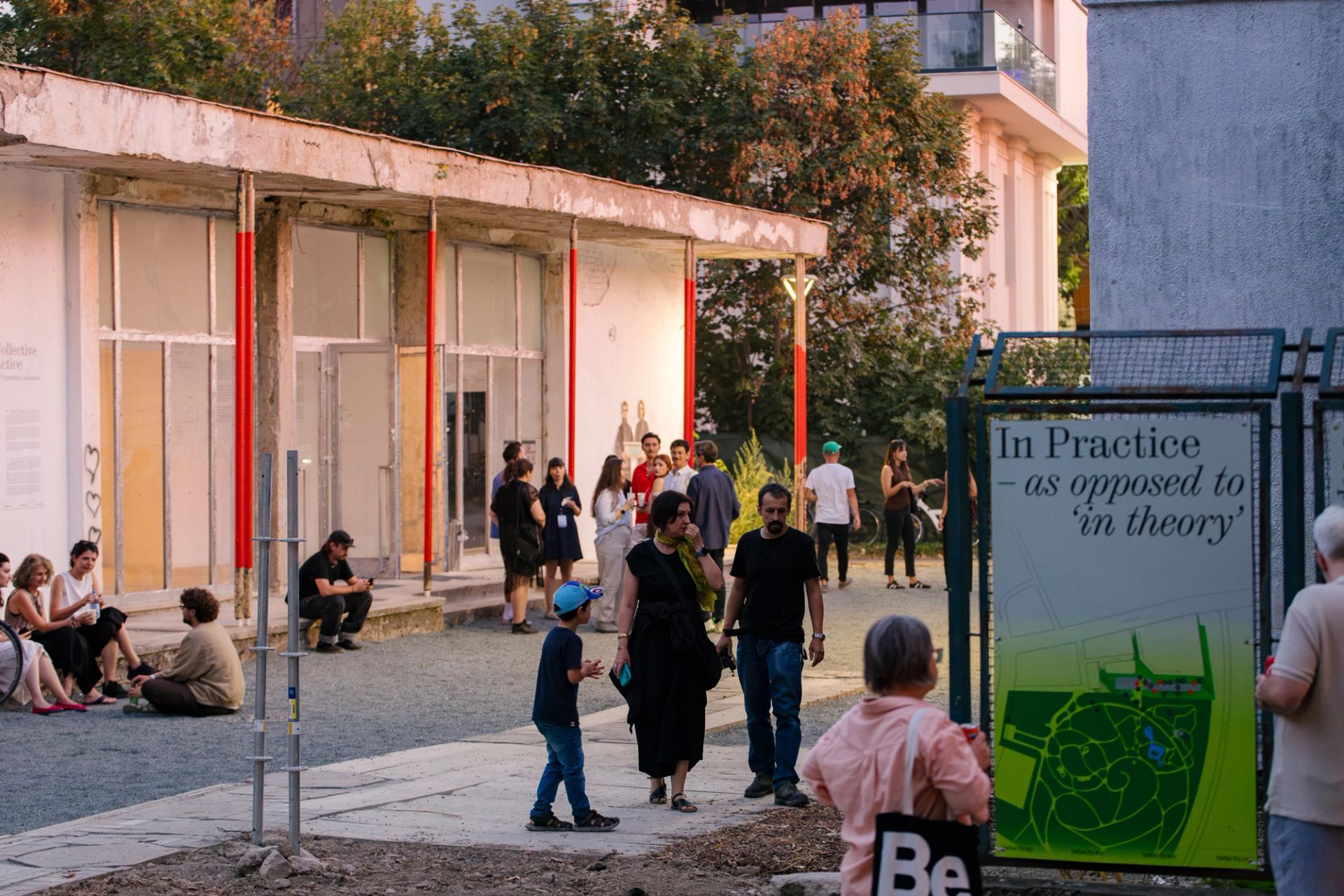
Opening Days of "Terra", 6th Lisbon Architecture Triennale 2022 © Luisa Ferreira
KOOZ This 6th Lisbon Architecture Triennale 2022 is titled “Terra”. What prompted the interest of focusing this Triennale on our Planet? How does the project approach and explore Earth at both the planetary and local scales? How did you conceive and organize the curatorial project of the exhibition?
CV | DB The richness of the taxonomy of “terra” gave us the inspiration for the title of this Triennale as it embodies all the qualities and aspects we wanted to explore through the four themes which exist as separate, yet interwoven narratives. With “Terra” we are looking at the planet, the ground, the place where we belong and the material with which we build.
With “Terra” we are looking at the planet, the ground, the place where we belong and the material with which we build.
The Triennale stems from an acute awareness of the social inequalities and climate challenges that we are facing across the planet, and the active role that architecture and the building industry can play in mitigating them through concrete actions in how buildings are designed and produced. The intricate relationship between architecture and these challenges prompted the four topics selected which span from a study of materials and processes (Cycles) to a series of future propositions on how we might inhabit our Earth (Visionaries), to explore how architecture works in very complex and difficult social fabrics (Retroactive) and how different approaches to the practice of architecture can help to heal and mitigate these dynamics (Multiplicity). From design through to its construction, this Triennale explores a quasi-activism-oriented form of practice which responds to tangible urgent data about our Earth.
Moreover, we were invited to curate this edition in late 2019 and, by early 2020 pre-pandemic, we were looking to current themes which we thought needed to be addressed to move forward. In line with the practice of architecture, which is always projected towards the future, it was important for us that the exhibition would both focus on longer lasting conditions and reject an Eurocentric vision; It rather develops as an inclusive exhibition with a variety of voices.
From design through to its construction, this Triennale explores a quasi-activism-oriented form of practice which responds to tangible urgent data about our Earth.
KOOZ The Triennale incorporates both a declaration of intent and a call to action advocating for a paradigm shift from a linear growth model (“cities as machines”) to a circular evolutionary model (“cities as organisms”). In what ways do the different formats presented (4 exhibitions, 3 awards, 3 days of conferences, independent projects and a book collection) explore this paradigm shift?
CV | DB We can already see how the circular model is disrupting the linear model at a variety of scales which span from large scale (such as the shift to renewable energy resources), to the small scale (as the prioritisation of local resources and materials). What we are seeing, just like the corporate real-estate industry, is that citizens’ engagement and awareness towards the social and environmental responsibility that developers are being asked to act upon is changing and increasing. Although these processes and transitions might at first appear as slow, especially when looking at grand schemes, it is important to observe the more agile and small-scale players as this is where the results and learning experiences are quite amazing. There are many circles in the world and the circularity of our economies will be celebrated and explored in unique ways depending on local ad hoc solutions and approaches.
We can already see how the circular model is disrupting the linear model at a variety of scales which span from large scale (such as the shift to renewable energy resources), to the small scale (as the prioritisation of local resources and materials).
KOOZ What are your ambitions for the proposals and reflections raised throughout this Triennale once the event has come to a close?
CV | DB Our ambitions are twofold. On the one hand, through the presentation of a variety of ongoing projects rather than complete artefacts, this Triennale wants to engage and inspire the young generation of architects in participating in the shaping of these processes. We want to raise their awareness towards the tremendous responsibilities and opportunities our future holds for them. On the other hand, through the variety and nature of the themes tackled, this Triennale wants to expand the notion of architecture as a profession which not only belongs to architects but rather re-frames the discipline as being about everything else that occurs around our buildings. In this sense our hope is that the wider audience can look at these processes and connect and rethink their own actions and processes.
This Triennale wants to expand the notion of architecture as a profession which not only belongs to architects but rather re-frames the discipline as being about everything else that occurs around our buildings.
Even if humbly, the exhibition wants to contribute to nurturing a necessary sense of optimism that, as architects and young designers, we need to feel regarding the possibilities that are ahead of us. I believe we need to commit to the work that can be the embodiment of very urgent processes of change and transformation in how we design. This is clearly a collective ambition and vision which is explicit within the thematic exhibition as that of “Visionaries” where we focused on shared visions which are each very site based.
Bio
The Portuguese duo combines both the practice of architecture through their Lisbon-based studio CVDB with teaching and researching. Veríssimo studied at the Faculty of Architecture in Lisbon and Harvard and has taught in Hong Kong, Argentina, Chile, the United States of America and Canada; Burna studied in Lisbon and at the Bartlett School of Architecture. Their previous collaborations as architects include Carrilho da Graça, Zaha Hadid, Maria Godinho de Almeida, Duarte Cabral de Mello, BDP with Manuel Vicente and OBS Arquitectos. Their work has been recognized with multiple awards for projects such as the Tapestry Museum in Arraiolos and the Mora Megalithic Museum.
Notes
1 Read KoozArch's exhibition review at https://www.koozarch.com/columns/shifting-systems-mimicking-the-virtuous-as-an-act-of-change