The concept of survival is developed by the philosopher Jacques Derrida as an existence between life and death, a spectral form of living death visible in the invention of Morel de Bioy Casares, the scientist recycles the atmosphere and the context of the island to create a projection of it. The fugitive discovers it through the presence of two moons in the sky indicating the present time and the one of memory.
Face to an extraordinary site, it is a question of articulating the use of various tools that go beyond the academic tools of the architect in order to reveal the invisible within a varied production process of manufacturing objects and images. The architect's intervention in a extreme situation is called into question by the fabrication of the elements of the process.
About 4 km northwest of Saint-Malo in Brittany, between the Pointe du Varde and Cap Fréhel: there is Cézembre. The island was subjected to a furious aerial and naval bombardment, thus gaining a terrible record: the most bombarded land in Europe during World War II. Traces of this disaster are still visible today, the island still infested with unexploded ordinance to this day.
The island is a place of memory that not only questions the rock but also the surrounding environment. One of the intentions is to expose the exhibition site itself by building landscape infrastructures as stations to observe and stage the landscape. They carve the sky or the rock in an atmospheric matter moving with the visitor. The devices for observing become rudimentary tools allowing the spectator to become aware of his senses and reconnect with the essence of his perception. They orient in space while enhancing the historic and ecological site of Cézembre.
Measuring between 1 meter and 9 meters high, it can be read in one block without being able to spot the parts and, at the same time, forces the visitor to look at it from a certain distance. This same distance makes the visitor a subject and the infrastructure an object reminiscent of those of the remains of the Second World War surfacing on the site. So it is the relevance of their location on the site that creates this effect that art critic Michael Fried calls "scenic" to qualify land art. These landscape infrastructures are given to visitors in the same way as beings in representation would be and in front of them the visitor is overwhelmed by the silent presence of the site and its history.
The intervention derives its raison of being from its environment and assumes that the process of walking and reading the site begins with an intimate and tactile reading of it. Differents criterias are taken into account to allow the promenade on the site. The infrastructures are adjusted to the site which sets the parameters.
The project was developed within the context of the École Nationale Supérieure d'Architecture de Paris-Belleville.
KOOZ What prompted the project?
MD “Landscape of Survival” began from a paradoxical observation: we build more and more memorials to celebrate our elders in a society where rituals are dissociated from the dead and where the strategy of human production is dematerialization towards Artificial Intelligence, bionism or transhumanity – a concept which consists in integrating the services in the body, to create a kind of improved man. At this point, there is no more need for an architect or designer since the product is inside the body and the designer of your body could be yourself or your fitness coach, your teacher, your dietitian. We could call it bodybuilding. So what is my role as an architect facing up to a self-designer?
Hans Hollein said in 1976 for the Man Transforms exhibition that “there are mainly two areas of human activity: surviving in life and surviving after life». He presents the way in which technologies favor the transformations of the body both in life and in death. Thus “self-design” is part of the transformations which prolong life after death: survival, revaluation of our body or transmutation.
We build more and more memorials to celebrate our elders in a society where rituals are dissociated from the dead.
KOOZ What questions does the project raise and which does it address?
MD Walking becomes a real act of survival where you discover the history and memory of the place by strolling through the site. This project is a critic of the human condition today. The land is uninhabitable and it should not be made habitable or else you would possibly die from it. In the tradition of the architectural thinking of Hejduk or Lequeu, it is about developing a fiction that reveals the reality when fiction is often more relevant in its factuality and ignominy and sometimes more real than our own existence. Lacan says that uncountering the reality would be so violent that no one could bear it: like a tree piercing the windshield of a car. Here the project is an attempt to represent the violence of this reality which is unbearable because of its history however magnified by its site. The project raises the question of the place of our body in front of this impenetrable territory by imagining a mental territory.
In the tradition of the architectural thinking of Hejduk or Lequeu, it is about developing a fiction that reveals the reality when fiction is often more relevant in its factuality and ignominy and sometimes more real than our own existence.
KOOZ How did the work of Derrida inform the project and your approach?
MD Survival is developed by Jacques Derrida as an existence between life and death. It is marked by the production of an archive, a memory, and can be seen in Crusoe's logbook as well as in the Zeno’s inventory of tools of the Italian architectural group Superstudio. Systematic inventorying allows the survivor to survive not only in the space in which they find themselves, which is often a hostile environment, but also in time by the transmission of knowledge and the general awareness of existence. Isolation in these landscape infrastructures is a way to develop these fundamental human values. Cézembre Island welcomes voluntary castaways by promoting self-consciousness, critical awareness, intellectual autonomy and altruism. The site and its memory then weave new relationships between individuals and their environment.
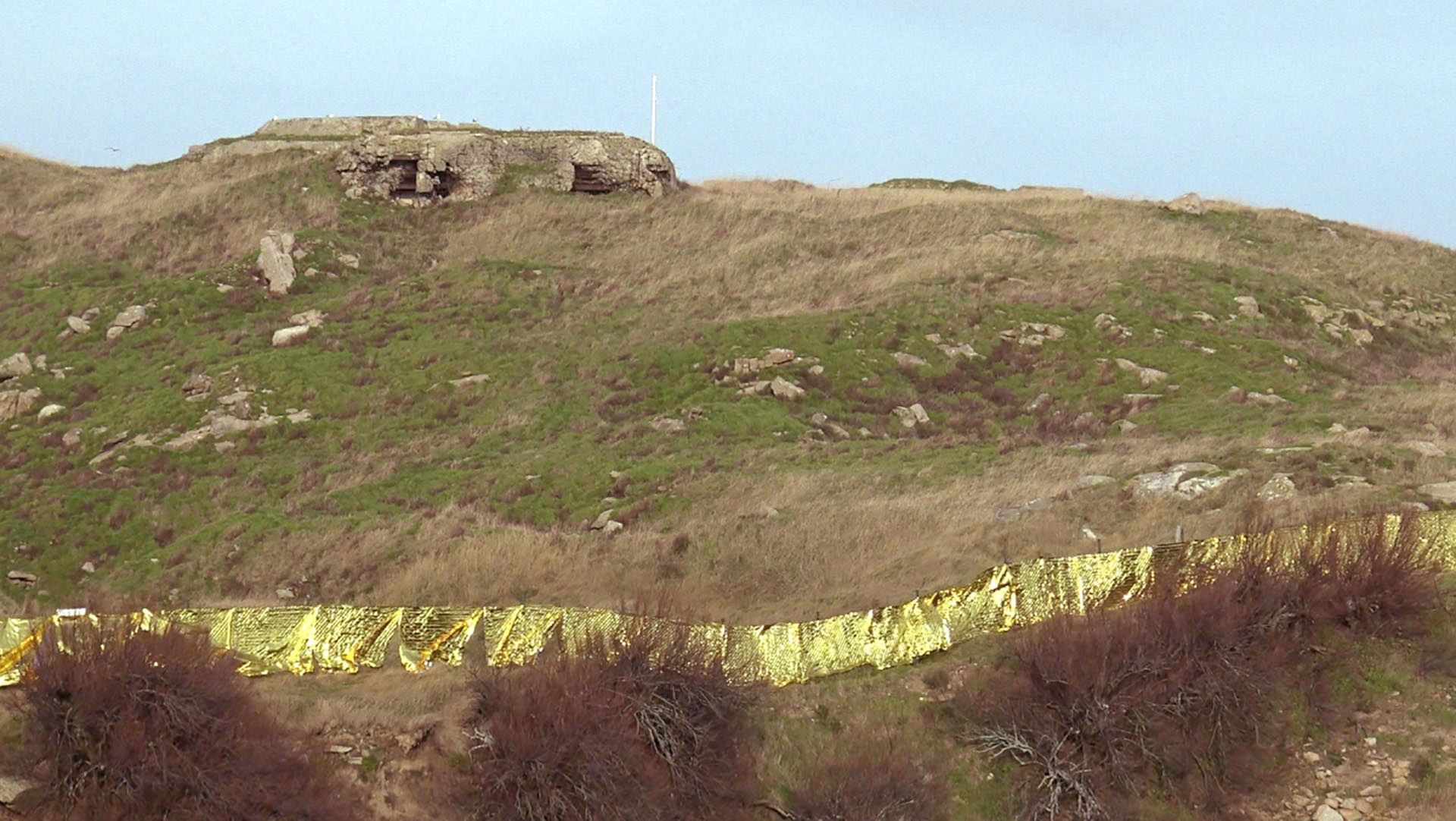
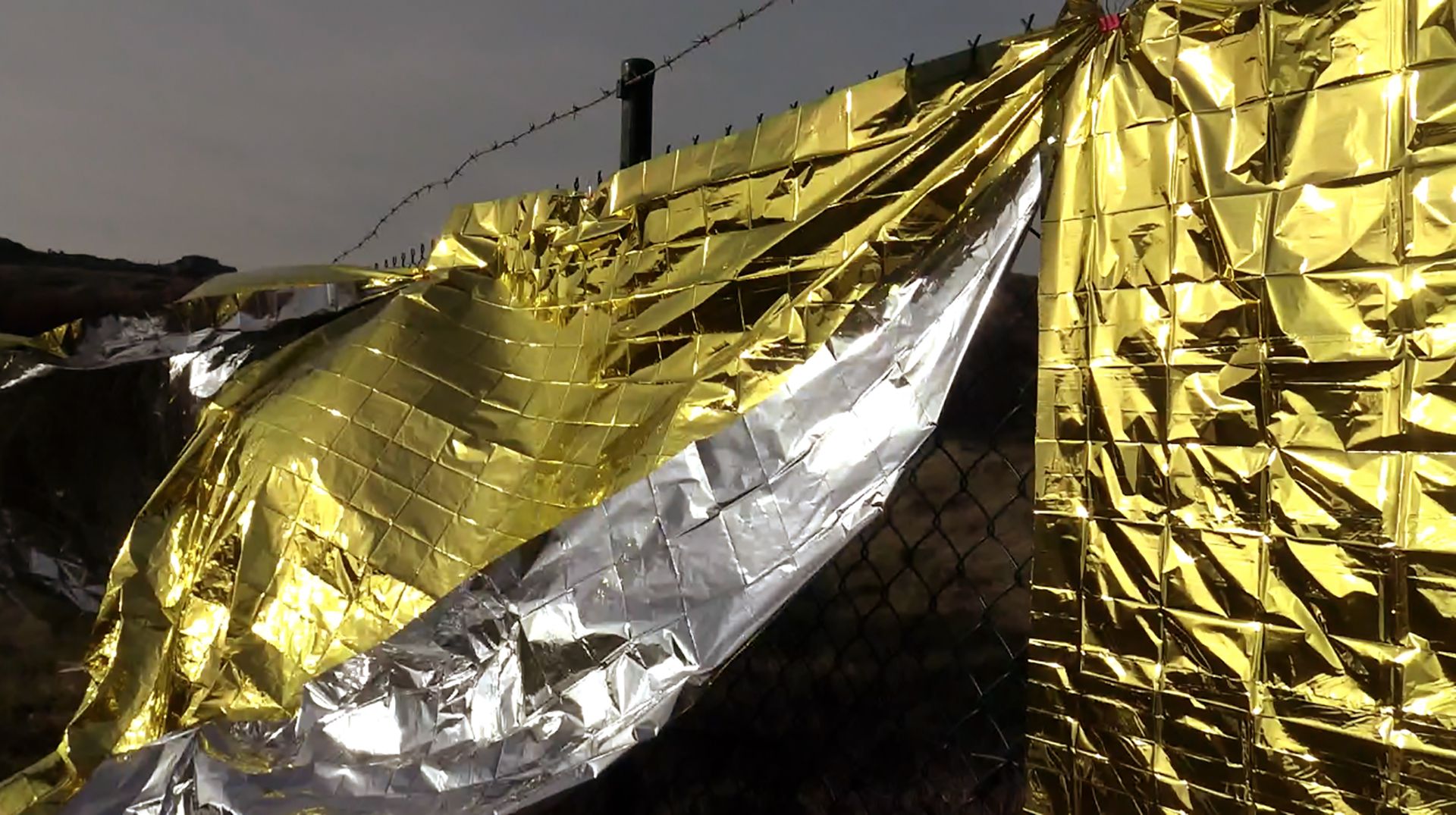
Systematic inventorying allows the survivor to survive not only in the space in which they find themselves, which is often a hostile environment, but also in time by the transmission of knowledge and the general awareness of existence.
KOOZ How does the project approach the landscape?
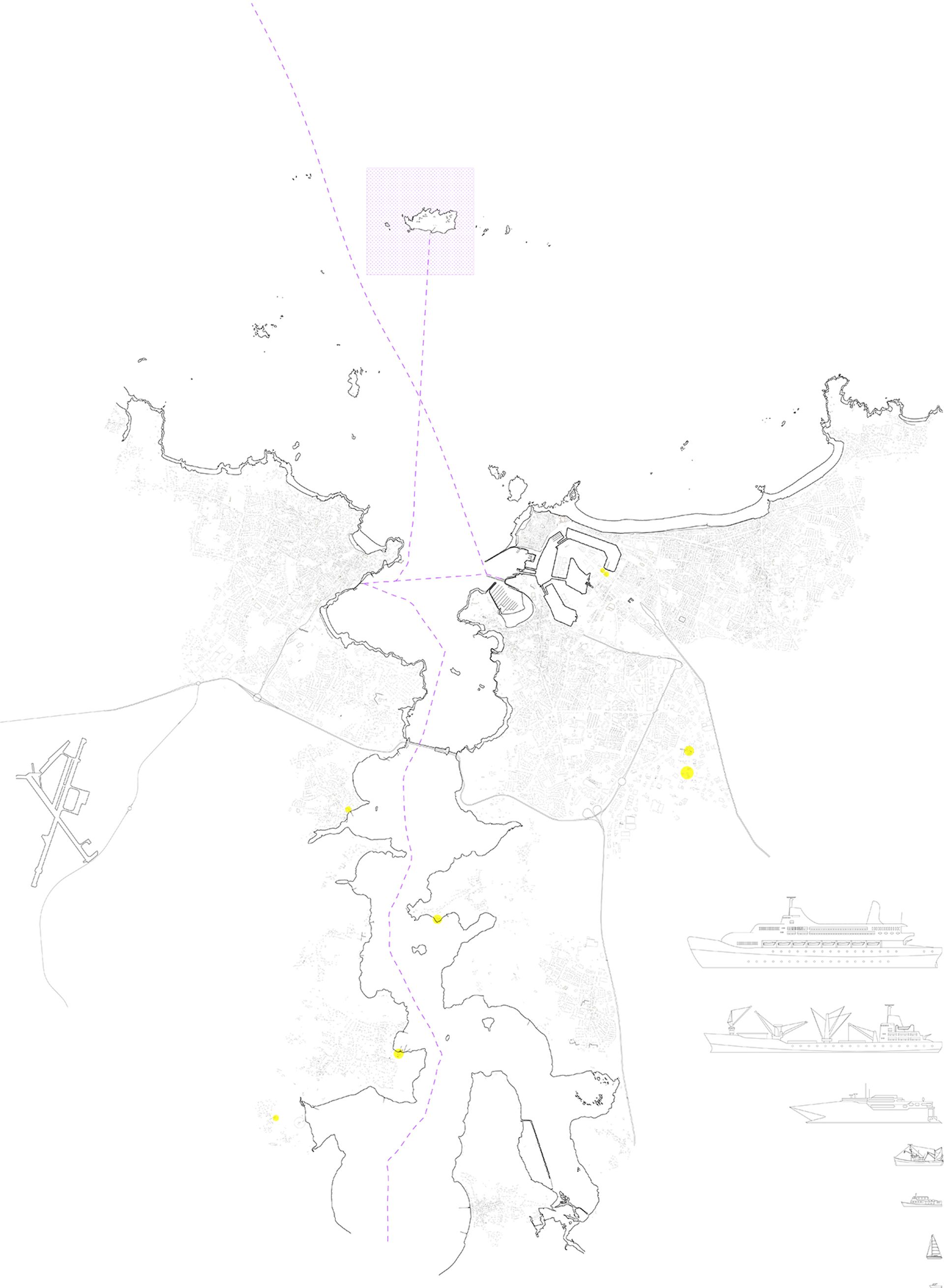
MD Located near the large access channel to the port of Saint Malo, the Cézembre site is affected by the violent currents generated both by the large tidal range that characterizes the area and by the action of the tidal power in the outlet of the Rance in the axis of Cézembre. The landscape of the Rance exposes these currents. There are trawlers, tuna boats, lobster boats and other fishing boats that now turn their backs to the sea, tossed to the rhythm of the tides.
Through these emaciated wrecks, the memories of the sailors re-emerge on these now disemboweled boats. Echoing this landscape between land and sea, it is about using the shipbuilding industry located in Saint Malo and along the Rance in order to use the steel plating of worn trawlers as skin for a new landscape infrastructure. The assembly parts are welded at the shipyard along the Rance which cannot be on the island due to the risk of explosion. The sheets are erected and mechanically assembled on the island.
The visitor discovers the site through the aging wrecks that recount the landscape from the Rance to its ultimate advance: Cézembre. One would expect a totally barren island, but it is not. The original flora has given way to nitrophilous species that manage to cover almost all of the island's grannit, martyred by tons of explosives, napalm and white phosphorus.
This artificial topography shaped by horror naturally puts on a show, with a certain efficiency, in these points of view, we travel closely to the traces of history. From the altimetric surveys of the hilly area, it is a question of establishing a mapping system both at the scale of the island and that of the surrounding landscape. These landscape infrastructures participate in the promenade, allowing to discover the remains of the Second World War and the bird reserve through a new interpretation of the great landscape. Each element is strategically anchored to respond to different atmospheric criteria and other specific determinants.
KOOZ What informed the type of interventions which are staged within the latter? how do these work as individual devices and as a network?
MD Different criterias are considered to allow the walk on the site. The interventions are adjusted to the site which sets the parameters. They respond to:
- structures of organization and circulation (jetty, existing pathway)
- topography (craters, ridges, valleys)
- close (remains, craters, rock, birds) and distant views (signals from lighthouses and forts, horizon)
- natural events that affect the island (prevailing wind, sound, sun)
- the low human physical density and the population of numerous birds and their nesting sites.
The void between the landscape infrastructures connects them in a network, and the position of each individual window allows a dialogue between these buildings which have different worlds by their relation to the landscape. The interventions are more to see than to be seen for itself while making the singular experience of our own perception. By entering in the network, the arrangement of the stelae makes the project a self-referential project, but by moving within it to enter the stelae, we move with atmospheric matter.
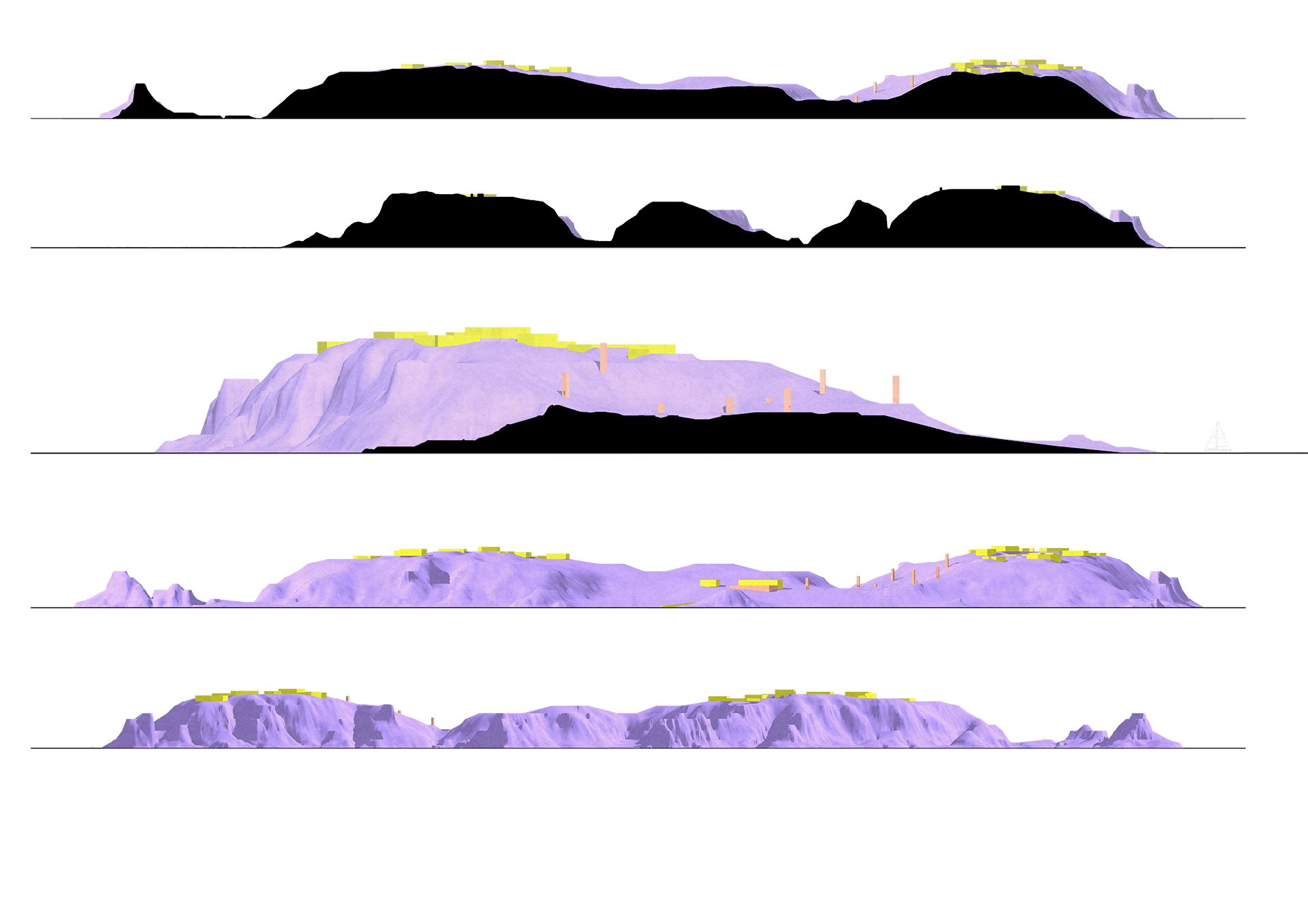
The film is used in the process as a tool to understand the sensitive conditions of the site where the plan and the section find its limits, but I used it mainly as a critical tool to generate the project.
KOOZ What role does the film play as a medium to record and stage the intervention?
MD The film is used in the process as a tool to understand the sensitive conditions of the site where the plan and the section find its limits, but I used it mainly as a critical tool to generate the project. The film helps me personally to build a world and a graphic charter that again carries on the project. In the film, a simple gesture of covering the barbed wire allows the fine golden survival blanket to become a visual tool and an imaginary link of expression of life and survival. It questions the current limit of the mined and prohibited zone of Cézembre. Stretched and juxtaposed with another, these blankets underline the topography of the site which can be observed, due to the brilliance of the material, from the mainland on the ramparts of Saint Malo. Faced with the conditions of the site, its lightness, its sound and its plasticity make it possible to exhibit various atmospheric events along a promenade where walking becomes an act of survival.
KOOZ How does the project approach the idea of preservation?
MD Today we see bare landscapes on this island, damaged bunkers, weapons melted by the heat of the napalm, more than 2000 craters, some of which are huge which bear witness to the destructive fury of war. It is not a question of turning this island into a museum, but rather of establishing a sensitive interpretation of its landscape. The new masters, with hoarse and threatening cries, are seagulls, cormorants and penguins of all sizes. Intervening in a historical and ecological heritage to be preserved and enhanced is more about treatment and interpretation than the creation of a new world. So, it is a question here of making an incessant iteration between a mental territory and a real territory.
KOOZ What is for you the architect's most important tool?
MD Language. I have talked at the beginning of the interview about the human production strategy towards dematerialization, but this reduction of material is the same for the architects and builders’s language. By reducing our architectural lexicon to describe a building, we are losing craftsmanship and know-how from workers. I think the more we have these words in our possession, the better our future story will be.