Benni Bosetto Can I just start by saying how much I love this place…
Asad Syrkett Indeed it was one of the first places I was brought to when I had just moved to Milan back in November.
Federica Zambeletti x KOOZ It's so nice to sit down for lunch with the both of you, I wanted this to be less of a traditional interview and more of a conversation; something that connects Rebecca — your exhibition on show at Pirelli HangarBicocca — to larger questions around domesticity, labour, the body, and space.
Maria Did you study the menu? Are you ready to order?
KOOZ Yes we will have the puntarelle and zucchine with mustard to share and then we take the spaghetti al limone, sogliola bollita con patate e maionese and the carne cruda con salsina all’Arturo.
Having this conversation in La Latteria seems particularly fitting, a place that feels deeply domestic, but is also resolutely public. A space which resists many contemporary ideas of design: it’s fixed, repetitive, almost stubbornly unchanged. I’m interested in how interiors condition us: how they choreograph bodies, attention, intimacy, even behavior. How do interiors and bodies mutually produce one another?
AS Benni I visited your show last night. The scale and variety struck me, but especially the physicality. I could feel the labour — your body invested in every element. I’m curious about the process, particularly the wall drawings.
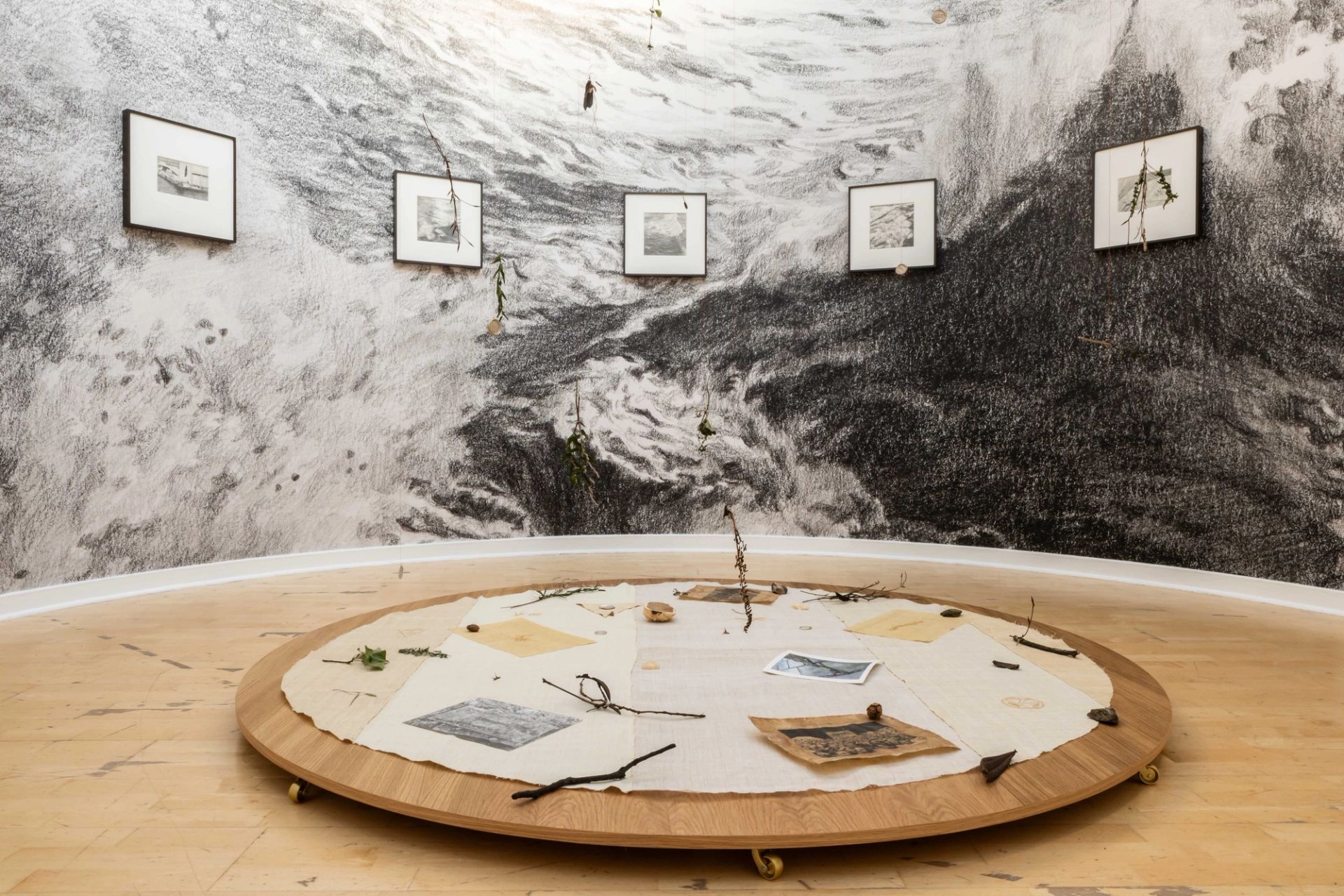
BB The wall drawings are the most physical part. They cover the entire Shed and there are three hundred of them. When I work at that scale, I need extreme focus, calmness between body and mind. The drawing isn’t one big gesture; it’s made of hundreds of elements. You can trust one minute, one hour. And if you trust one hour, you can trust the entire body of work. It becomes like a diary which is gently composed over time.
Benni Bosetto, Gli occhi, 2026 Installation view, Pirelli HangarBicocca, Milan, 2026 Produced by Pirelli HangarBicocca Courtesy the artist and Pirelli HangarBicocca, Milan. Photo Agostino Osio
AS That’s such a healthy perspective. Trusting the small span of time rather than being overwhelmed by the whole.
KOOZ You describe the wall drawings as ‘cells’. Each one exists individually and together they form a body, which is the exhibition. You enter through “the mouth”. Inside, there are organs — “the cheek”, “the belly”, “the heart”, “the eyes”. What happens when the language of the body is transposed to an exhibition space?
BB We are always in relation to space. There are no real boundaries. We think we are separate from the environment, but we’re not. When I travel far from home, my body reacts differently — to food, to emotions. The body is part of the atmosphere and part of the planet. So creating a house was a way to say that.
AS We have this idea of our bodies being so concrete, yet they are extremely porous.
KOOZ I'm interested in this relationship between the body and the home. Benni for you the house is safety, Asad in AD the house is also very much a projection, a highly constructed environment. There’s a tension between authenticity and performance.
Maria Here the zucchine and puntarelle, “mescola bene mi raccomando”
AS The work that I do is so engaged in both the relationship between the individual and their house but of course also with the images that these people want to communicate to the world. Stories that interest me most are the ones where the interior truly reflects the person who lives there — not something staged only for publication. Of course, there is artifice. But the goal is to feel “let in,” not shown something made for an audience. The best interiors feel like they are for the inhabitant first. Because there are no boundaries between image and life. Throughout the years I have seen that the interiors which are most real are those which were constructed by the individuals themselves and generally by artists, designers, architects. There you can really read the osmosis between body and space.
KOOZ I’m curious to see both of your houses...
AS I’ve only just recently moved to Milan and been in my apartment for only a few months. Before that I was in New York where I lived most of my life. It takes time for a place to feel like yours. It’s like clothes, at first they give you new energy. After a year, they feel embodied.
BB I’ve moved so many times. Houses in Milan, Berlin, Amsterdam… When I bought my house a year ago, it became a starting point for research. At the beginning I had no house, everything was in my studio. The exhibition project began from that instability.
Maria Let’s clear the table for the mains, spaghetti al limone, tartare con salsa all’arturo e sogliola con patate bollite e maionese. The sogliola is hot, eat it quickly and please make sure to eat the tartare like this, and the spaghetti should be well mixed.
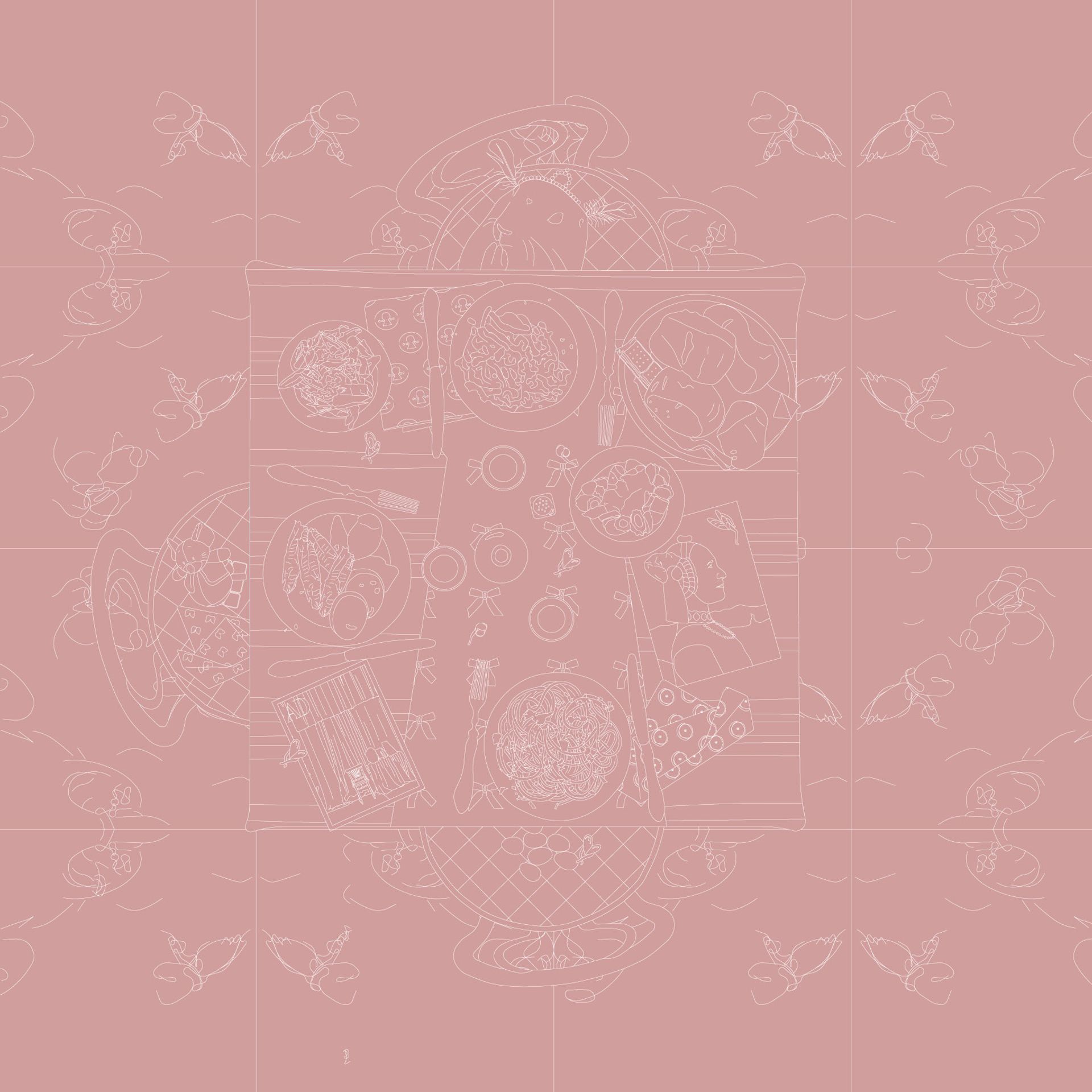
Each conversation is accompanied by a drawing of the table conceived as its imaginary map, depicting the food, references, tableware and talk shared over that particular meal. Drawing courtesy of Andrea Derni © KoozArch
KOOZ Grazie Maria. In fact, La Latteria could be considered the home of Arturo and Maria and it is so resolutely theirs, nothing here is staged but has been constructed through time. The roses on the walls have been gifted by diners; perhaps that was the price they paid in exchange for a meal. Arturo and Maria also live upstairs so there is a very close proximity between the home and the place of labour, and the door seems to always be open. When I walked into the “belly” of Rebecca and encountered the doors laid flat, it made me think of how doors normally protect or divide — and how flipping them makes them useless in that sense.
BB I like everything low. It creates a certain calmness. There’s a Japanese filmmaker — Yasujirō Ozu — who shoots from knee height. The perspective is always low, and everything feels gentle. Doors are very archetypal. When you place doors horizontally, they lose their function. They become fields, gardens, cemeteries. You have to bend to enter. That changes perception.
KOOZ It also allows for different points of entry and forms of engagement. I love the fact that it's an exhibition which also children or differently abled bodies can engage with because of this different perspective. Connecting this to the interiors portrayed in magazines like AD; are there specific heights or perspectives which are privileged and that define how these spaces are mediated?
AS Historically, interior photography was upright and centralised. Very formal. In recent years, perspectives have shifted — more angled, more intimate. Audiences are tired of overly structured images. Natural light, imperfection, embodiment — these feel more honest. In the 1960s and 70s, lamps were always on. The glow elevated the image. Today, natural light feels more authentic.
KOOZ Did you give specific instructions for photographing your exhibition?
BB Only one: emphasise the layering — the textiles, the semi-transparent walls. Depth was important.
It’s such an interesting challenge to eat and talk at the same time. I kind of don’t want to eat and just engage in the exchange, at the same time this tartare is so good!
KOOZ This brings me to the practice of editing which is central to all of our work. What do you leave in? What do you remove?
AS I think that shows up in a few different ways in design media. First, there’s the initial editorial decision: which houses we choose to show and which we don’t. That’s already a form of editing. But even after a house has been selected, the shaping continues.
There’s the styling, the way we work with the interior itself, and then the objects. Sometimes we bring objects into a space because we want to give it a certain energy or emphasis. Other times, we ask the homeowner to leave particular things exactly as they are: a pair of eyeglasses on a bedside table, a pair of shoes by the door, a half-full water glass. Those details matter enormously. How many of them there are, where they’re placed, how prominently they appear in a photograph. All of that shifts the feeling of the space. It changes the energy. It changes what it feels like to inhabit it.
For me, the ultimate goal is to give the audience some understanding of what it might be like to actually be there. And the objects that truly belong to the person who lives in the space are often what give it the deepest sense of authenticity. They’re evidence of use, of presence.
But there’s also an intense level of editing behind even those gestures. We decide what stays and what goes — sometimes as late as post-production, during retouching. We adjust saturation, tone, contrast. We decide how warm or cool the light feels. Each of those choices is editorial. And all of them shape how someone, who may never physically visit that home, experiences it through an image.
KOOZ In Rebecca, once you start paying attention to the objects, you really enter another layer of the space. There’s the larger composition — the rooms are defined by textiles but then suddenly there’s something small and unexpected, like a Rubik’s cube, or a piece of jewelry, or a tiny personal object. It becomes incredibly layered. How do those objects help construct the narrative of the space?
BB In my work, objects become charged by proximity. Small sculptures, photographs by other artists — such as Cuoghi Corsello and Riccardo Banfi — they gain new identity within the ensemble. The house is a body. The objects are organs. They empower each other.
"The house is a body. The objects are organs. They empower each other."
KOOZ Rebecca is extremely rich in references. How do you work with references?
BB We live in a bulimic image culture. Endless inputs. My exercise is to choose one, to keep it, to make a promise to it. Otherwise everything dissolves. This show is a container for those promises.
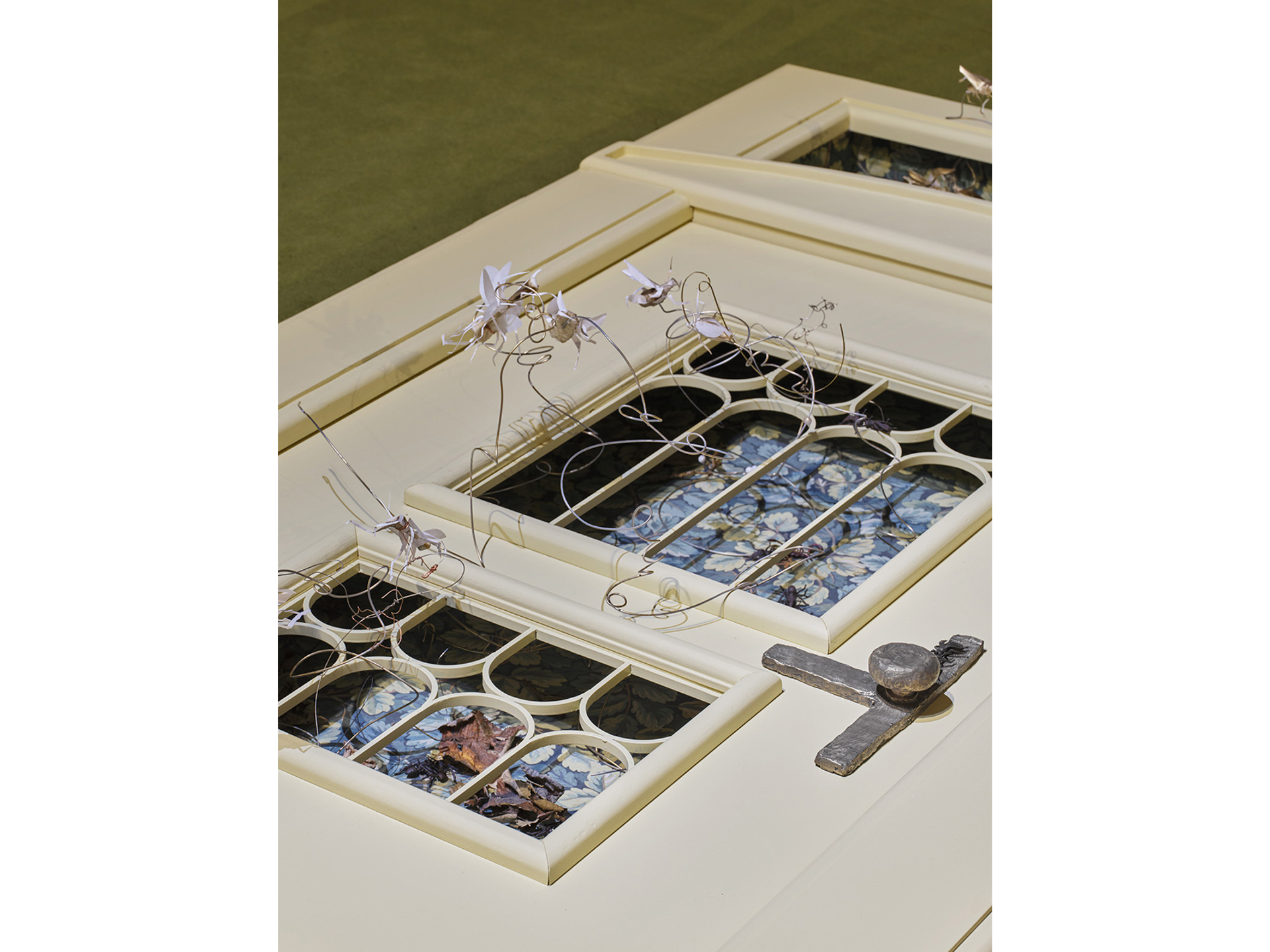
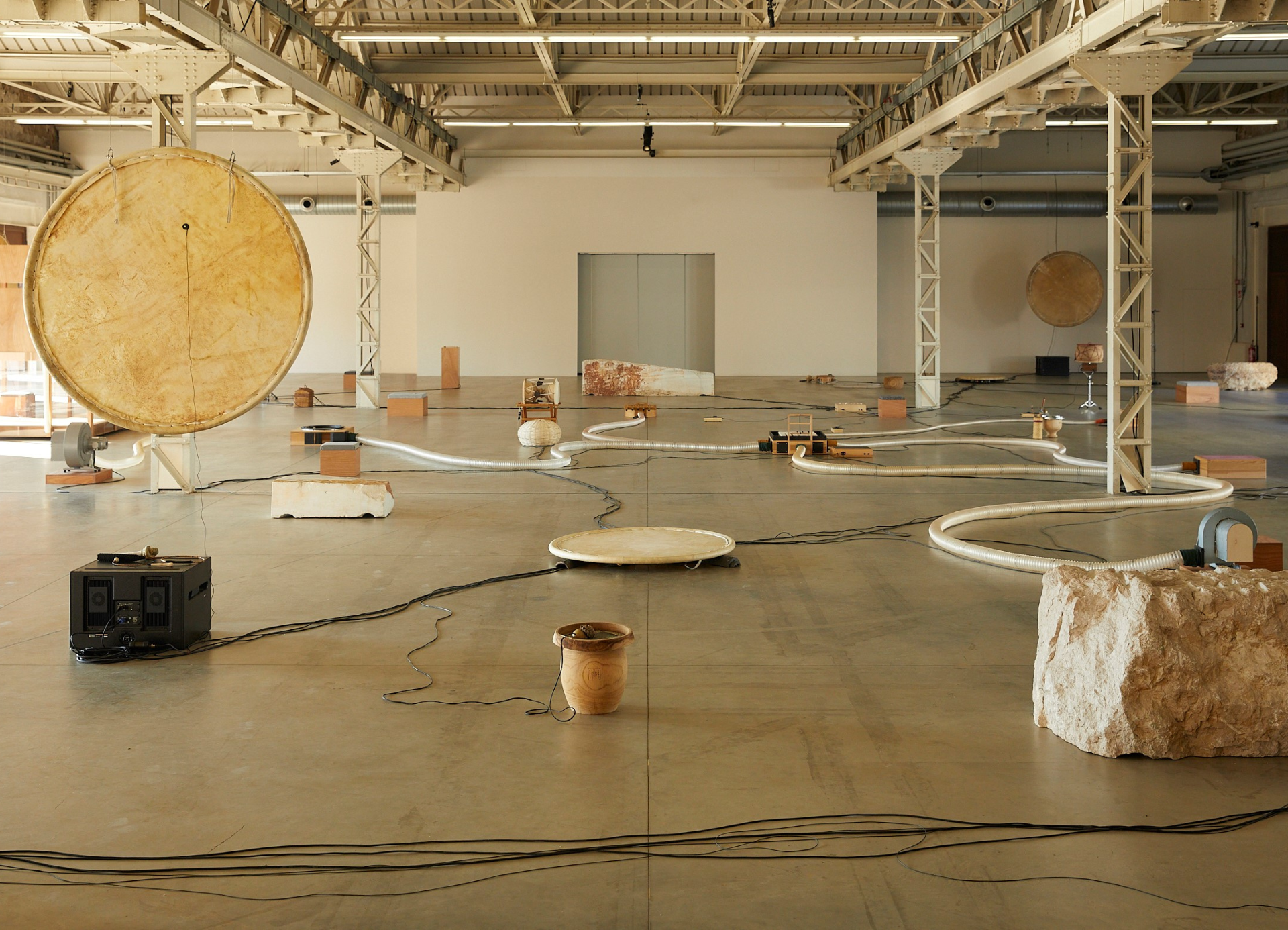
Benni Bosetto Porta sussurri (particolare), 2026 Installation view, Pirelli HangarBicocca, Milan, 2026 Produced by Pirelli HangarBicocca Courtesy the artist and Pirelli HangarBicocca, Milan. Photo Agostino Osio
KOOZ Digestion takes time. You can’t process everything at once.
AS When you move into a new apartment, that digestion period is so important. It’s the time when you begin to understand how you actually want to be in that space, not just how you want it to look.
But because we live in such a distracted world, and we’re constantly consuming images of finished interiors, it’s very tempting to feel like you have to arrive at that “resolved” point immediately. There’s pressure to complete it, to style it, to make it coherent right away. And in doing that, you risk skipping the slower process of discovering how you’ll truly use the space. What furniture you want to live with, what objects you want to coexist with, rather than just what photographs well.
That connects to your question about digestion and references more broadly. I try to limit how much I look at social media, especially interior design on social media. There’s been such an explosion of imagery that it becomes overwhelming and flattening. As an editor, I think it’s crucial to find references outside of interior design itself.
For example, I went to see the exhibition of Anselm Kiefer at Palazzo Reale last weekend. What stayed with me wasn’t just the scale of the paintings, though they were incredible — it was the texture. The thickness of the paint; the dimensionality. The way specific shades of gold, copper, and black related to each other in real space. You can’t experience that through a screen. Even if it’s the same image, the encounter is completely different in person. On social media everything becomes flattened, visually and emotionally.
I’m also deeply inspired by music, especially albums. An album has a beginning, a middle, and an end. It’s not visual, but it creates atmosphere and emotional narrative. I return to albums I’ve listened to for twenty years, and each time I experience them differently. They evolve with me.
I often wonder: what would it mean to approach images of domestic interiors with that same ambition? To create images that last long enough for someone’s relationship to them to change over time. When you look at photographs of your childhood home, the experience of seeing them now is entirely different from when you were five or fifteen. That idea — that an image might endure long enough to be re-experienced, to reveal something new a decade later — feels deeply important to me.
KOOZ You talk about endurance — I’m wondering how much the domestic sphere has changed in the past fifty years …
AS Domestic spaces are the stage for our first interactions — with ourselves, with our families — and they shape how we begin to understand the world.
The images we make are usually of people who have the means to construct a home as the right backdrop for the life they want to live. Whether they’re hosting constantly or simply sharing everyday moments with family, the space becomes a projection of how they imagine domestic life should feel.
The visual language changes — we see that when we compare images from the 1960s to those made today — but many of the underlying ideas about home haven’t shifted as much as we might think. Even a hundred years ago, in the 1920s, the house was already a site of self-definition and social identity. The aesthetics evolve, but the impulse to shape a home as an expression of how one wants to live remains remarkably consistent.
KOOZ And what about how a house is organised?
AS If you look at houses from the past, or even at the homes we publish today, there are real changes in how domestic space is organized and understood. Our relationship to class within the home, for example, has evolved. A hundred years ago, you had maid’s quarters, back staircases, kitchens that were never meant to be seen by guests. Those hierarchies were built directly into the architecture. But I don’t think those ideas have disappeared, they’ve just transformed. The contemporary “show kitchen,” for instance, often functions as a space for receiving guests, for pouring a glass of water and performing hospitality, while the real working kitchen is hidden elsewhere. It’s a different expression of a similar structure. So yes, the forms change, the aesthetics shift, but the underlying dynamics, visibility and invisibility, service and display — have persisted, just in new configurations.
KOOZ Whilst Benni’s physical labour in shaping the entire exhibition is on display at Pirelli HangarBicocca, within AD it’s always concealed.
AS Indeed. We talk about maintenance and labour, but we don’t show it. That’s why Benni’s show felt refreshing — the labour is the aesthetic.
"We talk about maintenance and labour, but we don’t show it. That’s why Benni’s show felt refreshing — the labour is the aesthetic."
BB In art, labour becomes language. The house is an image, but also something else beneath that image.
Nothing should be crystallised. The walls can separate. The doors can move. It’s one body, but it can transform. That’s what’s beautiful — it holds, but it changes.
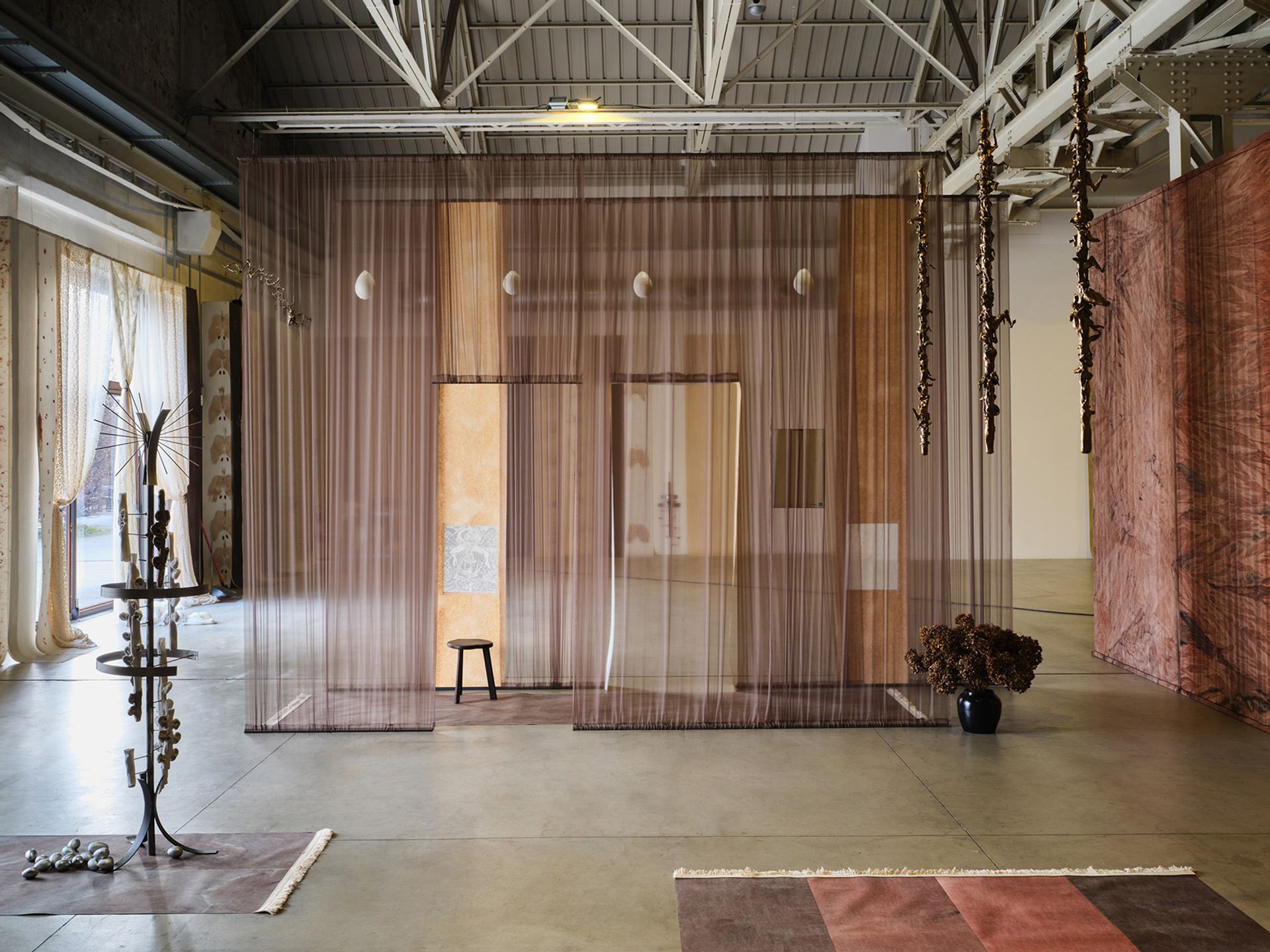
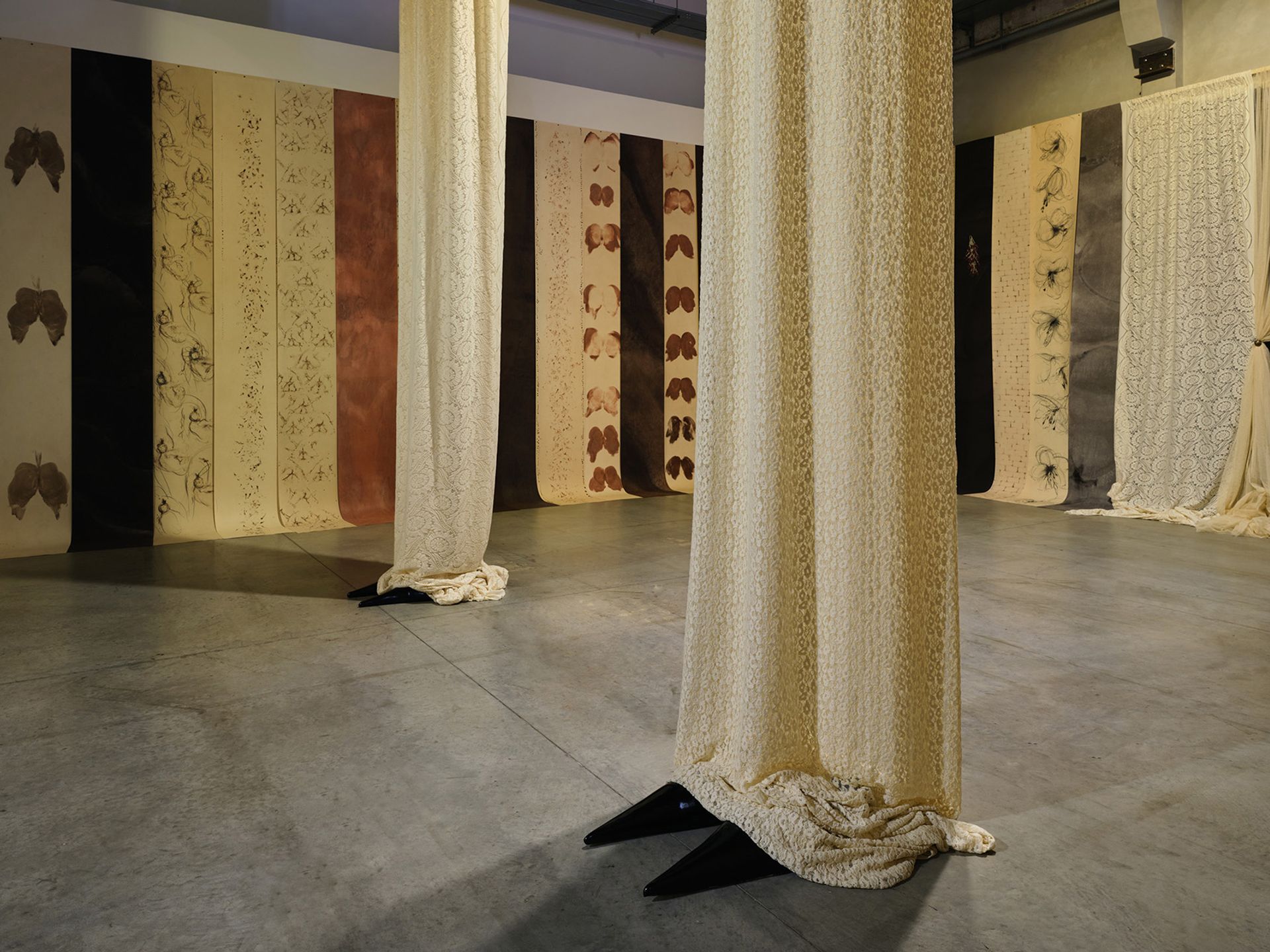
Benni Bosetto “Rebecca” Exhibition view, Pirelli HangarBicocca, Milan, 2026. Courtesy the artist and Pirelli HangarBicocca, Milan. Photo Agostino Osio
KOOZ Before the guided tour of Rebecca I sneaked back into the adjacent exhibition of Nan Goldin, just next door. It’s such an unsettling experience, to be able to immerse oneself in Nan's intensely personal archive of life, relationships, trauma, and activism. Walking back into Rebecca I then felt a sense of warmth and almost a safe harbour. Yet, the exhibition feels both safe and unsettling at the same time.
BB Nan indeed advocates for the necessity of discomfort in art and life. And although that sits in direct opposition to what I do, there is indeed a strong relationship between discomfort and comfort.
KOOZ Speaking comfort, would you like a dessert or coffee?
BB Just coffee for me please.
AS I’m good, I already had two espressos today.
BB Aside from comfort, I love boredom. I practice staying horizontal for twenty hours a day. It resets everything. Rest is physical, it’s generative.
KOOZ Boredom creates space for thought. Actually, the opposition between resting for twenty hours and then working so laboriously on the show is a compelling tension. Going back to the show, what was the genesis of the project and the title of Rebecca.
BB The title came later. I knew I wanted to work on an exhibition project which would revolve around the word and notion of “hold.” When I was explaining the project to a friend, they recommended I read the novel Rebecca by Daphne du Maurier. As I wanted to sexualize the space, to give it identity. I thought. ‘Why don’t we give houses first names?’ Rebecca means “to hold.” When I discovered that, it was confirmed.
AS A first name makes it intimate. It allows projection.
BB Exactly. You can trust it. You can enter. Before we conclude, I’d like to share a letter written by another artist and recently discovered by my friend Umberto Chiodi. I dedicated the artwork “Porta del gatto e della follia di L.C.” to it. It reads: “Loredana, non disperarti troppo. Quando avrai venduto questa casa, potrai pagarti, almeno per un anno, una dama di compagnia e potrai adottare a distanza, una ragazzina che forse verrà in Italia una volta maggiorenne.”
[in translation: “Loredana, don’t despair too much. When you have sold this house, you will be able to afford, at least for a year, a companion lady, and you will be able to sponsor a young girl from afar who may perhaps come to Italy once she reaches adulthood.”]
KOOZ That letter brings us back to the word “hold.” A house holds bodies, histories, and desires — but it also holds value. It can be sold, inherited, divided. What seems stable is in fact constantly shifting between intimacy and exchange. Perhaps that is what Rebecca understands so well: that nothing should be crystallised. A house can hold — but it can also let go.
The conversation took place over a table at the historic Latteria di San Marco in recognition of its domestic scale and convivial spirit—a setting where the shared table becomes a site of encounter, exchange, and unexpected dialogue. Founded in the 1960s in Milan’s Brera district and run for decades by Maria and Arturo Maggi, La Latteria remains a discreet institution, known for its intimate atmosphere and daily handwritten menu shaped by seasonality. With only a handful of tables and a steadfastly simple approach to cooking, it endures as a quiet landmark in the city’s culinary and cultural life.
Is This Seat Taken? (ITST) is a situated conversation series hosted by KoozArch, convening lunchtime conversations between cultural practitioners around a shared table. ITST understands the particular pleasure of ‘debates over plates’ as a cultural act — a space of slowness and attention that is by turns critical and casual. ITST holds a seat at the table for contexts where creative energies converge, capturing and catalysing the exchange of ideas through dialogue over food.
Bios
Benni Bosetto is an Italian artist based in Milan whose practice spans drawing, sculpture, installation, and performance. Her work explores the body as a site of desire, vulnerability, and resistance, constructing intimate, layered worlds where human, animal, and architectural forms merge. Through slow, manual processes and the accumulation of visual and narrative references — from literature and psychoanalysis to popular culture — Bosetto creates immersive environments that invite viewers into altered temporalities of rest, dreaming, and imagination.
Asad Syrkett is a writer and editor, and the Head of Editorial Content of Architectural Digest Italia. His work examines the cultural, political, and aesthetic dimensions of design, interiors, and architecture, with particular attention to questions of representation, power, and intimacy. Across editorial projects and critical writing, Syrkett interrogates how images and spaces shape desire and social norms, positioning the domestic as a key site where personal experience and cultural narratives intersect.
Federica Sofia Zambeletti is the founder and managing director of KoozArch. She is an architect, researcher and digital curator whose interests lie at the intersection between art, architecture and regenerative practices. In 2015 Federica founded KoozArch with the ambition of creating a space where to research, explore and discuss architecture beyond the limits of its built form. Parallel to her work at KoozArch, Federica is Architect at the architecture studio UNA and researcher at the non-profit agency for change UNLESS where she is project manager of the research "Antarctic Resolution". Federica is an Architectural Association School of Architecture in London alumni.
Andrea Derni is an emerging curator and architecture graduate based in Milan, working at the intersection of architecture, exhibition studies, and curatorial practice. He holds a Master’s degree in Architecture from the Politecnico di Milano, with a thesis examining the exhibition as a platform for political and critical debate in complex cultural and geopolitical contexts. He currently works as Curatorial, Research, and Development Assistant at DROPCITY – Centre for Architecture & Design and has collaborated with (AB)NORMAL on exhibition projects, including the XIV Triennale International Exhibition at La Triennale di Milano.