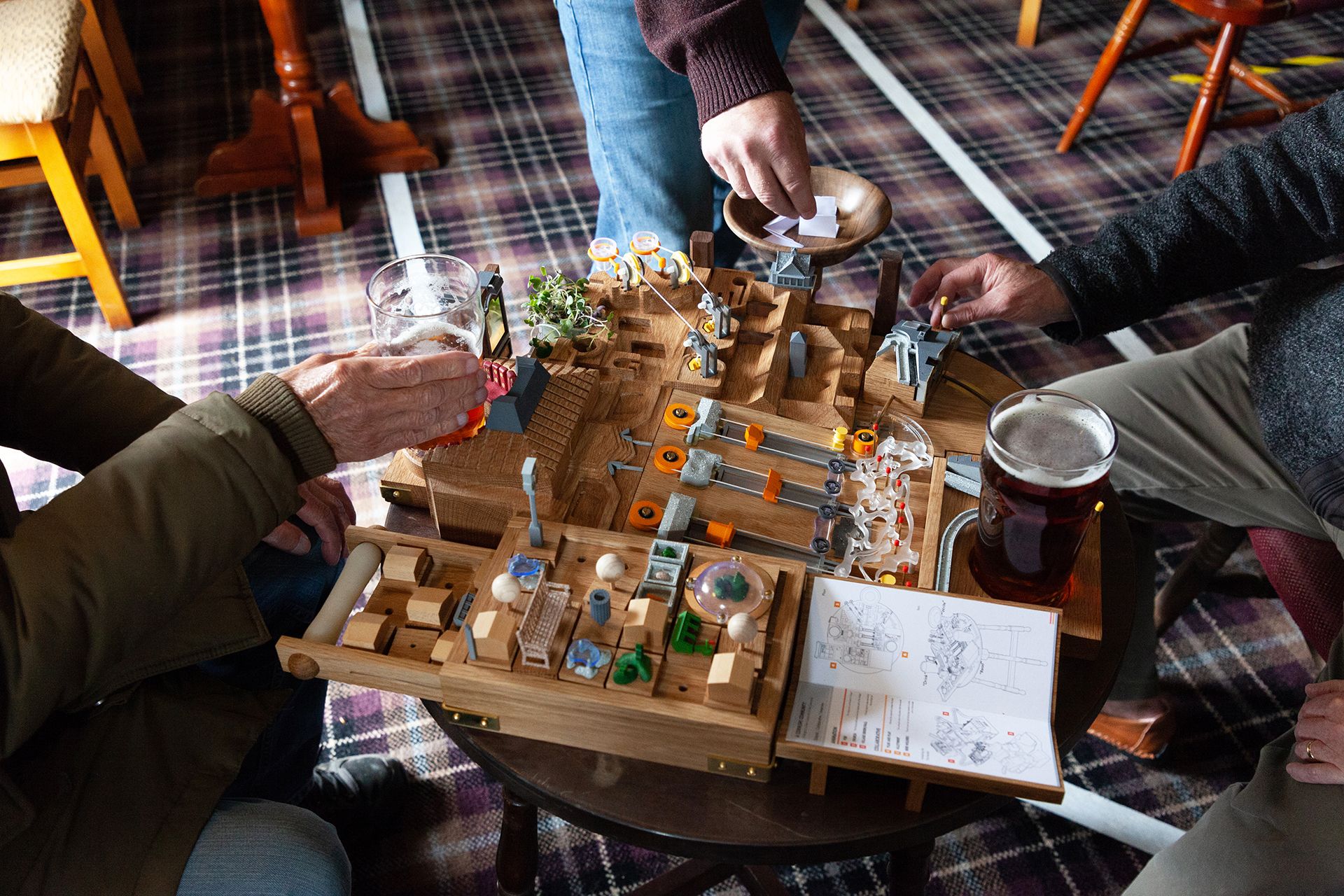
'A Corn(ish) Community’. The Cornish coastline is being increasingly appropriated by outsiders, for outsiders, specifically second-home owners. Using a pub(lic) model, a dialogue is established between the architect and community in the design of a new village for second homeowners and local residents. The model encourages collaborative design and an immersive understanding of the project as a whole.
The project was developed at the Bartlett School of Architecture.
KOOZ What prompted the project?
TL Communities in Cornwall (as in many picturesque destinations in the U.K., such as the wider south-west region and the Lake District) have long been divided between local people and second-home owners. Over the first lockdown in 2020, however, I noticed how the divide had reached a head. In light of this, I wanted to investigate what role architects could play in designing new communities which incorporate both local people and communities within the design process. Being someone who has holidayed in Cornwall since my childhood, the place holds a special connection for me. Moreover, as a second-home owner in the area, I realised I was implicated in the very conflict that I was exploring, which drove me to find the correct architectural responses to the problem.
KOOZ What questions does the project raise and which does it address?
TL The central question raised by this project was the agency of the architect: how much can/should they seek to understand a community they are designing for? What influence can they have in the creation of new communities? How can architects more effectively communicate design ideas to members of the community (through the use of engaging devices/instruments, used in an informal setting), and ultimately, how can they become better listeners? Following the work of Giancarlo DeCarlo, this project also addresses how architects can often focus on the more superficial ‘problems of ‘how’’, rather than on the more fundamental ‘problems of ‘why’’.
The project raises the question of who should be leading the design process: should it be the architect, who must convince the community of their design, or should it be the community, whose feedback the architect must listen to and then incorporate into their designs?
KOOZ How does the project approach the role of the local community in relation to the landscape and its heritage?
TL Increasingly, the Cornish coastline is being appropriated by outsiders, for outsiders, specifically for second-home ownership. As a result, Cornish locals often have no choice but to relocate to poor quality housing, often situated miles from the coastline and away from their previous communities. Paradoxically, the very people responsible for Cornwall’s burgeoning tourism industry are also responsible for tearing apart the Cornish communities themselves.
To address this issue, a new village is proposed on the banks of the River Camel in North Cornwall. Throughout history, life in Cornwall has built on rituals that bring communities together through a shared experience. The Camel Estuary has an important fishing heritage, and this new village is intended to reintroduce local Cornish people into an area where they have frequently been outpriced by second-home owners. Emulating the tidal movements of the River Camel, second homes are incorporated within the very fabric of the village (taking on the appearances of a church gatehouse, a duckpond house, and a market stall), establishing a new typology for both second home-owners and local residents. Through this seasonal movement of the village elements, none of the homes are left empty, thereby reducing the “ghost town” effect which many Cornish towns experience in winter months.
To encourage the formation of new communities, a ritualised event is enacted. Through the creation of a deployable instrument, this project refocuses attention away from the conflict between local communities and outsiders, moving towards a collaborative architecture that embraces both past and present traditions of Cornwall. The instrument is split into four sections, each alluding to current and lost industries of Cornwall – these include farming, mining, fishing, and tourism.
KOOZ How does the project explore the role of the architect as mediator?
TL This project seeks to subvert the notion of the architect as an authority figure who presents a final design to a community for approval. Instead, it embraces community-led design, which empowers the local community to make decisions which only they could know the answer to, with the architect acting as mediator between the community and the final design. All too often, community participation can become mere “tick-box” exercise, resulting in what Carole Pateman terms ‘pseudo-participation’. To avoid this, this project used a case study of the rural Cornish village of St Tudy.
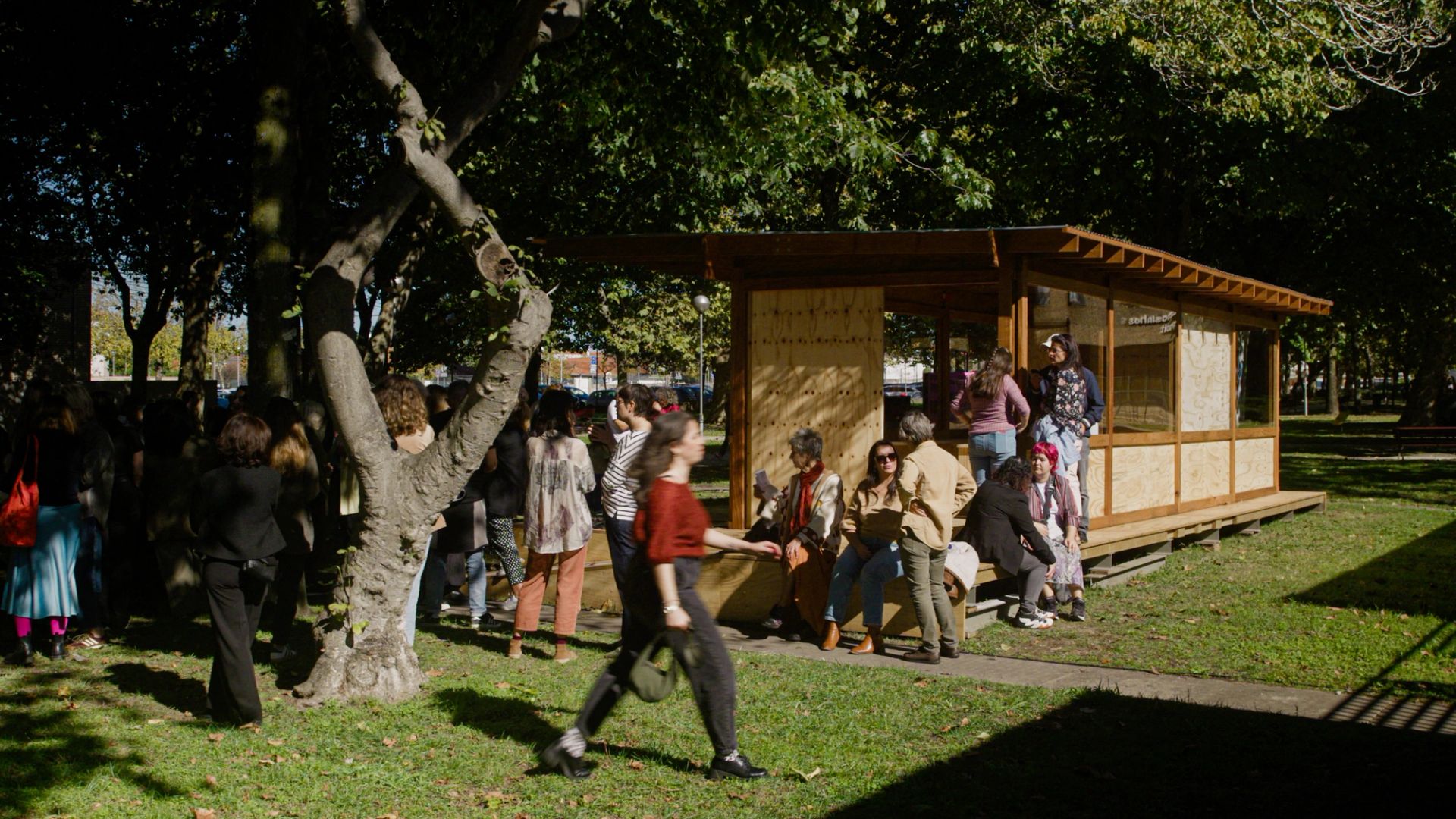
By researching the specific needs of the St Tudy residents through a range of questionnaires, interviews, and surveys, the project explores the central need for architects to be guided by the community they are designing for. This project also emphasised the importance of clearly communicating architectural ideas to the community. When interviewed, one St Tudy resident remarked upon how architecture can be ‘quite hard to understand with just plans and sections’, preferring instead to ‘see the thing in action’. Another resident viewed designs on a computer screen as ‘flat and hard to understand’, in contrast to a model where ‘you can easily see the scale of things and the heights and variations in buildings’, and, most importantly, ‘how the place feels’. Thus, through the use of a pub(lic) model, a dialogue is established between the architect and the community, thereby encouraging collaborative design in which all members of the community can have a real impact on the final design of the village. In doing so, I have sought to put Jeremy Till’s concept of architects as ‘angels with dirty faces’ into practice.
This project seeks to subvert the notion of the architect as an authority figure who presents a final design to a community for approval. Instead, it embraces community-led design, which empowers the local community to make decisions.
KOOZ What is for you the power of the architectural imaginary?
TL For me, the architectural imaginary means the ability to find new ways of communicating architectural ideas to people who are not in fact architects, but who will be inhabiting the places architects have designed. My project has imagined new ways of including people into the design process, and also developed new ways of communicating complex architectural ideas in a compelling and captivating way.
Ultimately, my project highlights that an architect must have an open and receptive mind when entering into the design process. This allows architects to be guided and mediated by the needs and wants of the community they are designing for, rather than resorting to a fixed and closed-minded approach to architectural design, which fails to meet the future needs of the community.
Bio
Tom is an architectural designer, model maker, and visual artist from London. His work explores collaboration, rurality, community-led architecture, and shared experience through rituals. Tom uses a variety of media to create an immersive, interactive, and collaborative architecture. Through utilising models as the starting point of his projects, new hybridised outputs are achieved – which are presented through either animation, drawing, or film.
By understanding both the role and agency of the architect, Tom challenges the limits of what architects can influence when designing for communities, as well as the channels through which they are able to understand who they are designing for. His new work continues these themes as he looks to design more proposals for communities through collaboration and communication.