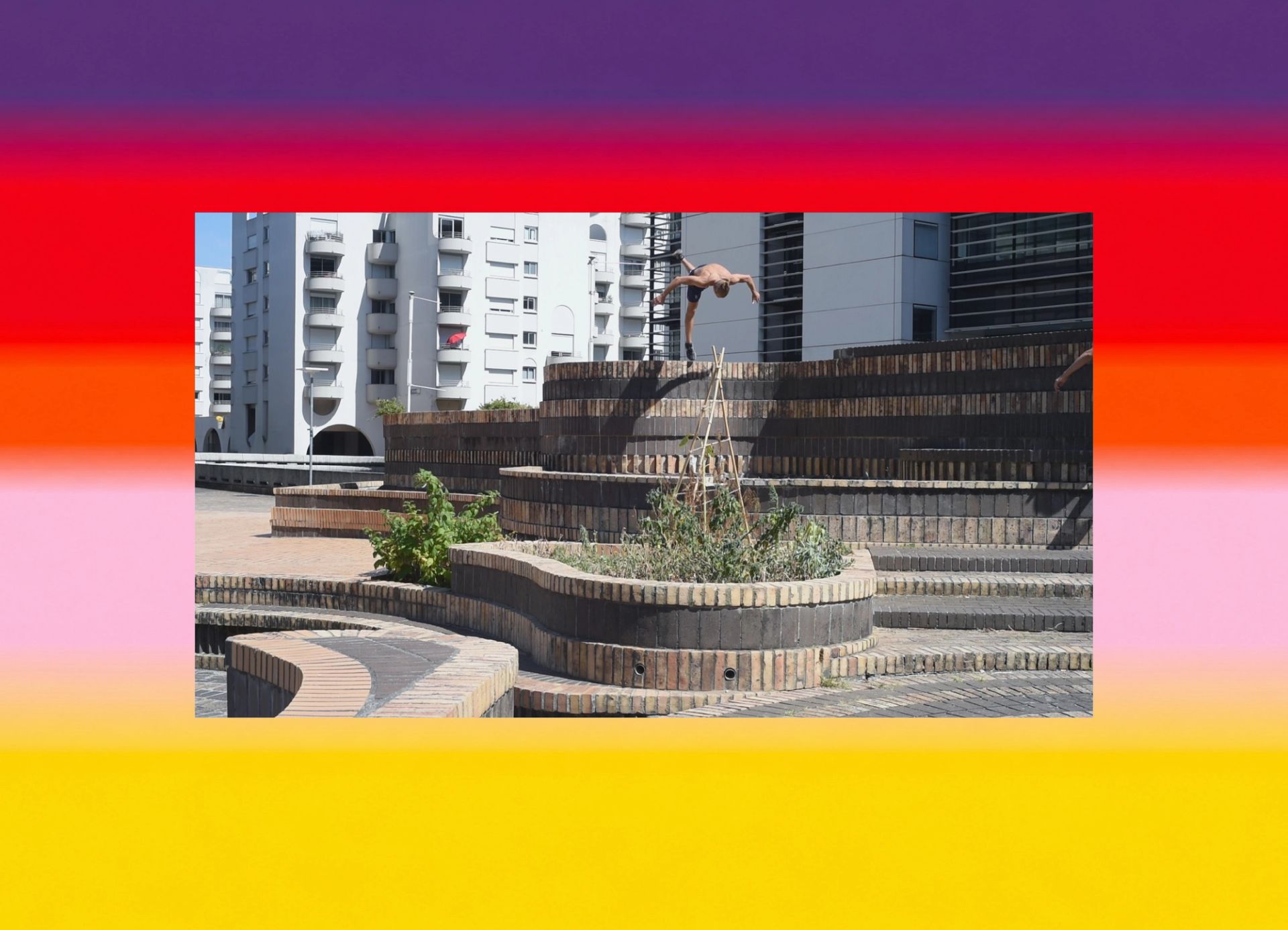
Part of the "De-Activated City" series.
Max Nathan is an Associate Professor in Applied Urban Sciences at UCL , based at CASA, we well as an affiliate in the Urban Programme at the Centre for Economic Performance. Max completed his PhD at LSE in 2011.
Max’s academic research focuses on the economics of cultural diversity, in particular the performance of diverse cities, communities and teams; innovation systems and clusters, especially in tech and creative industries; and in public policy for cities, especially policy design and evaluation. He co-founded the Centre for Cities think tank and the What Works Centre for Local Economic Growth, whilst also being affiliated to CAGE, IZA, NIESR and the Centre for London. Max worked in Whitehall at the Department of Communities and Local Government on issues like localism, regeneration and economic development.
KOOZ What are your thoughts on cities being “deactivated” in relation to your recent writings on cities and the pandemic this past year? / what does a deactivated city mean to you in the past year?
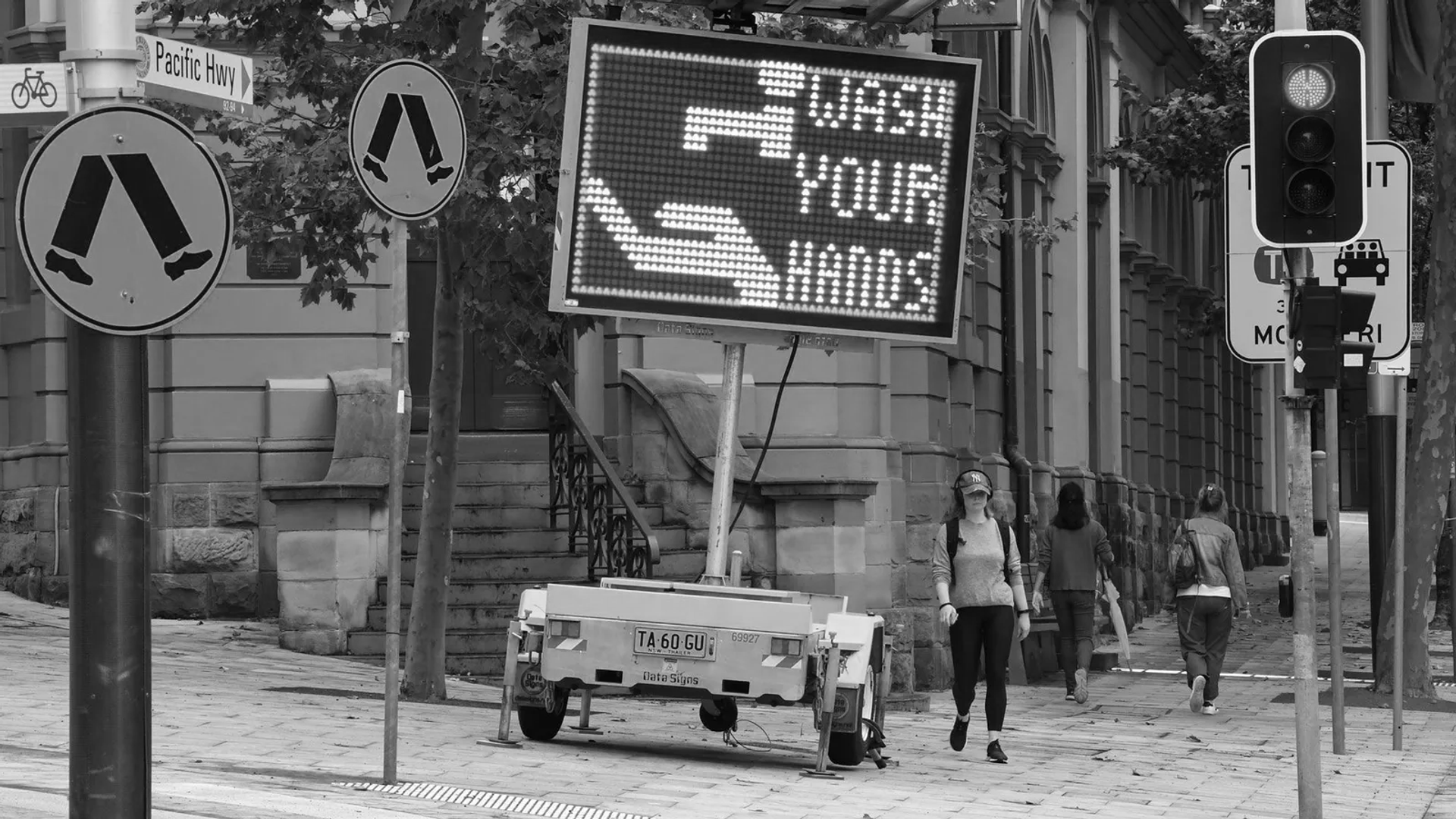
MN It’s a very powerful image, and for me it works in at least two ways: “Surface deactivation” – the spectacle of deserted city centres and “Economic deactivation”, with hundreds of thousands of people thrown out of work, and entire urban industries more or less shutting down. That said, I think we also need to complicate this picture.
First, deactivated for whom? There are protected groups of citizens (say, who can work from home) and exposed groups (who can’t, and who have to work to make ends meet). This second group has helped keep life running for the first. As Shannon Mattern pointed out in her talk at UCL’s CASA Seminar Series in January, it’s these people – delivery drivers, healthcare workers, public transport workers, shop and warehouse workers – who have been busier than ever this year.
Second, deactivated where? Much of the deactivation of city centres is also a relocation of economic activity to suburbs and residential neighbourhoods. We have these stunning, iconic images of empty downtowns, transport hubs, shopping drags; but what surveys, cellphone data and rest show us is new circuits of urban production, distribution and consumption. We are now going to find out how temporary or not these shifts will be.
Thirdly, and stretching it a bit, I’d distinguish between physical and mental activity. We’ve seen huge drops in commuting, retail footfall and so on in cities like London. But we’ve all taken on a big internal load as we’ve physically deactivated, and through this, shifted our ways of being in the city. Yet the shock and stress of living through a pandemic is a lot to bear, even if you don’t experience illness or bereavement. It’s hard to process that full-spectrum experience as it’s happening; I suspect that mind work – and the mental reactivation – is going to keep running even in cities and societies that have started to unlock.
KOOZ In your experience, which city spaces have been most affected by the current pandemic? and why?
MN It’s the obvious ones: offices, homes, retail and leisure spaces. We’ve done vast forced experiments in each. First, offices have emptied into homes. Surveys – of workers and bosses – suggest that overall, the shift has gone surprisingly well at the basic level of getting things done, although that hides variation in access to proper workspace; double burdens at home, and so on. We’re now starting to see a divide opening up between staff – who want to stay at home, at least some of the time – and managers, who seem keener on getting them back into offices. The latter will win, so at least some of that spatial shift will inevitably go into reverse gear. (It’s also worth remembering that we’re talking about a minority of jobs here – Jonathan Dingel and Brent Neiman find that only ~45% of UK jobs can be done from home at all based on task content; and that’s the same or lower in almost all other countries.)
Second, the pandemic has detached venues – shops, restaurants, bars, galleries – from their users. This was already starting to happen – in the UK, most notably with online retail – but COVID-19 has accelerated this shift. In turn that’s reconfigured our geographies of consumption. Delivery platforms and dark kitchens/stores are part of this story, but so is the repurposing of traditional store space into storage/dropoff/pickup points. Again, it’s going to be fascinating to see how much of this detatchment and reconfiguration sticks.
It’s also important to zoom out and see how these two shifts play across urban systems. In the Global North, big cities are the crucible of change: they have larger shares of jobs that can be done remotely *and* exposed service activities that have to stay face to face, pivot or shut down. But we can also see a geography of exposure in smaller towns and cities, where non-tradables are a bigger part of the economy. In the UK Tortoise’s Coronashock analysis is really helpful for this: in the majority of cities and towns, retail spending is way down. Within that, university cities, distribution hubs and places near airports are worst hit. But places like Hoxton – where Amazon is based – have seen loads of spending.
KOOZ To what extent has your perception of the city been altered / changed in the past months? Were there any discoveries which surprised you?
MN Concretely, not much. When I’ve been outside, I’ve largely wandered round and round my own neighbourhood, or biked out of London. I’ve been pleasantly surprised how quickly and suddenly one hits the countryside. Conceptually, rather more. (None of this should really have surprised me though.)
For one thing, I’ve had to reframe my sense of urban risk. In big cities like London we’re used to thinking about a certain set of given downsides: congestion, pollution, a high cost of living. Historically, exposure to disease has also been on that list, but for most people in London that went away in the last century, and so we’ve started acting as if the city’s no longer “structurally” vulnerable. Of course, now we know this isn’t true, and that greater global interconnectedness also provides a series of pathways for viruses to travel. The recent experience of many East Asian cities with avian flu, swine flu, SARS and so on should have been a wakeup call. Mike Davis spotted this back in 2005; most urbanists missed it.
I’ve also had to think harder about how urbanisation might “generate” new pandemic risk, especially in less mature urban systems where cities are growing and people and animals are coming into new close contact. I hadn’t properly understood how easily viruses could jump species barriers; both within cities (e.g. in wet markets) and as wildlife habitats get eroded. For economic geographers in particular, there’s a large agenda here that needs to be taken much more seriously.
KOOZ Your research on cities is (naturally) full of papers and articles on the subject, many coming out in 2020 as modelling studies of COVID-19 are studied and published in real time. In contrast, the news about COVID-19 and cities can often be written with language ranging from melancholy to dramatic to euphoric for a “new beginning” post-pandemic. What myths do you often see that you wish would get less attention in the media?
MN The “End of Cities”: It’s just too way early to tell – shifts in economic geography happen slowly. It’s also worth remembering that similar predictions in the past – cities dying due to deindustrialisation, or the internet – were followed by more urbanisation overall, not less. And there’s a tacit assumption in much of this discourse, that cities can be unbundled, as Noah Smith puts it – work becomes virtual, and home can be anywhere. But people who choose to live in cities don’t just move for work: cities are also about social and cultural life. And we know that cities offer huge learning advantages for younger people – just from being around and observing others.
“Working from home is the new normal”: In almost every country in the world, only a minority of jobs can currently be done from home, and these shares are much lower in the Global South than the North. UK media coverage tends to focus on large office-based employers and forgets this bigger picture. And again, it’s too early to call it. Previous technological revolutions took years to bed in and needed a lot of complementary investment in management and organisational processes. This time we’ve jump-started the change but those investments in soft technologies still need to happen. When you dig into what big office-users are saying, many are upfront about this – Google and Citigroup for example. I suspect they recognise, as a lot of academic research shows, that remote working may be quite problematic for complex innovation and creative work, as well as for younger workers who don’t have pre-existing networks built on face to face, and may lack the room to work effectively at home. This stuff still needs figuring out.
“Post-pandemic city”: The long history of cities and pandemic risk hasn’t been cancelled, rather it’s been globalised. The Anthropocene arguably raises and urbanises pandemic risk, as cities encroach on wild habitats. Even ‘post-COVID cities’ feels unhelpful at the moment; it feels unlikely the disease will be eliminated or even controlled in many parts of the world for years.
KOOZ What do you wish more architects and designers knew about the impact of COVID-19 on our cities?
MN This is hard to answer: I wish I knew more about what architects and designers do know. One thing that struck me during the first wave was the instant assumption that urban form must be driving the pandemic, and I guess that’s something architects and designers have tended to think too? Specifically, that big cities were hit hardest because of urban density, and urban connectivity.
In fact, the evidence now suggests that big cities were hit first but not harder per se. In the UK, the worst affected areas have turned out to where poorer communities live – basically, places where people are exposed either at work or at home, and where people can’t afford to isolate if sick. Spatially, that’s a mix of the poorer parts of London and the conurbations, and smaller, poorer ex-industrial towns. It’s also, disproportionately, minority ethnic communities. Put simply, the link between case rates and density has gone away over time, while the link between case rates and structural deprivation has got a lot more important. Of course, there are built form channels working here – most notably through overcrowded housing – but it’s other economic and social geographies, as well as public policy, that really seem to drive it.
KOOZ Could the current pandemic be an opportunity to rethink our approach and relationship to the city, both as architects and as individuals?
MN I don’t think we have much choice. We’ve already had to run a series of large-scale experiments on cities. It’s possible that all of these changes will simply flip back to “pre-pandemic norms”, but I think that’s unlikely for two reasons. The first is that the forced urban restructuring we’ve seen this year is partly the acceleration of existing trends, not a radical break. The second is that some of these shifts seem pretty popular – in particular, working from home at least some of the time.
To the extent these trends persist, they will shift the economic geography of cities: from cores to peripheries, and perhaps also from larger to smaller places. There are some suggestive signs of the first happening already, although as I said before, it’s too early to call it definitively.
I think we need to be careful of the argument that dispersing economic life out of big cities automatically spreads opportunity around. People who can work from home are typically older and richer – if they move it will be to desirable suburbs and rural areas within easy reach of the city. If companies drive dispersal, and do this around mixed working, they will go for the cheaper big cities – places with a critical mass of skilled staff and office space. It’s hard to see how any of this is “levelling up”. We’ll need other, more deliberate tools to help equalise.
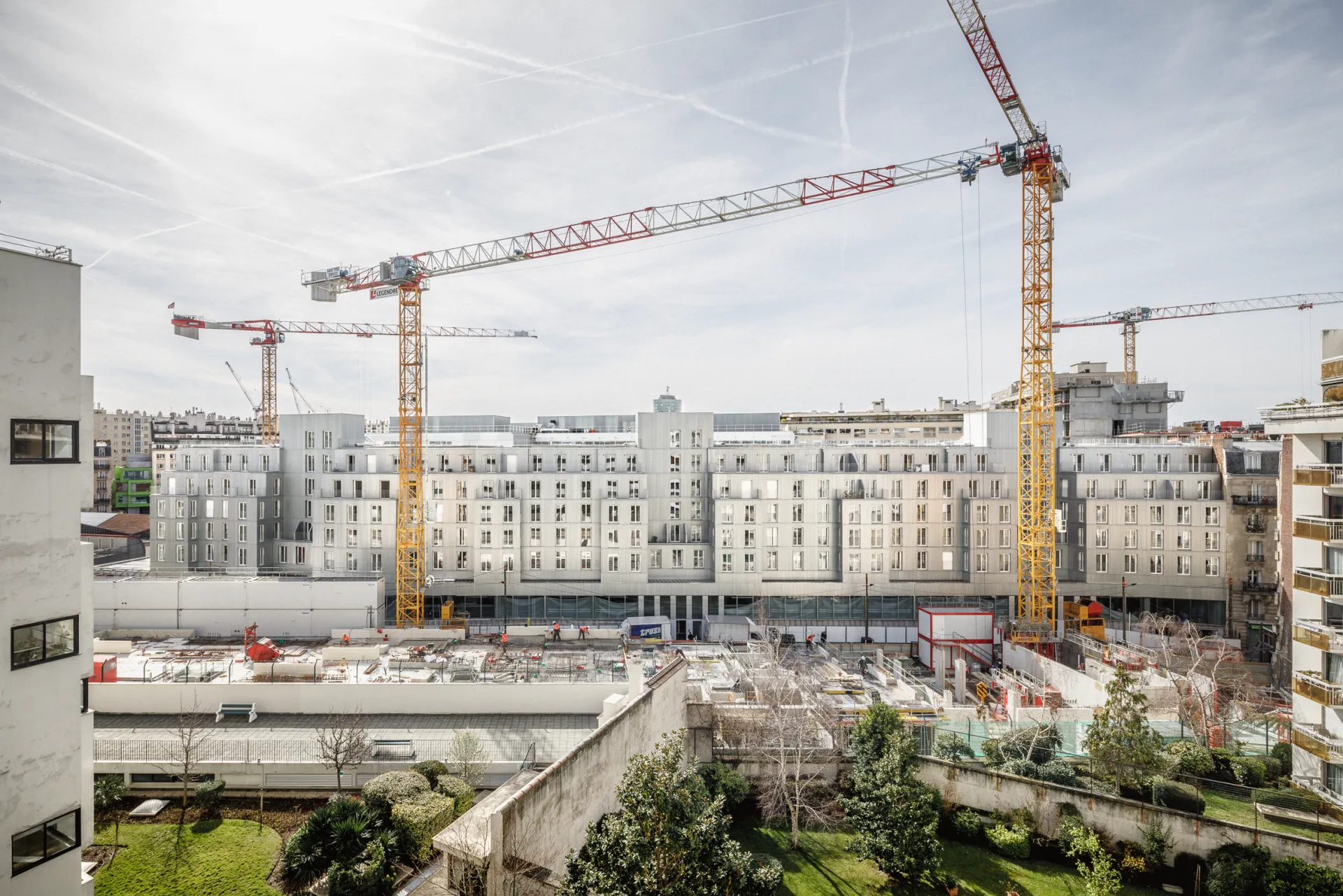
To the extent these changes stay, and grow, that opens up an array of big questions for architects and urbanists. What do we do with unused city centre offices? Can we turn them all into co-working spaces? Will an army of startups occupy them, as has happened in the past? Can we realistically turn them into decent housing, and for who? What happens to the retail spaces nearby – how much of that comes back, and in what form? How much of these new urban logistics systems stick, and what kinds of spaces will then be needed to sustain that? How do we provide and refit living spaces for mixed modes of working, and how do we improve neighbourhood functionality? It’s pretty much all been emergency urbanism so far – sticking desks into bedrooms, painting on cycle lanes. Perhaps most importantly, what are the energy and climate implications of these shifts? I’ve seen a couple of US studies suggesting that energy consumption just relocated from offices to homes last year. How can we do better than that?