Deactivated
verb
past tense: deactivated; past participle: deactivated
1. make (something) inactive by disconnecting or destroying it.
“the switch deactivates the alarm” (Oxford Dictionary)
City
Noun
1. A large town: Many of the world’s cities have populations of more than five million. (Cambridge Dictionary)
2. A city is distinguished[by whom?] from other human settlements by its relatively great size, but also by its functions and its special symbolic status, which may be conferred by a central authority.” (Wikipedia)
The etymology of the term “city” derives from the Latin word “civitas”, which defines not a physical region but the social body of “cives” (citizens) united by law, leading us to understand that people make cities, not buildings. From this point of view what makes a city alive are the individuals that walk through it. Many urbanists have dwelled upon the importance of the human experience within this field, from the Situationist to Kevin Lynch, from Tschumi to Koolhaas.
“Above all, do not lose your desire to walk. Every day I walk myself into a state of well-being and walk away from every illness. I have walked myself into my best thoughts, and I know of no thought so burdensome that one cannot walk away from it.” – Søren Kierkegaard
+++
You saw the year off at home, a mixture of anxiety and thin relief as a small army of screens shine media fragments of a world on its precipice. Confined to your own eternal homescape, it’s safe to say that for now, your current work-home-balance remains rooted in its domestic setting, 2021 or not. Are you still an urban dweller if your corridor has now become the pavement you once cut your teeth on? Your screens, your cinema? Your kitchen table, now the only restaurant open? Your nice clothes probably think you’ve vanished. Some days you think part of that old life has.
Enough of this state of mind, you think, time for a walk. In a letter philosopher Søren Kierkegaard cherished the value of walking, writing “every day I walk myself into a state of well-being and walk away from every illness. I have walked myself into my best thoughts, and I know of no thought so burdensome that one cannot walk away from it.” Though the fridge is already stocked from last week’s trip to the store, and you already lined up at the bakers’ yesterday, it’s about to get dark again and you need to move. Coat on, scarf wrapped, glasses fogging up with steam as a fresh mask sits snugly under your smudged frames. 10,000 steps a day is a far cry lately, but still, time to stretch my legs, you say.
The door hinges shut with a click,
and you step out
into
the deactivated city.
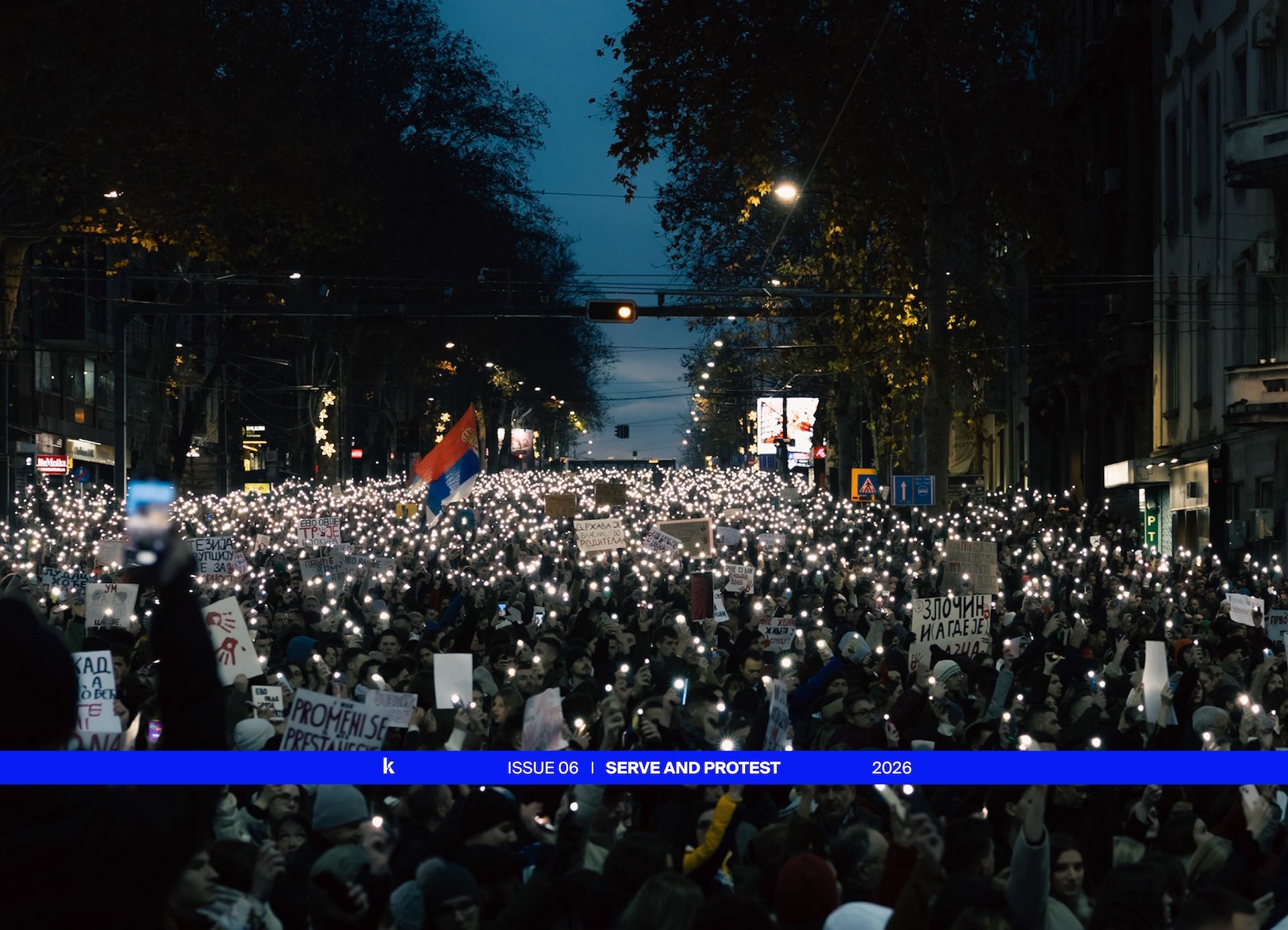
Deactivated – not dead, but not dormant either. Deactivated, as a machine with its energy-sparking network cables now pulled out from its centre. Streets that were once vibrant lie in sullen silence. Squares that were bustling now switch between two extreme frames, one soundless, the other bristling with righteous anger; pandemic or not, squares have remained ground zero for protests and outrage against injustice. This is an uneasy line to walk on – without a gradient of activities, (restaurant chairs folded up, markets packed away for healthier times) streets and squares are now polarized places with no middle ground as the spaces around them lie inert.
In The Language of Cities, Deyan Sudjic describes the unique power of a city, in that it “offers chance social encounters, and places in which new ideas are being shaped.” Apart from public places such as the street or square, key typologies of meeting places that have escaped digitization have suffered the most through the global pandemic, rendered fruitless and frustrated in their closures. These include institutions starting from the places that nourish us: independent restaurants, cafés, bars and eateries – where one could share experiences with friends, colleagues, lovers, family (or steal a quiet moment alone) – to the cultural institutes that host creativity on both urban and global scales: the museums, cinemas, theatres and everything in between. Pillars of our urban fabrics, these backdrops to chance encounters teeter on the brink of financial ruin as cities lurch from lockdown to lockdown.
A third meeting-place: shopfronts and retail institutions that were once thresholds of attention now find their façades dissolve online, a form that is constantly proving more lucrative (albeit lacking in human contact). In the case of brick-and-mortar stores, the pandemic and its restrictions have sped up problems that were long coming as online shopping reaches exponential heights. Some institutions (the family-run hole-in-the-wall, the gallery feeling their margins thin year by year) may not come out on the other side.
What can we, as designers recognize in these meeting spaces – gripped by pandemic – that navigate these strange times? Curfews add another layer to limiting our movements in cities – the nocturnal hustle or intimate gathering muzzled as we warily watch R-numbers rise and fall.
How do we acknowledge the deactivated city?
How must we, as thinkers of design, art and architecture – walk through its new conditions?
Through Abstractions, KoozArch invites contributors to approach this brief analytically – understanding and reflecting upon their version of the deactivated city. Places that once facilitated gathering or the fostering of networks were once the bread and butter of city living.
How do we operate without them, when the activities stop but the buildings still stand? Considering the Deactivated City can be done with, or without offering imagined solutions (though we would certainly welcome any), rather we encourage different investigations of the de-activated spaces whose temporality and lifespans remain undecided.
*This Abstraction series was developed in collaboration with Sabrina Syed