Part of the "De-Activated City" series.
Owen Hopkins is an architectural writer and curator. Owen is the Director of the Farrell Centre at Newcastle University. Previously he was Senior Curator of Exhibitions and Education at Sir John Soane’s Museum and before that Architecture Programme Curator at the Royal Academy of Arts.
Owen have curated numerous exhibitions and is author of six books and editor of a further six books / journal special issues / digital publications. He has written widely on architecture for publications such as The Independent, CNN, Dezeen, domus, Icon, The Architectural Review, Blueprint, Architecture Today, The Architects’ Newspaper, topos, The Architects’ Journal, Building Design, Apollo, and The Burlington Magazine.
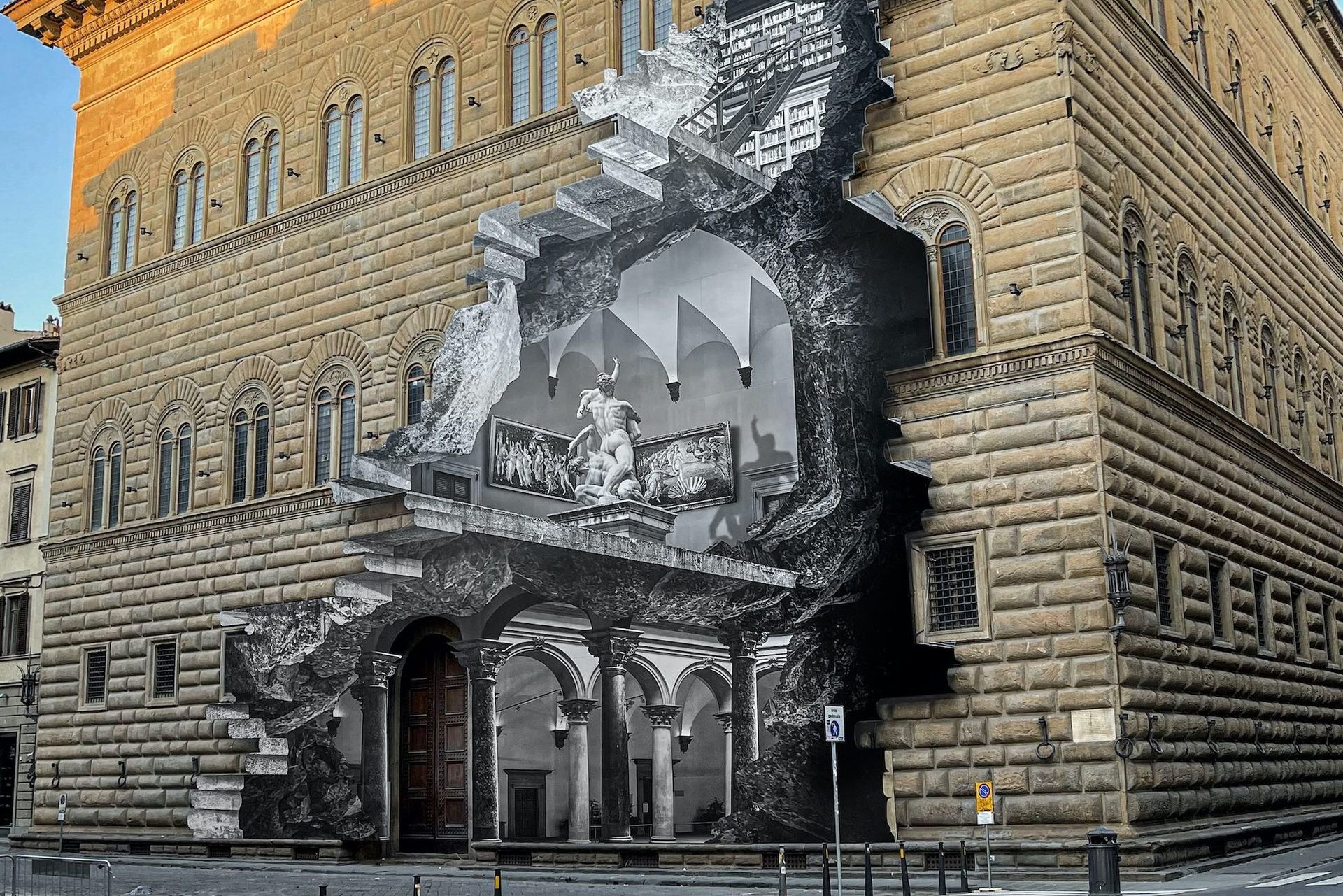
KOOZ What are your thoughts on cultural spaces being “deactivated” in relation to your recent writings on museums and the pandemic this past year?
OH Museums are by definition public institutions. So, when the public is taken away the museum arguably ceases to exist. Less philosophically, the lack of footfall has obviously been hugely challenging financially for many museums and cultural spaces which are likely to feel the effects for many years to come. And if masks and some form of social distancing are likely to be around for a while, the blockbuster exhibition, on which so many institutions depend, is surely a thing of the past.
At the same time, the absence of people ‘on-site’ raises new possibilities for the other spaces where museums might exist. As well as being public institutions, museums are defined by their architecture – where object and audience are brought together. I’m interested in new forms of institutions that aren’t defined by their architecture, but exist outside of it: dynamic, de-centralised and able to refashion their spaces in real time, whether in the physical or digital worlds.
KOOZ When talking about cultural spaces, what aspects escape digitalisation? What are the consequences of this?
OH Most obviously is the one-to-one experience of an object, of standing in front of a great work of art and being moved in some way. It’s what Walter Benjamin famously called the ‘aura’ – the indefinable quality that the original object possesses, which he saw as evading mechanical reproduction, let alone today’s digitalisation. Yet the privileging of the object in this way is increasingly a conservative position. What drives so many people to visit museums or other cultural spaces is as much the fact that they offer a collective, social experience as a purely cultural one. The experience is still fundamental to visiting a museum, of course, it’s just not only about staring reverently at a work of art, but equally about meeting, gathering and interacting.
KOOZ How and to what extent has the closure of these spaces affected the cities that thrive upon their cultural identity?
OH For starters, tourism has dropped dramatically, so that cities for which museums are key drivers for tourism have suffered considerably in economic terms. The upside has been that places that are usually inundated with tourists have been much quieter, which more space for local residents. The interesting thing will be whether as lockdown restrictions ease as vaccination campaigns ramp up, but international travel remains severely curtailed, this will translate into changes in how we use our cultural spaces as they begin to reopen.
I was also quite interested in the rave culture that developed in the UK last summer, in a weird echo of the late 1980s and early 1990s. This was a kind of spontaneous movement that arose out of the desire to break free of the tight restrictions governing everyday life (which young people felt harder than most) and simply come together and have fun. It was a kind of pressure release valve – the natural (if illegal) response to an unnatural situation.
KOOZ To what extent has your perception of the city been altered / changed in the past months? Were there any discoveries which surprised you?
OH For me it’s the rise of what I call the ‘hyper-local’: using shops and (takeaway) cafes and restaurants that are literally on your doorstep rather than travelling to the city centre or out of town retail park. While big many ‘high street’ chains have gone out of business due to the rise of internet shopping, which the pandemic has dramatically accelerated, the hyper-local isn’t susceptible to the same pressures and in many ways transcends them. Food, for example, has to be cooked locally, while things like click-and-collect offer a hybrid between online and retail.
KOOZ Could the current pandemic be an opportunity to rethink our approach and relationship to culture, both as architects and as individuals?
OH Definitely! Clearly digital communications via Zoom and the like are not the same as meeting in ‘real’ life, but they do offer some significant advantages. Take one example: as with the blockbuster exhibition, the age of the big international conferences and events are surely over – with the upsides of massive reductions in travel (and therefore carbon) matched by potentially hugely increased accessibility and inclusivity. The only limits are time differences.
At the same time, just as the dematerialisation of music saw a revival of vinyl, so those aspects of architectural and cultural experience that can’t be digitised or virtualised will become increasingly important. The feel, atmosphere, even smell of a material, space or another body – these are all things that the pandemic has simultaneously taken away and made us crave.