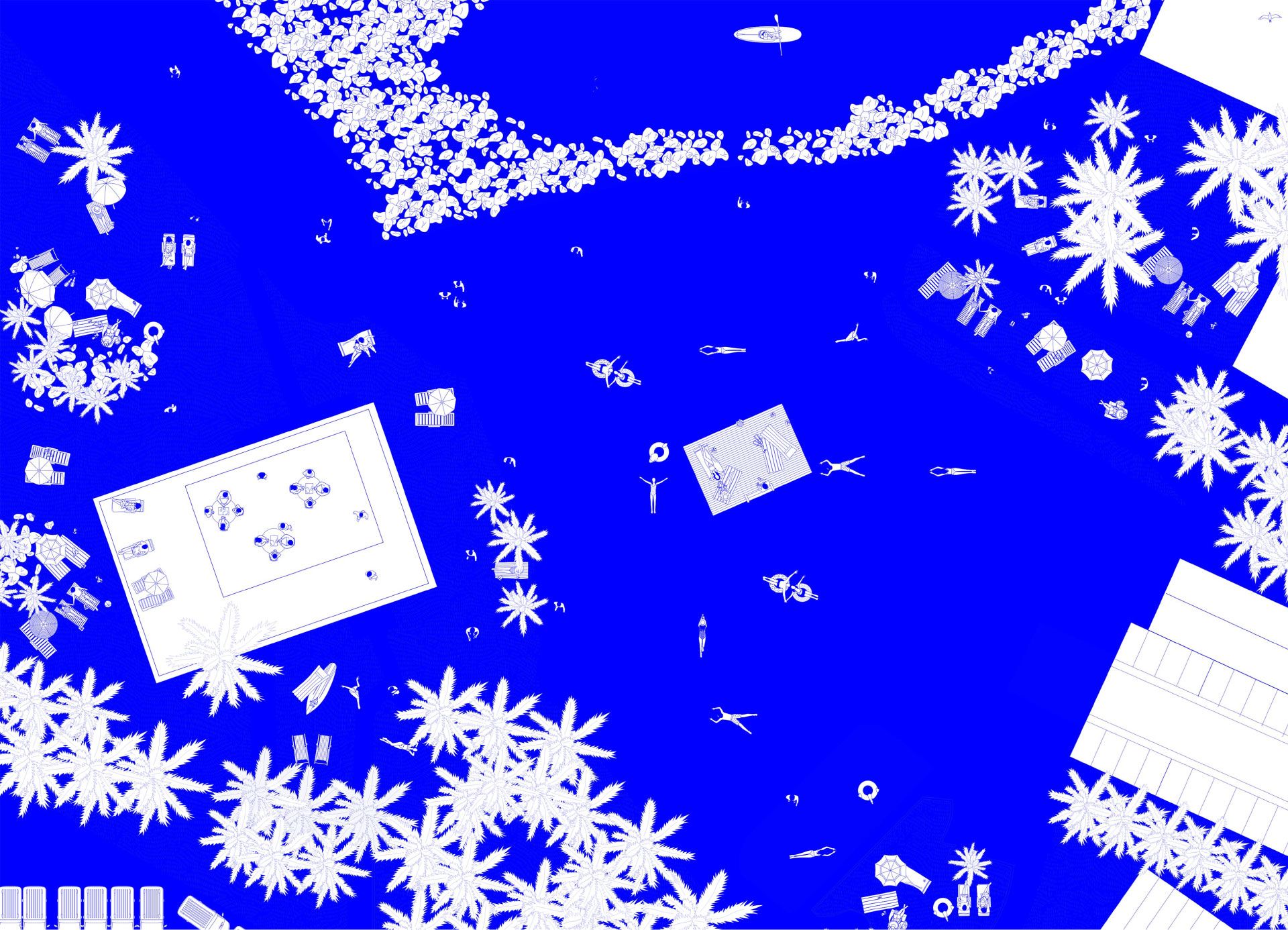
Architecture alone - even when encompassing its broadest definition - cannot solve a deeply entrenched societal issue. However, architecture allows us to craft distinct physical or virtual spaces. The control over the experiential and visual qualities provided by any space we choose to bring to life can elucidate concepts that are otherwise inaccessible to certain groups of people, and can inspire remedial action of these issues. Architectural visualization provides a mechanism with which to critique cultures: its physical intangibility circumnavigates the realistic constraints that are inherent in built forms. As visionaries and storytellers, we give cultures tools to rethink their customs within a realm unencumbered by societal and physical restraints.
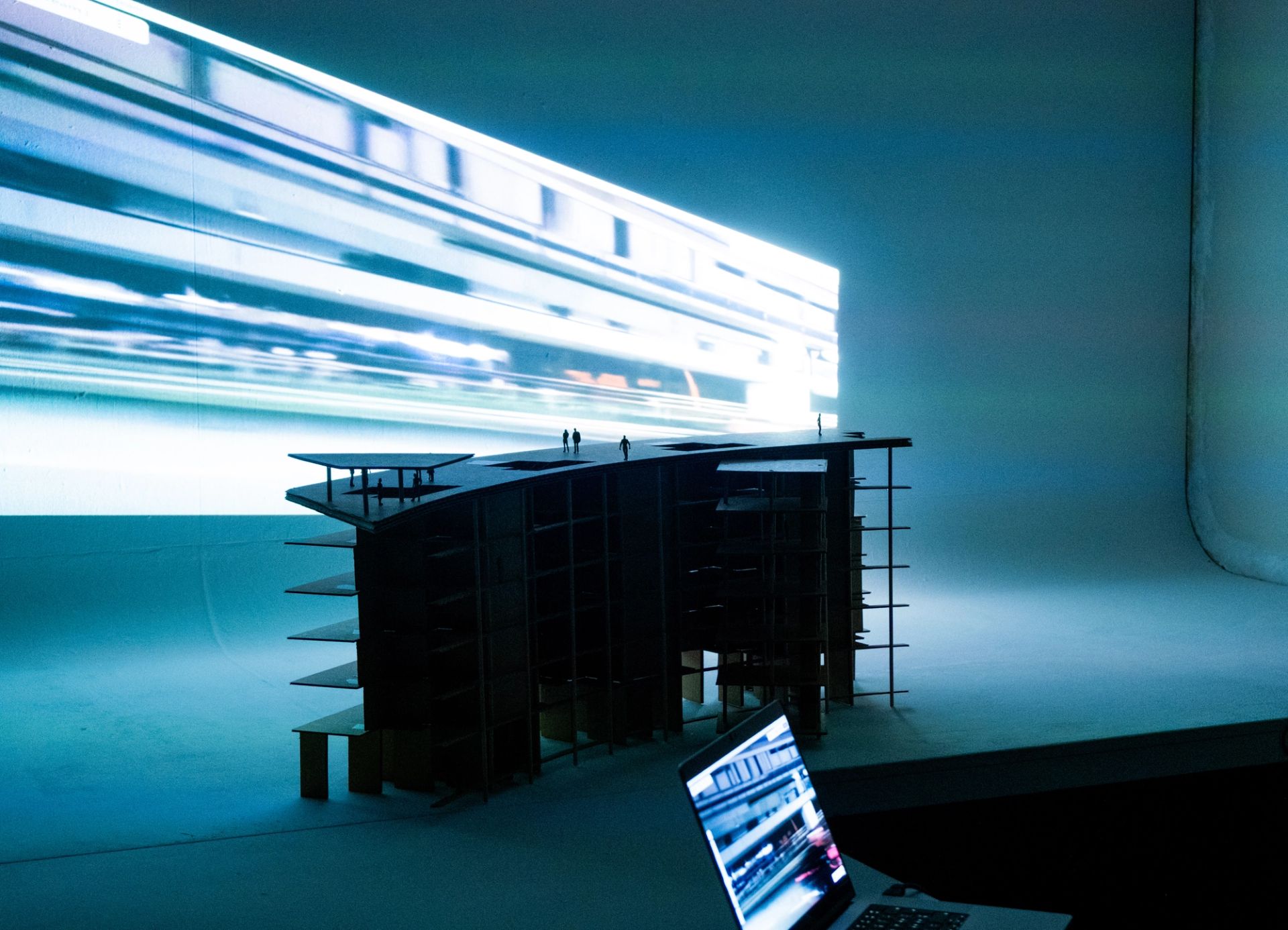
The ever-escalating number of global immigrants and refugees brings about a ubiquitous sentiment of both displacement and xenophobia, and thereby, a desire for barriers and border control. In this narrative, the ground condition has become uninhabitable,forcing people to inhabit the z-axis. The necessity to build upwards creates a new language of horizontally stacked borders, in which inhabitants are forced into a tiered hierarchical system that mirrors the way our society functions today. The imaginative portrayal of our current instinct to separate people into specific spaces within a strict hierarchy aims to illuminate the spatial and cultural barriers that prevent many societies from accepting ‘otherness’ as an indispensable requisite to a vibrant conglomeration of cultures.
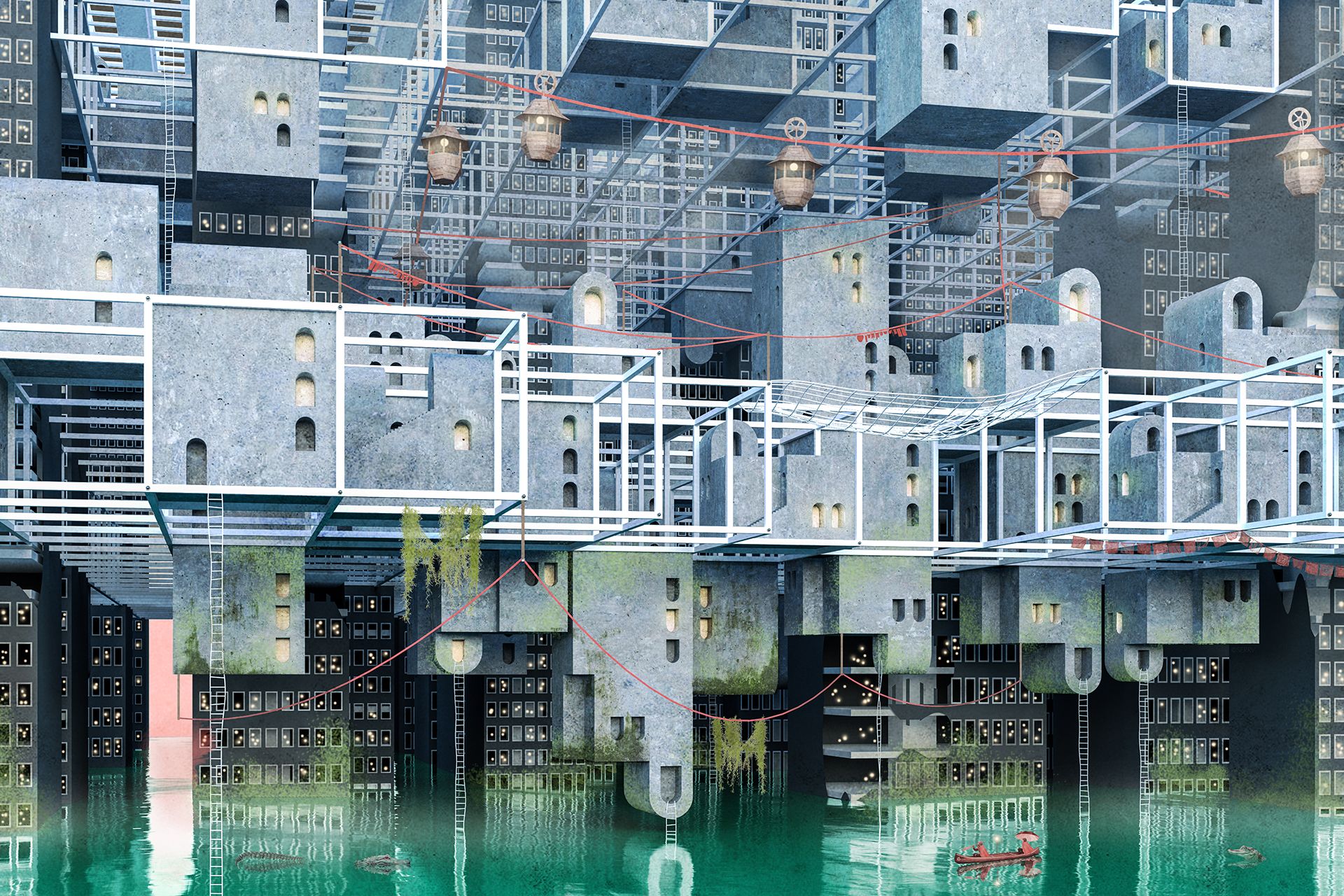
BELOW THE BORDER
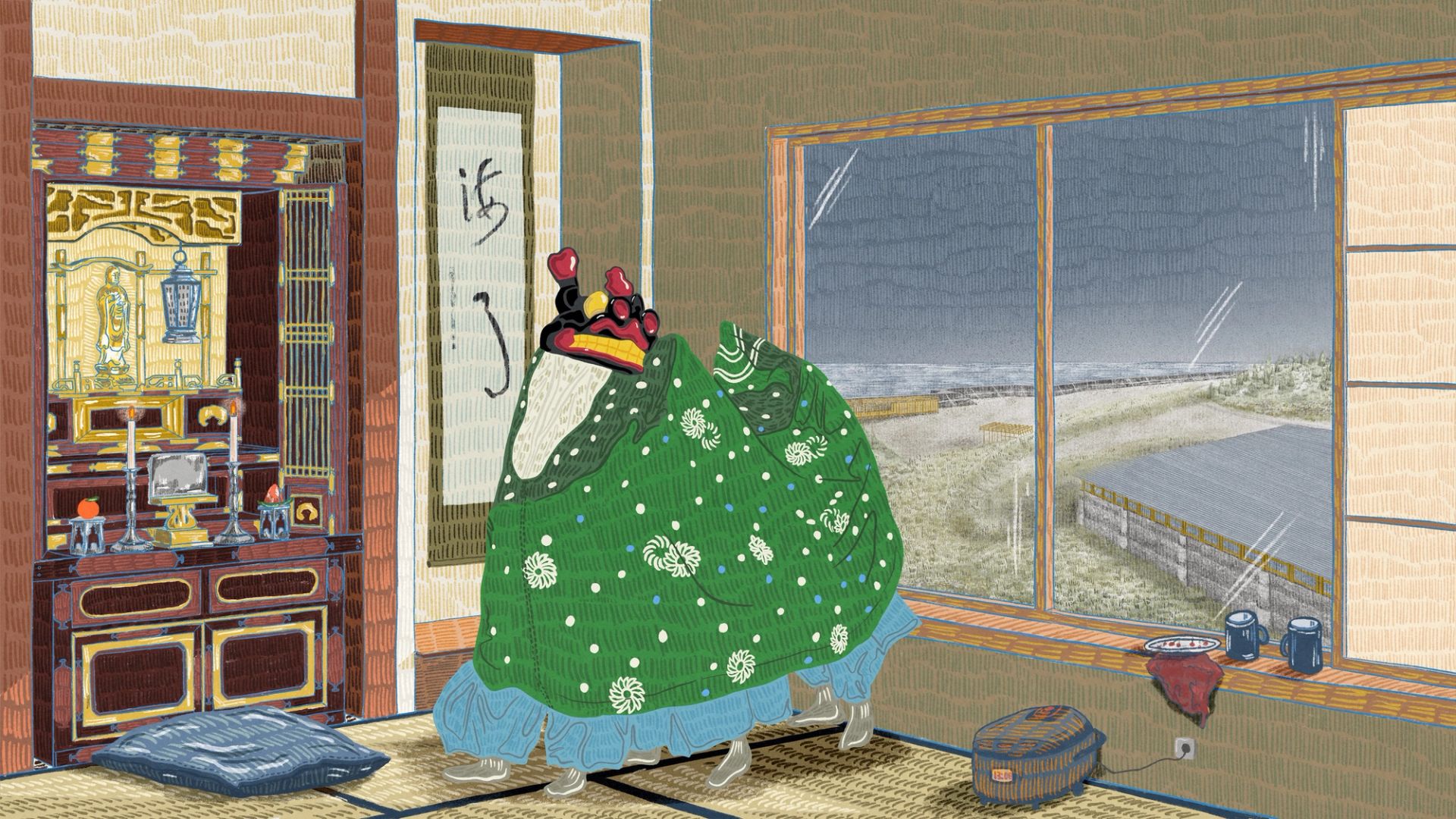
My big brother says everyone used to live together on the ground. I don’t remember that. I was too little. Mama left before us, to work and to send home money to us. She told me and my big brother that when the sea gets too high to stay in our town, we would have to escape too. When the time came, we traveled here on a little boat, with many other kids and families. It took weeks, and the sea and the sky were angry and scary. At night we weren’t allowed to use lights because the big people would catch us. We passed a few new HABITATS on the way, but they were full, and we had to get to the one Mama was at. HABITAT_97. Finally we made it. We were all wet and cold, but seeing the place where Mama was made me so happy. We have been here for a few years now, but haven’t seen Mama yet. She lives above the border in the machine world, and we aren’t allowed to go up there yet. The big people are scared of us. I live with my brother and many other people in a house that some of the big people above us sent down while we wait. They triedto make them look like the homes we used to live in, but they’re not the same. All the houses are stuffed in the big grid. My brother says the grid was built to keep together the old skyscrapers that hold up the people above us. There are also people that live inthe old buildings, but they don’t have houses yet. During the day I help my brother go fishing, or I visit my neighbors to sell the fish he caught in the yucky water. Sometimes I balance on the ledges around the village to hear the music people also played at home, I sniff the yummy food my neighbors are cooking, or I play hide and seek in the hung up laundry. Sometimes I play in the ropes and nets that are around our town, but my brother says that’s dangerous. I get mad at him because he’s not Mama. I miss her. Life is dark and wet, but we are happy.
The project was developed at the Tulane School of Architecture.
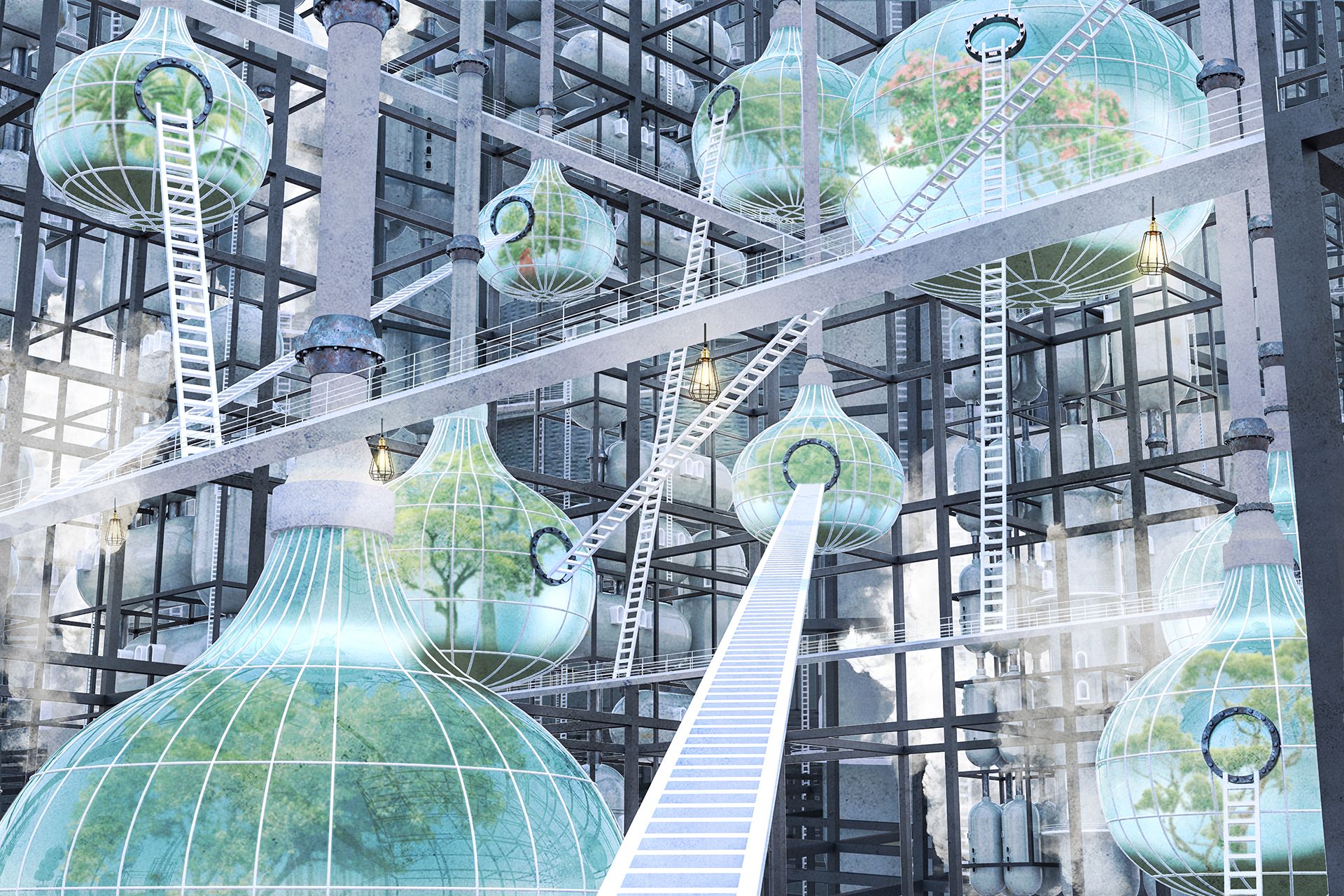
IN BETWEEN
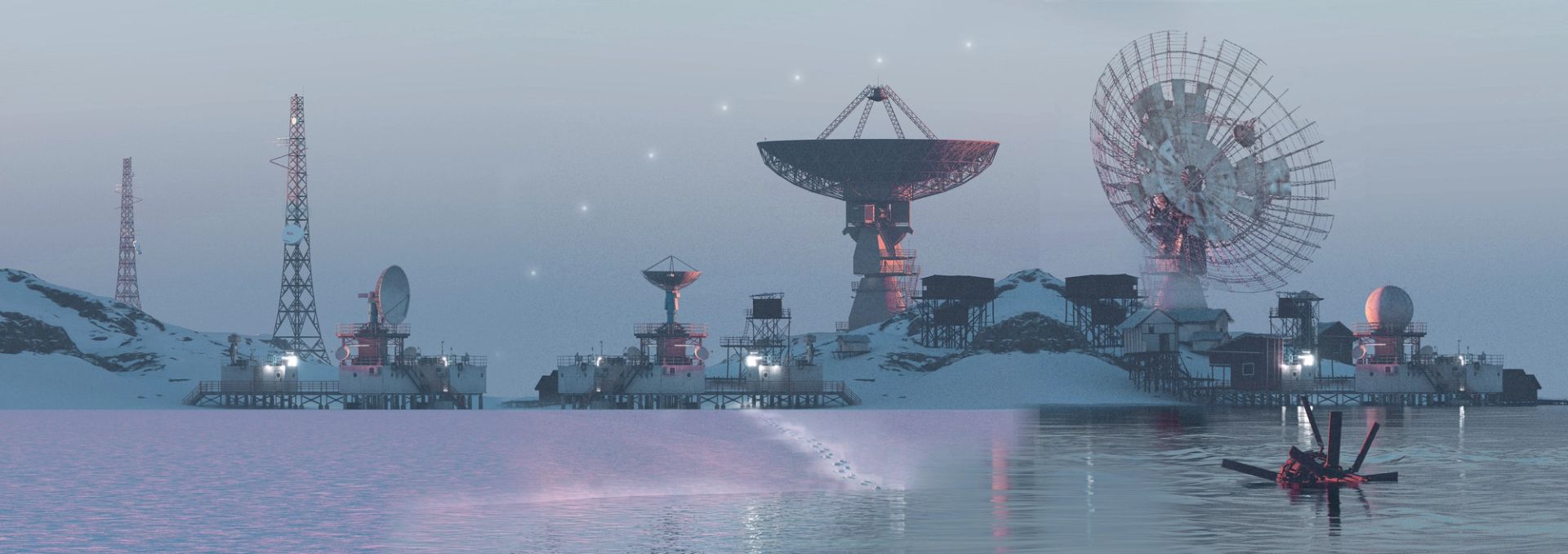
I came here exactly fifteen years ago today. I started below the first border, before they had even sent down shelters for the newcomers. Our home city was struck by a sandstorm, and the drought ruined all the crops and any chance at life. When we got here, my friends and I squatted in the abandoned skyscrapers, making the dilapidated structures our home. When we finally madeit through regulations, we were transported past the border, to the machinery and infrastructure layer. We still live here now, inreclaimed tanks that were used before heavier machinery was required.
For all the inhabitants of this layer, each day is the same as the last. Mostly, our life is trash. That is, managing the trash and waste from the people atop the border that looms above us. They forgot we even exist. We sort through their trash, sanitize their water, grow their food, and try our best to keep up with demands of cultivating new types of nature when they are bored with the older version.We process all the resources that are pumped upwards from the remainder of what is left of the ground condition. Some of us have tried to point out that this is all part of a cycle, a cycle that will keep exacerbating people’s desire to escape what is below, but we are too scared to speak up. After all, this is better than home. Life is laborious and loud, but we’ve made it.
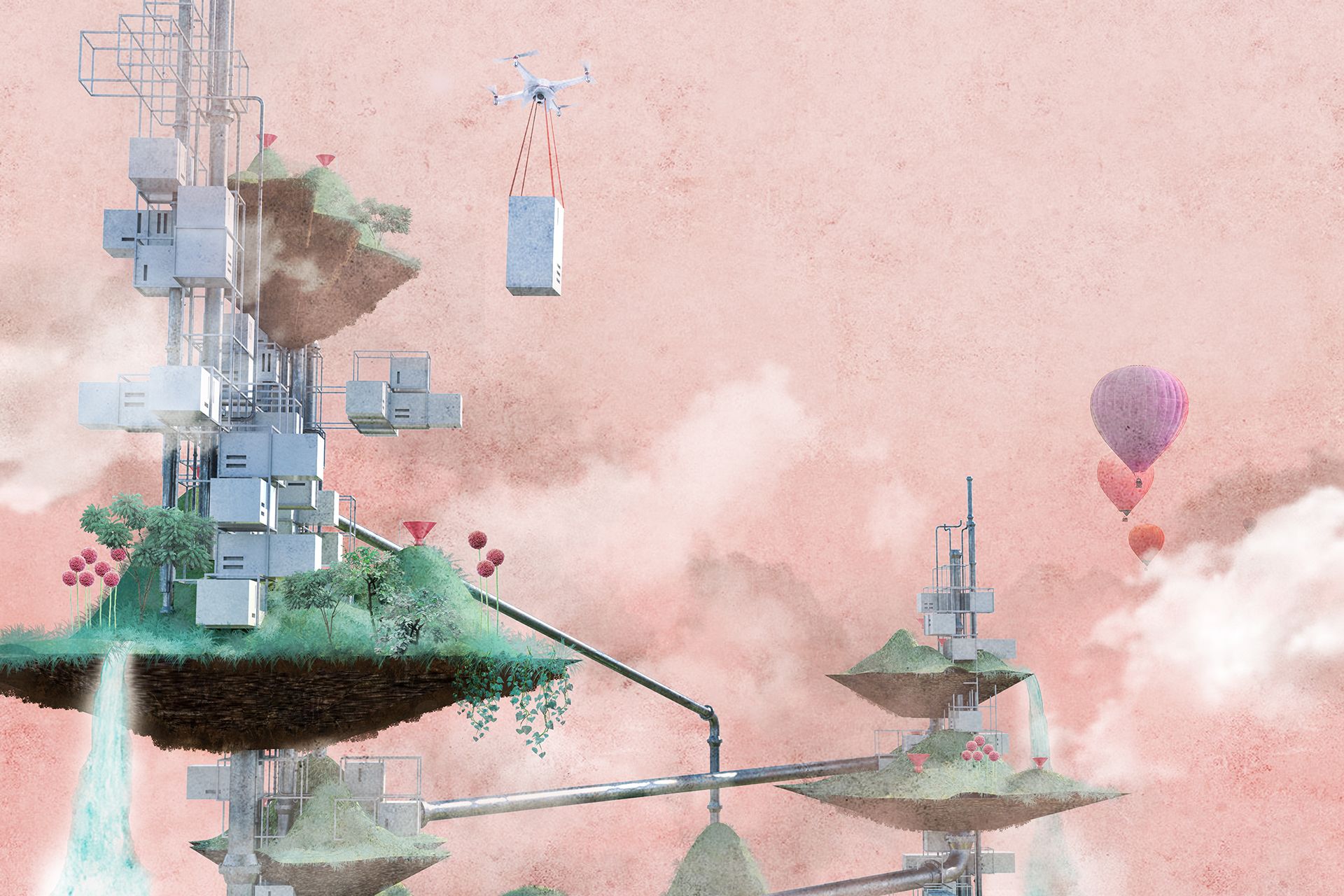
ABOVE THE REST
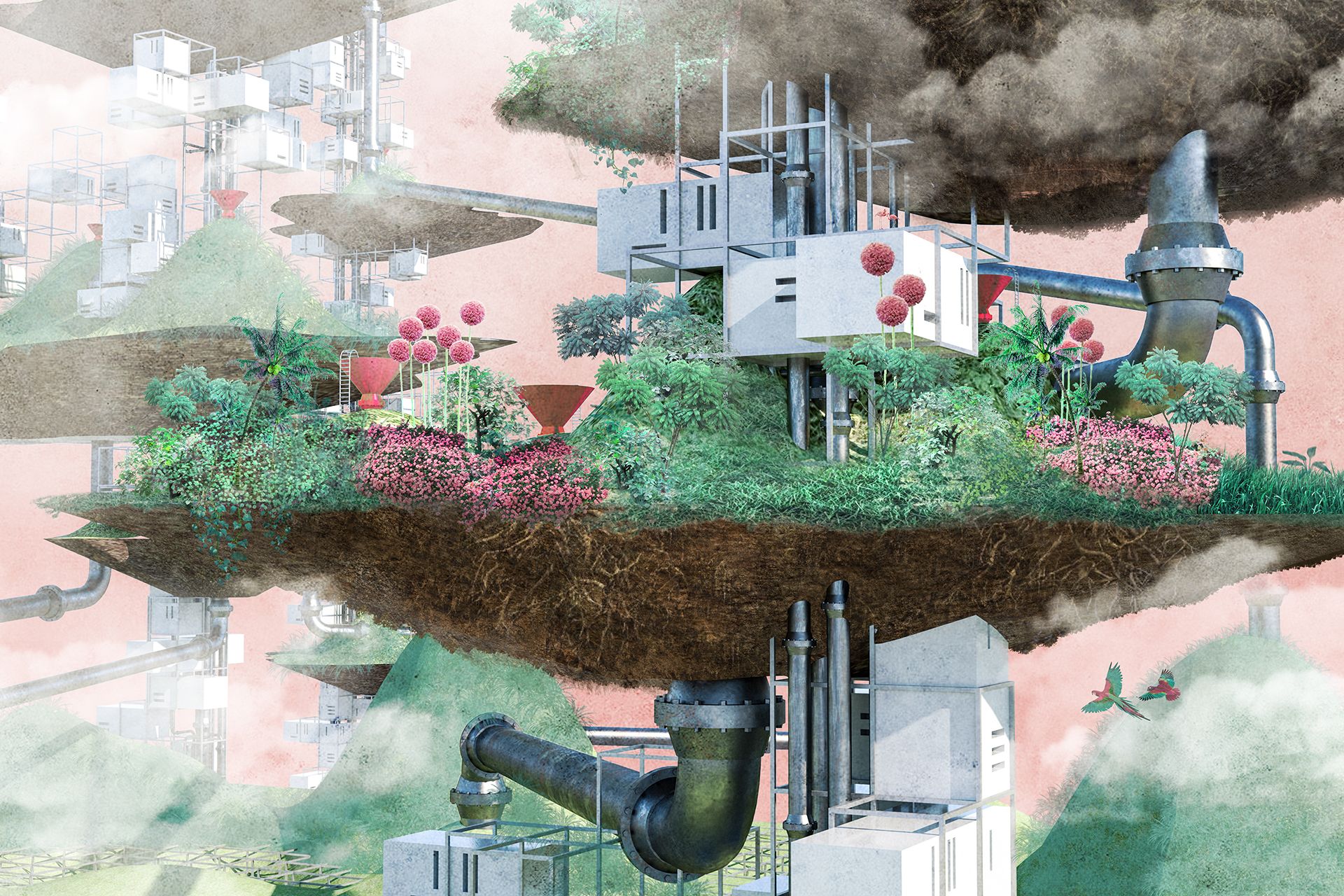
Years ago, when we were running out of habitable land, we decided to take matters into our own hands. We needed to escape the unbearable crowds of new people and the equally daunting rising water levels. Now we have finally created this wonderful place among the clouds, where we can live free from the stress of intruders—oh! We even added a border as a protection from the… how should I put it… the elements below. Our life is filled with an exquisite, new and improved version of the nature that had slowlyvanished on the ground. Our nature never ceases to amaze. Or if it does, we just have it adjusted a bit. It is best observed through the safety barrier of our windows, however, as most of us stay indoors to avoid the relentless sun and suffocating temperatures. Andanyways, everyone enjoys their privacy, so interactions with neighbors are kept to a minimum. I suppose sometimes we go on hikes to the Clarity Chutes, which are located on the peak of each landmass for us to dispose of garbage, or anything else that is interfering with our inner zen. Life is easy and pristine, and truly the dream.
KOOZ What prompted the project? What questions does the project raise and which does it address?
SW When brainstorming topics for my architectural thesis, I found that any societal issue I felt passionate about couldn’t be solved through architecture alone - each one requires a much more interdisciplinary approach than attempting to mitigate it with a physical building or structure. I challenged myself to come up with a way I can stay within the boundaries of the field of architecture alone - specifically with the skills I had developed in architecture school - to suggest a wide-ranging tool with which to address and critique our culture. The project questions if and how we can successfully use imagination and storytelling as a remedial device, and explores how we can create importance using these tools without a direct physical purpose as the end goal.
KOOZ How does the project define and approach the notion of borders?
SW The variation of structural typology and representation of spaces within each layer of the vertically stacked borders suggests the direct effect of borders on our quotidian relationship with our surroundings. The project seeks to demonstrate how physical borders create exclusionary means of deciding who receives certain resources and who is deemed deserving of dwelling in particular spaces, in turn creating psychological borders in how we perceive different groups of people. The aim is to prompt compassion amongst those who are fortunate enough to live without the worry of exclusion, and to encourage us to lessen this sentiment of superiority solely based on locational origin and differences of culture. This is becoming increasingly important as our globalized society long ago entered a vicious circle of exacerbating resources and displacing people.
Any “paper architecture” project is a practice of using architectural storytelling and imagination to convey an idea.
KOOZ What role can architecture play in the redefinition and blurring of these?
SW The architectural field can play an important role in how we present our attitude toward borders, or people on different sides of borders. Though we cannot directly control the political side of how our borders function, we can use the unique tools that the realm of architecture lends us to coax a larger change in ideology. Any “paper architecture” project is a practice of using architectural storytelling and imagination to convey an idea. Each time a project is presented, it elucidates a problem, or stimulates a conversation about the illustrated concept. If we cannot design a physical space or structure to alleviate an issue, we can use the unconstrained realm of the imaginary to build this space without the real-world limiting factors that exist outside the borders of a piece of paper or our screen. We can question how we build and design for different groups of people, and why we do so in distinct ways. As the people who design the way our urban fabric comes to life, we can challenge our superiors’ notions of what a certain group’s architectural typology should look like, and begin to dismantle what we have been taught is an appropriate way to incorporate or separate people using design tactics.
KOOZ What is for you the power of the architectural imaginary?
SW Philosopher David Hume claimed that “whatever the mind clearly conceives, includes the idea of possible existence… nothing we imagine is absolutely impossible.” The notion that our imagination is in itself embedded in a certain reality provides a clear parallel between what we perceive as fiction and reality. This suggests the strength in using emotionally evocative imagery and fairytale for a controlled spatial interpretation of a specific societal or cultural predicament. In this instance, the use of fairytale and the imaginative illustration of the unproductive way in which our society is structured to prevent the absorption of displaced people or immigrants, should provoke an emotive response that spurs a positive change: if it doesn’t change the societal structure itself, it should at least alter the point of view of those who have closed themselves off to the increasingly ephemeral state of a person’s belonging to one designated place.