Federica Zambeletti / KOOZ How does the theme of (Super)Models build upon the lineage of previous editions of Mayrit, and why is it the right framework for this year?
Miguel Leiro The recent editions of MAYRIT have worked through large-scale conceptual frameworks, allowing design to be read beyond objects or disciplines. Drowned Worlds (2022) and Wet Dreams (2024) both approached design through aquatic imaginaries: submerged territories, unstable environments, flows; excess, desire, and the conditions of living within systems that are already overflowing. They allowed us to think about design in relation to climate, infrastructure, fantasy, urban pressure, and the porous boundaries between bodies, cities, and environments.
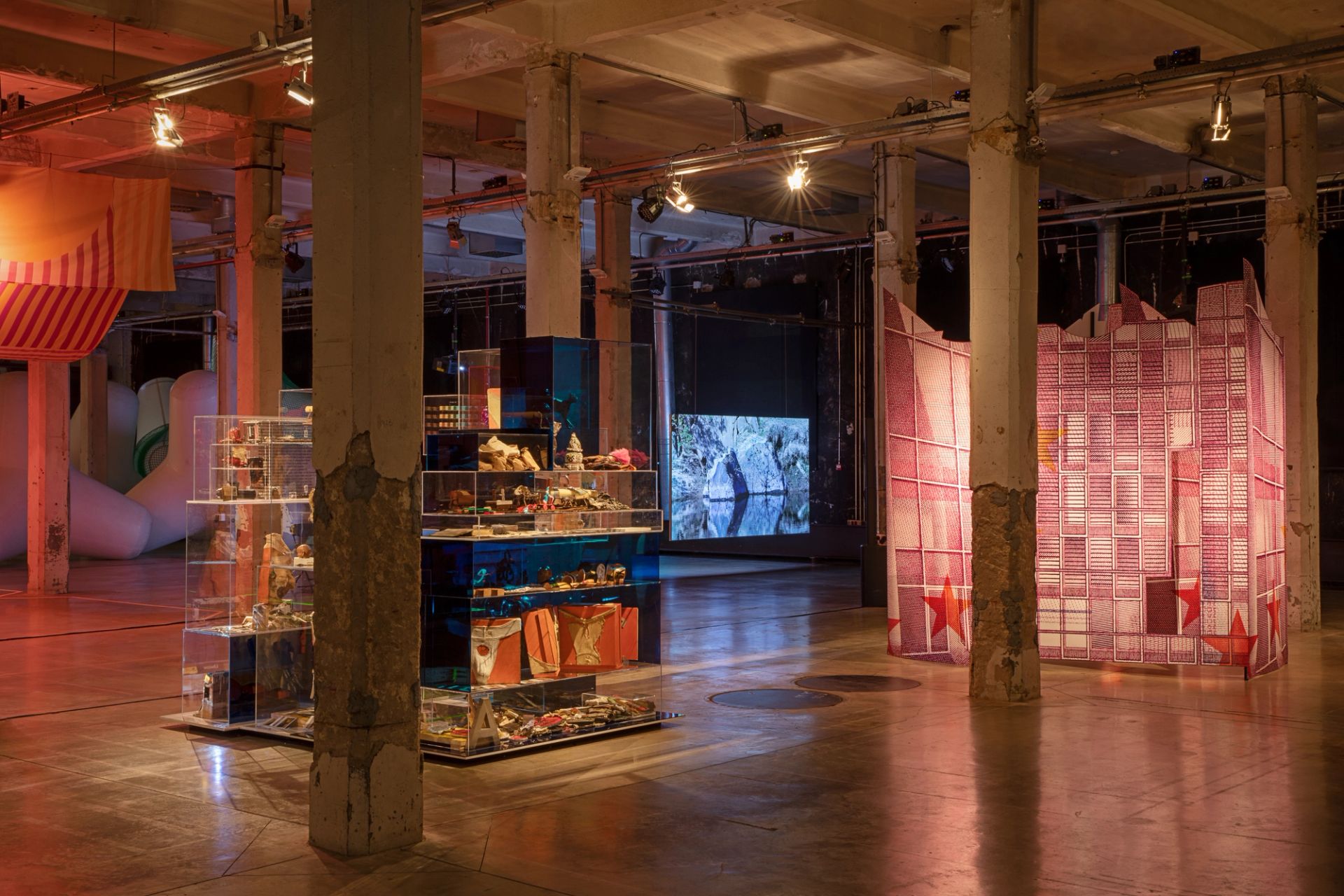
(Super)Models continues this lineage, although through a less aquatic framework. It remains large in scale, but the focus shifts from fluid environments to the structures that organise and reproduce reality. Models are not only tools of representation; they are systems that shape behaviour, standards, images, economies, and expectations. In that sense, this edition moves from the submerged and the fluid toward the operative: toward the forms, protocols, and references that quietly determine how we imagine and build the world.It is the right framework for this edition because models are everywhere at this moment. They appear in design, architecture, fashion, artificial intelligence, urban planning, cultural institutions, and social life. For MAYRIT, this offers a way to connect very different practices without forcing them into a single discipline or narrative. As with previous editions, the framework is not a theme to be illustrated, but a lens through which the city and its cultural agents can be read differently.
"Models are not only tools of representation; they are systems that shape behaviour, standards, images, economies, and expectations."
KOOZ How did the concept of (Super)Models emerge, and why does it feel particularly urgent right now?
Mohammad Salemy I grew up in a house visited by models. My mother was a fashion designer, so from the age of eight I was already able to abstract certain generalities about the women she would use to try her designs on. In other words, I was able to discern the non-human aspect of a model. For me, Supermodels are distinguished from regular models by either of two facts. First: once there, they become something that every designer in their own field has no choice but to follow or adhere to. Second, Supermodels are designed to inform — almost to regulate — how other models operate, functioning as a kind of meta-code. With the emergence of LLMs and AI systems, we are now facing the question of models on all grounds: aesthetic, infrastructural, technical, political, and philosophical. Our civilisational future depends on how we understand models and task them with their functions.
I was also the organiser of the conference Incredible Machines and editor of the book The Model is the Message, to which Eduarda contributed a text. That collaboration was, in many ways, the starting point for what has now become this biennial.
"We are now facing the question of models on all grounds: aesthetic, infrastructural, technical, political, and philosophical. Our civilisational future depends on how we understand models and task them with their functions."
Eduarda Neves Perhaps it will be important to mention the critical and ironic configuration of the concept (Super)Models… We don't know if it's urgent because we don't work based on a certain type of "urgency" which usually only means perpetuating dominant interests. Language is also permeated by these "urgencies." We are more interested in concepts capable of producing distinct ways of thinking and acting, fabulating the possibility of living other art worlds, floating worlds.
KOOZ The framework suggests that models not only represent reality but actively shape it. How does the biennial critically engage with this power?
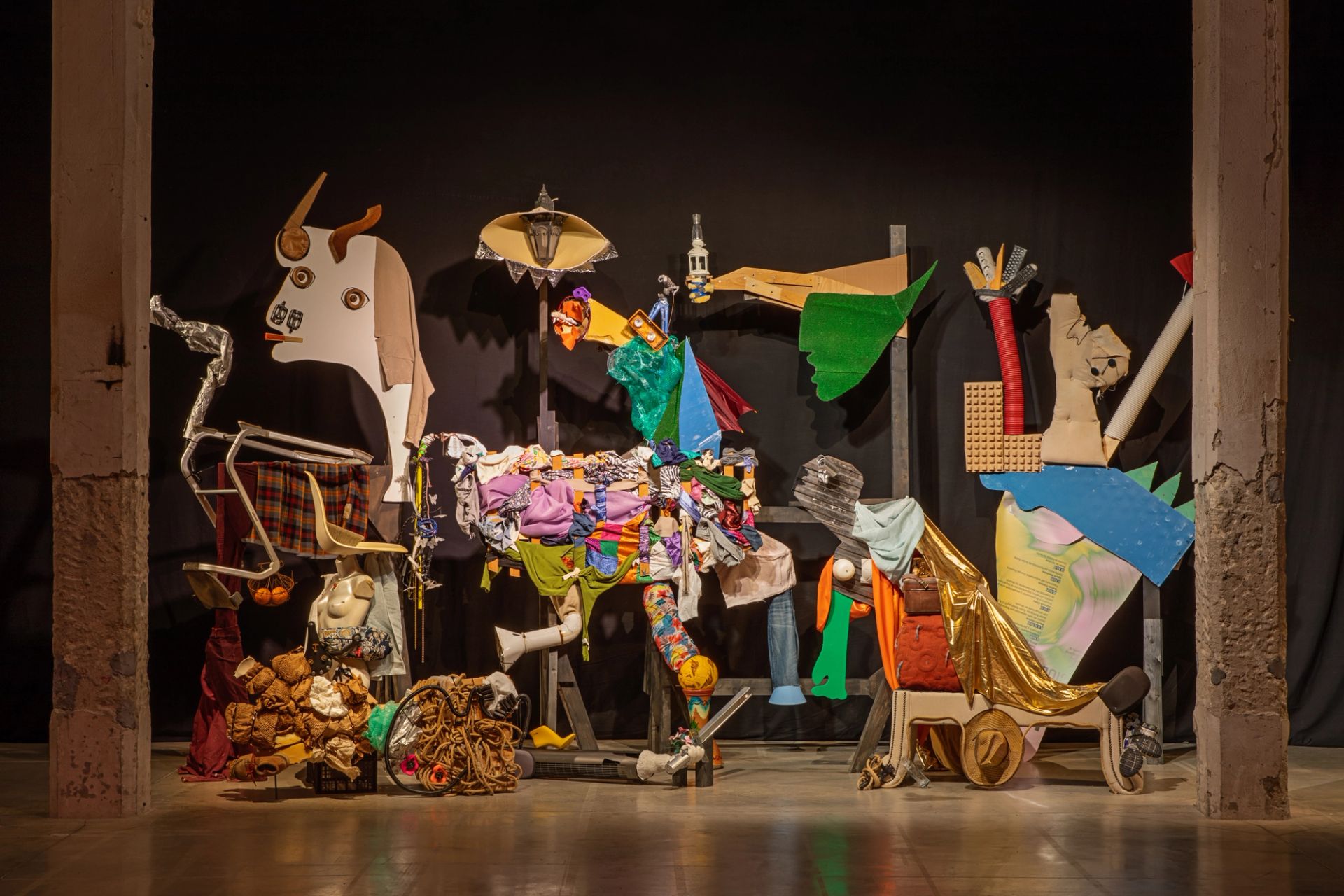
MS Every artwork in our exhibition confronts the question of models in its own way. Adad's Guernica reimagines Picasso's most politically engaged work by stripping it down to its basic formal and structural elements, then rebuilding it with discarded everyday materials. Daniel and Abie do the same for wave-breaker tetrapods, normally deployed for military purposes, repurposing them as interactive public art. Attila's work is about modeling the metaphysics of painting, moving it from two dimensions into three. The goal of our exhibition is to show that models do not always have to be technological or physical, and that their invisibility as models does not reduce their central role in shaping our experience of the world.
ENAs curators, we are only responsible for the curatorial proposal and the exhibition in Matadero. Thus, the critical dialogue is expressed in the curatorial text and in the exhibition. In an international context where the dominant logic of biennials is to reproduce the conceptual and ideological status quo of the mainstream art world as well as the geopolitical and economic universe that sustains them, our proposal is situated in an external zone that intentionally distances itself from that apparatus of power. We are more interested with this biennial in destabilising models than producing essentialist ontologies or reproducing disciplinary and disciplined models, regardless of their nature.
KOOZ Your curatorial text highlights a tension between reproducing existing models and generating alternatives. How is this reflected in the selected works?
MS That tension mostly exists outside of our exhibition. The works commissioned and selected for the exhibit oscillate between these two functions rather than settling on one side or the other.
EN The artists proposed have practices marked by an international trajectory, without disciplinary limitations, assuming a strong commitment to critical intervention in multiple domains that go beyond their respective specific fields of activity. Distanced from the production of any single mode or model of thought and action, their works are aimed above all at the floating fields of transdisciplinary forms, external to any ideological representation, be it of an artistic, geographical, political, social, gender, or other nature, seeking instead disruptive paths and variable and flexible contexts. In the contemporary world, as we write in our proposal, "Supermodels don't just reflect the world; they produce it." This is how, without conformism and exclusion but rather by taking risks, the artists participating in this exhibition are able to create other worlds. Artists have proposed works capable of questioning the usual ways of conceptualising and materialising architecture and design. The project in the specific space of Intermediae/Matadero will not only respond to the curatorial program but will also enhance the unique potentialities of this exhibition space.
"This is how, without conformism and exclusion but rather by taking risks, the artists participating in this exhibition are able to create other worlds."
KOOZ How do you balance institutional and independent spaces within the overall program?
ML For us, the question is less about balance than about building bridges. MAYRIT has always tried to connect different scales of cultural production: institutions, independent spaces, studios, galleries, universities, public programs, and more informal contexts that are often essential to the city’s cultural life. Institutional and independent spaces should not be understood as opposites. They operate with different resources, rhythms, audiences, and forms of visibility, but they are part of the same ecosystem. The role of the biennial is to create moments of contact between them, allowing each one to contribute from its own position without losing its specificity.
KOOZ The identity explores notions of “exhaustion” and “friction” within models. How do these concepts manifest visually?
Archivo Orsini In contrast to the all-encompassing nature of the model and the synthetic capacity of the canon, at Archivo Orsini we have chosen to examine the material dimension of these structures in search of their cracks and interruptions. If the classical idea of a model sought to synthesise, classify and make complex objects and notions reproducible, the proliferation of models and of models that produce models has generated a classificatory ‘surplus’ which, far from its objectives of efficiency and simplification, has overwhelmed any project of ordering the world through saturation. Building on this ‘exhaustion’, we have composed a visual essay organised into four series of images in which the transmutations of the canon and its exhaustion take on concrete forms and enable—without descending into utopianism—poetic and political interpretations of modular collapse.
Firstly, we examined the etymological dimension of the term ‘model’ and compiled images from various archives of casts, negatives, prehistoric hands, armed hands, invisible hands, plaster casts, sculptures, fake volcanoes, CT scans and wax models. We then delved into the interpretation of the (Super)model as an extractive tool and colonial apparatus, where records of undersea cables, trade routes, plantations and workers, cloud analysis, the internet, botany and urban infrastructure signalled the existence of a fissure,in which the human body and the physicality of infrastructure contradict a system that appears abstract and invisible. The taxonomic condition of the (Super)model forms the third section, where a collection of mouths, eyes, hands and gestures used in police analysis, measuring tools for animals and people, criminal photographic records, parts of datasets and drawings from mental institutions demonstrates how meaning can be flattened and rounded, and how the model functions simultaneously as a mirror and a mould. The (Super)model’s capacity for social control through the dimension of sound occupies the final section: the noises of work, protests, sound cannons, listening walls and Mosquito frequencies are some of the issues we explore, as instruments for organising space and human groups.
"We then delved into the interpretation of the (Super)model as an extractive tool and colonial apparatus, where records of undersea cables, trade routes, plantations and workers, cloud analysis, the internet, botany and urban infrastructure signalled the existence of a fissure."
KOOZ What do you hope audiences will question, or perhaps unlearn, after experiencing the biennial?
ML I would hope audiences leave the biennial with a broader understanding of what design can be and where it can operate. Design is not only present in objects, furniture, interiors, graphics, or finished forms. It also exists in systems, behaviours, rituals, infrastructures, institutions, images, technologies, and ways of organising collective life.
In that sense, (Super)Models invites audiences to look beyond design as a discipline and understand it as a field that constantly shapes how we live, move, desire, consume, remember, and imagine. The biennial is not interested in presenting design as something isolated from the world, but as something deeply entangled with culture, politics, economies, bodies, and environments.
ABOUT
The Mayrit Biennial is an event that merges design, architecture, and contemporary art, held every two years in Madrid. Through exhibitions, installations, and activities throughout the city, Mayrit positions the Spanish capital as a creative hub for emerging talent.
BIOS
Miguel Leiro is a designer, curator, and educator based in Madrid who focuses on expanding the cultural value of design. After receiving a bachelor's in Industrial Design from Pratt Institute (New York City) he started a practice in Madrid that specialises in products, creative direction, interiors, and branding. In 2020, he founded Office of Design, a non-profit cultural management organisation. Office of Design’s flagship project, MAYRIT Bienal, is a leading experimental architecture and design platform celebrating its’ third edition in May of 2024.
Eduarda Neves is an academic and an independent curator. She has presented exhibition projects in national and international institutions and spaces. Her research and curatorship articulate the domains of art, philosophy and politics. She was part of the Contemporary Art Acquisition Committees for the Portuguese State Collection (2019-20), for the Porto Municipal Collection (2021) and (2023) the Appreciation Committee that selected the Official Portuguese Representation at the 60th International Art Exhibition – La Biennale di Venezia 2024. She is currently director of ESAP (Porto Art School), where she teaches contemporary art and programmes the DÍNAMO gallery.
Mohammad Salemy is a Berlin-based independent artist, critic and curator from Canada. His writings have been published in e-flux, Flash Art, Third Rail, Brooklyn Rail, Ocula, Arts of the Working Class and Spike. Together with a changing cast, he forms the artist collective Alphabet Collection. Salemy has been the cofounding Organiser of The New Centre since 2014 and the editor-in-chief of its publishing arm, Triple Ampersand. He is also the editor of "For Machine Use Only: Contemplations on Algorithmic Epistemology" (&&&, 2016) and "Model is the Message: Incredible Machines Conference 2022" (&&&, 2023).
Archivo Orsini is a collective dedicated to research, creation, and writing on contemporary art, design, architecture, urbanism, philosophy, and digitality. Founded by Clara Harguindey, Claudio Hontana, and Juan de Salas, the project takes its name from a 19th-century explosive device—anchored in the conviction that writing history also means thinking and writing from the rubble, the crater, and the crack. Through poetry, programming, and archival practice, Archivo Orsini develops ongoing collaborations with artists, curators, and researchers to produce texts, games and small libraries that critically engage with the material world we inhabit.
Federica Zambeletti is the founder and managing director of KoozArch. Trained as an architect, she works across research, storytelling, and curatorial practice at the intersection of art, architecture, critical theory, and regenerative thinking. Before founding KoozArch in 2022, she collaborated with UNA/UNLESS on a range of cultural projects, including exhibitions, research initiatives, and the transformation of an 18th-century palazzo into a cultural foundation for Anish Kapoor.