The exhibition “Situations. Stratégies pour habiter l’instable: phénomènes, événements, coïncidences'' developed by Pablo Bras in collaboration with Juliette Gelli and Romain Guillet, represents France’s participation to this year’s Triennale Milano exhibition “Unknown Unknowns. An Introduction to Mysteries”. The exhibition echoes the theme of the 23rd International Exhibition and looks to find ways to live with the unstable, working with the assumption that, to move forward, we should not explore the unknown or invent new worlds, but observe the current one in order to configure it and strain its combinatory possibilities. In this interview with Pablo Bras we discuss the role and value of designers as individuals who are able to create situations which are grounded in our physical present rather than turning towards the speculative future.
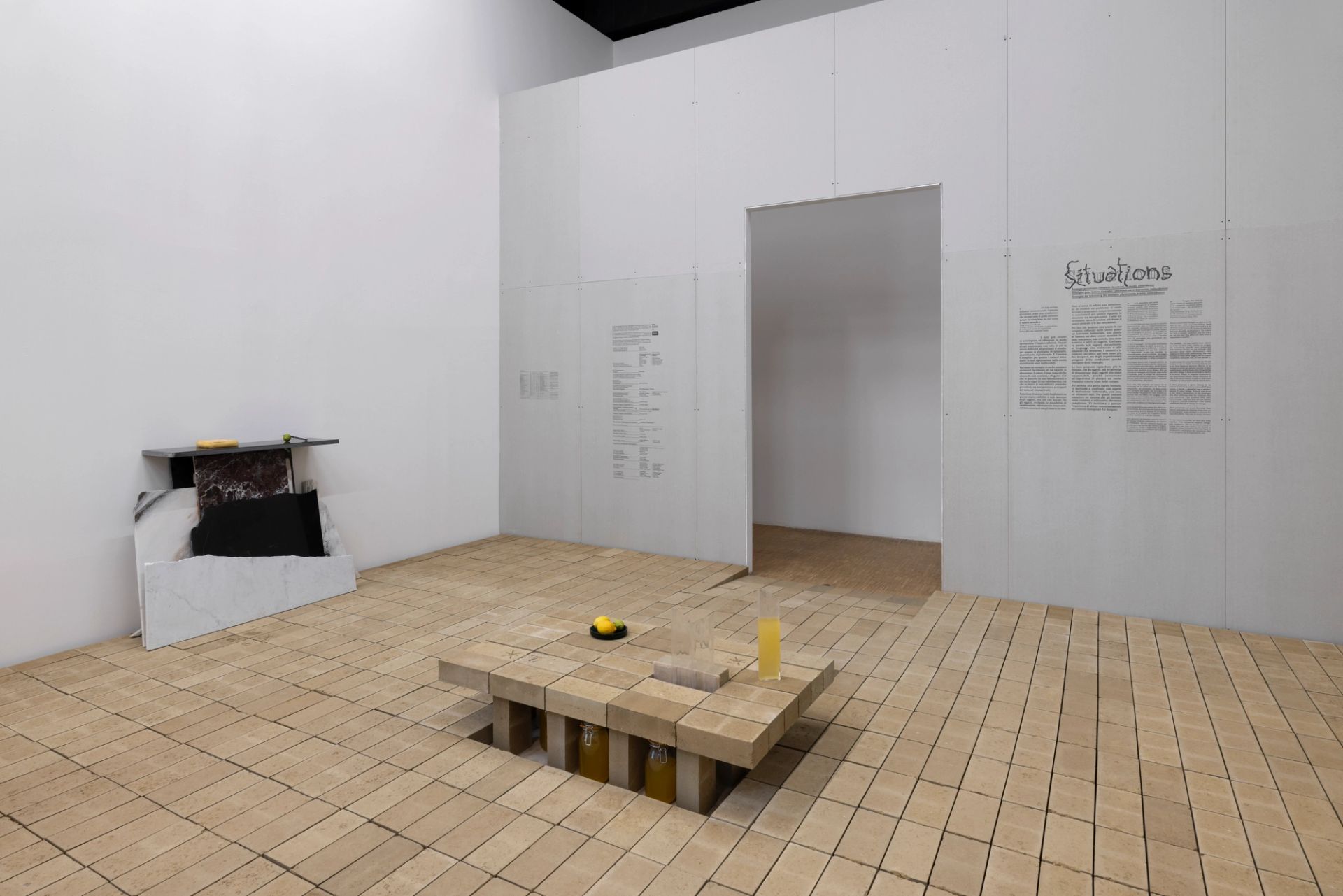
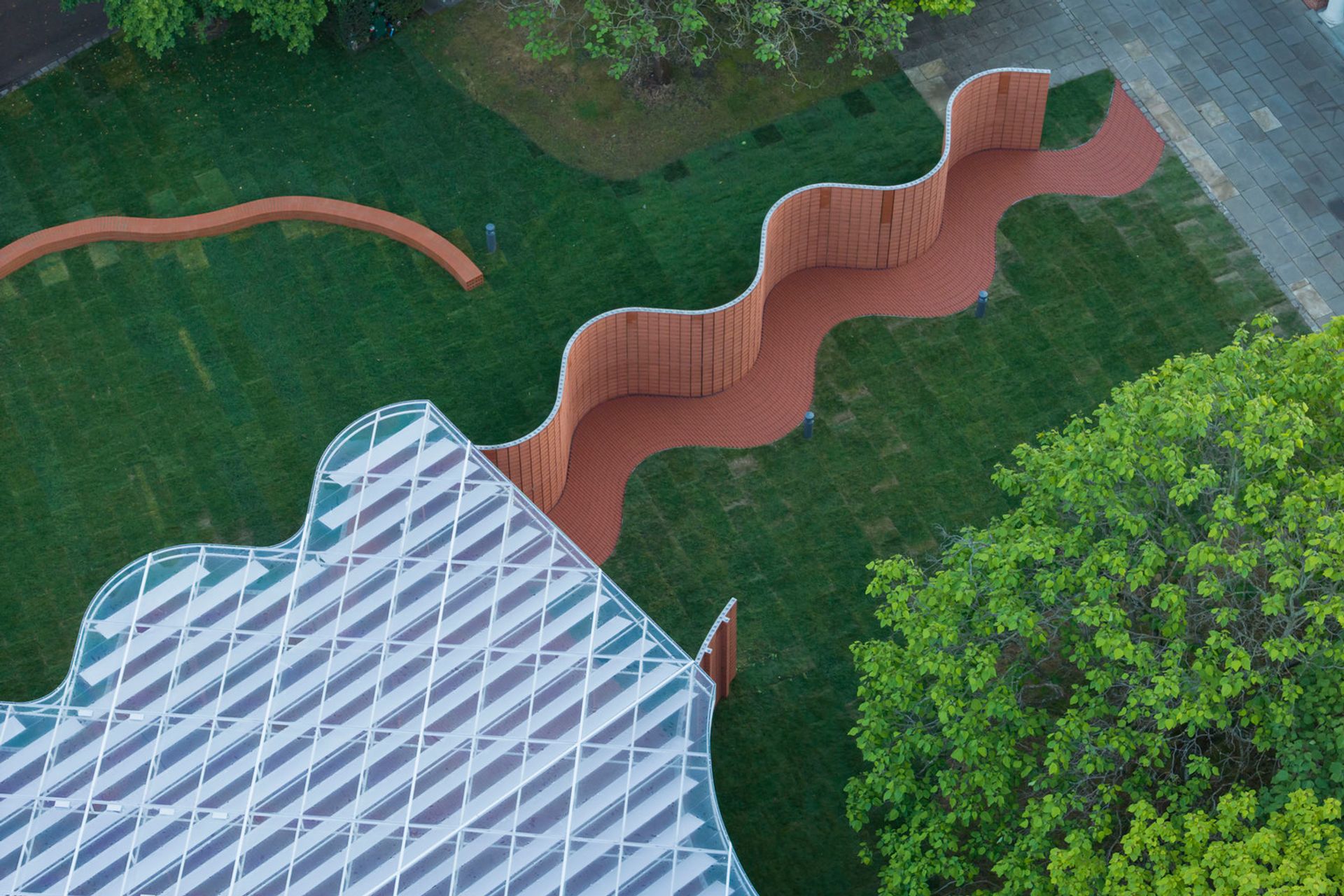
Exhibition view of “Situations. Stratégies pour habiter l’instable: phénomènes, événements, coïncidences'', French Participation at the 23. Milan Triennale. Credits: Andrea Rossetti.
KOOZ What prompted your interest in the 23rd Triennale Milano International Exhibition and what informed your participation in the competition launched by the Institut Français?
PB I was pursuing the French public programme Agora about natural and artificial phenomenon for home appliances when I came to the conclusion that our current choices as designers are not efficient to apprehend our objects of research. We have very static tools to create: mock-ups, sketches and 3D, while observing existing phenomena implies more flexible and dynamic methods. At the same time, I was observing French designers that approach creative processes with a lot of flexibility, variation, and improvisation.
So filling for once the function of curator was a way to continue this reflection by picking up existing works from other people, in order to argue, nuance and develop their ideas. This seemed to be soluble into Ersilia Vaudo’s general curatorial project.
To question how we inhabit means to question the way we impose our uses or our functions onto our environments.
KOOZ The title of your installation is “Situations. Strategies for Inhabiting Instability: Phenomena, Events, Coincidences.” How do you approach and define notions of “inhabitation” and “instability”?
PB A French design theorist, Alain Findelli, stated that the work of the designer should seek a "better habitability on earth". There are several ways to define design, but one pertinent way to do this job could be to consider the current crisis as a crisis of our ways to inhabit our Planet. "Inhabiting" is understood as the way we live collectively, considering that the "we" should extend from humans to the rest of living and nonliving things.
If we go radically into this, to question how we inhabit means to question the way we impose our uses or our functions onto our environments. In this sense, we have to reinvent the way we produce these uses and functions. The question of inhabiting is less about new scenarios or uses than production scales and processes.
The aim of this exhibition is to remember that there is no such thing as the future. It is an invitation to accept instability as our new relation to time and events to drive our coming developments.
The term "Instability" directly follows this question. To me, modernity has defined inhabitation with a very clear perspective and has even produced a term to ensure time's linear development: the future. The aim of this exhibition is to remember that there is no such thing as the future. Future is what emerges from a bunch of images, discourses and willings, but the only reality is the present.
So what this exhibition proposes is to renounce to a very clear path of development in time, while escaping the temptation of a romantic backtrack. It is an invitation to accept instability as our new relation to time and events to drive our coming developments.
KOOZ Featuring a lemon tree, a DIY data centre, a broom and twenty-two other objects, the installation asks us to interact differently with the environment and objects that we inhabit and use daily. How has the current climate and ecological crisis made you rethink your practice as designers?
PB I think my generation learned design under the scientific consensus about the climate crisis, so we didn’t have to reinvent our practices. On this very precise question, some of my teachers were even in a position where they had more to learn from the students than the reverse, which is a bit frightening but also thrilling.
Of course, design goes through an epistemological crisis and the main question we have to answer is: What designers can create if they do not create products anymore? Speculative design answered this question through storytelling, fiction, movies and images. This exhibition proposes that designers can create situations. It means that they have to compose simultaneously with what exists and what could exist. In short, they have to rearrange the present before imposing a process of production.
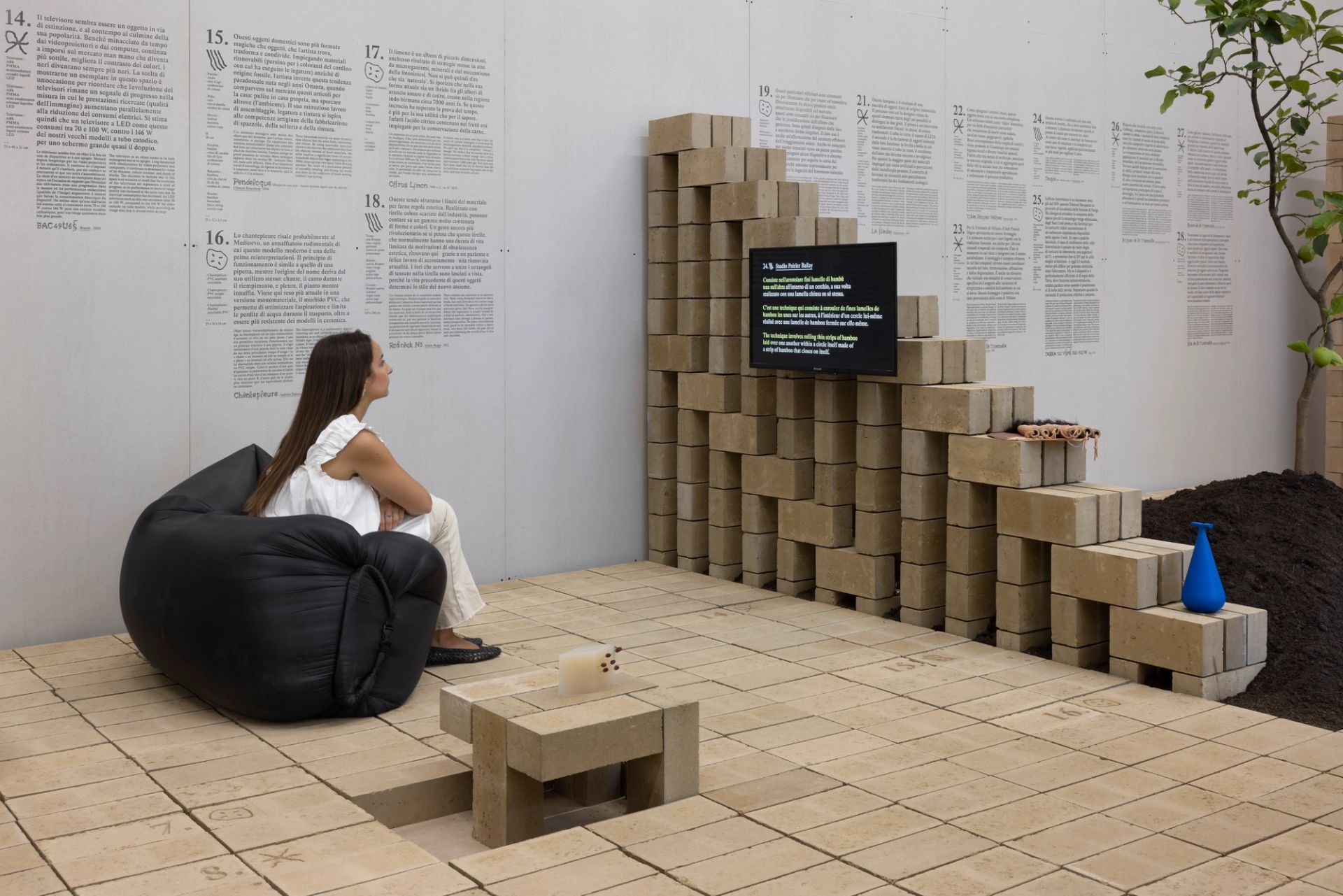
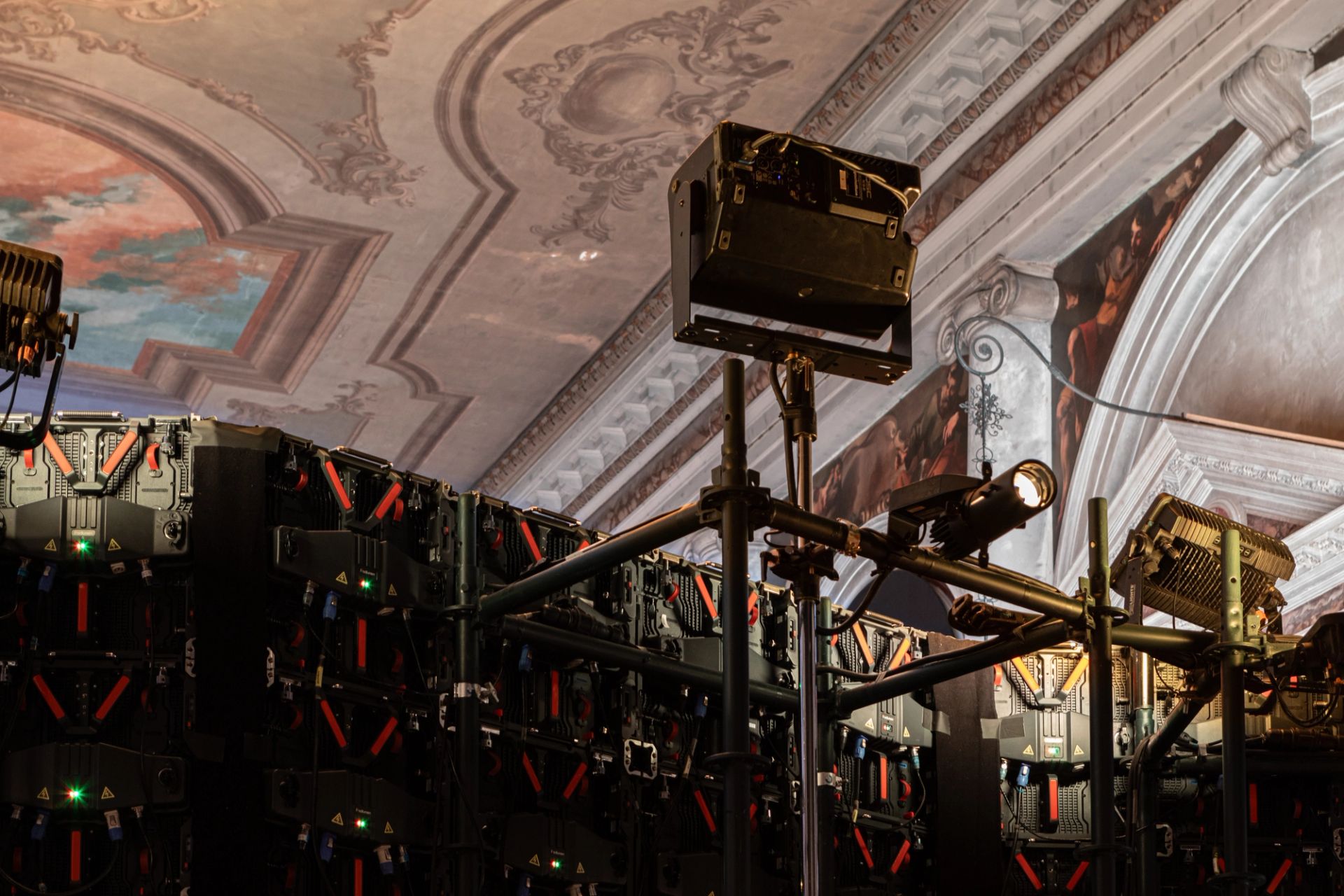
Exhibition view of “Situations. Stratégies pour habiter l’instable: phénomènes, événements, coïncidences'', French Participation at the 23. Milan Triennale. Credits: Andrea Rossetti.
KOOZ Beyond the realm of design, your expertise also spans to the visual arts, scenography and graphics. What is, in your opinion, the strength of your multidisciplinary team?
PB Designers are a bit generalists as professionals, which could become a problem in some cases. Personally, I don’t think designers are legitimized to produce knowledge with something else than shapes. We can and have to be influenced by other disciplines: history, sociology, engineering, biology… But it will remain their epistemology: historical method is the method of historians, sociological is the one used by sociologists and so on. Our method implies shaping. That being said, shape is not a superficial question. It is very political, even a philosophical one.
When one has to create a space like the French section, one needs to work with people that develop a singular discourse with shapes. That is why we created the space, together with Juliette Gelli - who is an expert in graphic shapes and moving environments - and Romain, who is an expert in spatial shapes. Other thinkers were influencing the process of creation through readings, and we even asked for an unpublished text from the French philosopher Victor Petit that closes the exhibition catalog (that will be out in September).
If you look at an exhibition like the 23rd Triennale of Milano, the actual Unknowns are the footprint and impact of the manifestation itself.
KOOZ Temporary exhibitions have been to date energy savvy endeavors. How and to what extent did the exhibition's carbon footprint inform the design and content of your installation?
PB Well, if you look at an exhibition like the 23rd Triennale of Milano, the actual Unknowns are the footprint and impact of the manifestation itself. I’m not part of those that say "the most ecological exhibition is the one that doesn’t exist…", but I admit that the cultural benefits of such an event - production of knowledge, awakening of curiosity, open minding - simply can’t be counted on the same level as its ecological cost.
That being said, the production of exhibitions is such a confidential question which makes it a very exciting subject, if not THE subject for exhibitions' design. If one is curious about how things are made and how they work, one cannot keep on going into a design museum and watching a movie on a TV without wondering how the TV itself is made. So gladly these questions slowly contaminated the content of the exhibition and impacted the creation of the space.
We considered that what we know the least is what is closest to us, so we tried to open the visitor's eye to what makes an exhibition. This is the function of this "Ecological Balance of the Space" that the visitor finds just before the exit.
KOOZ What are your hopes for both a designer and amateur visiting the Triennale? What would you wish for someone to take away from such an endeavor?
PB One of the starting points of the exhibition was to not be naive or resolve, nor to moralize. But we did not want to create an austere space, though. So, we tried to balance between a place where people would like to stay and very neutral texts. I guess that the dreamed feedback from this exhibition would be a feeling between disorientation and enthusiasm.
Bio
Pablo Bras is a designer. His interventions start from objects to spaces, images and texts. His practice privileges contact to the production process. He works mainly for artists, cultural institutions and private clients. He has exhibited at the Villa Noailles, the Arsenale Pavilion, the Villette, and the Arcade Gallery. He has also benefited of grants, such as the Agora for Research in Design in 2019, which has allowed him to conduct mixed research, in which theory is considered as an opening to practice, and practice is experienced as a limit to theories. He is also a winner of the Mondes Nouveaux programme, promoted by the French Ministry of Culture.
Federica Zambeletti is the founder and managing director of KoozArch. She is an architect, researcher and digital curator whose interests lie at the intersection between art, architecture and regenerative practices. In 2015 Federica founded KoozArch with the ambition of creating a space where to research, explore and discuss architecture beyond the limits of its built form. Parallel to her work at KoozArch, Federica is Architect at the architecture studio UNA and researcher at the non-profit agency for change UNLESS where she is project manager of the research "Antarctic Resolution". Federica is an Architectural Association School of Architecture in London alumni.