Project
BRIC (Build – Rotate – Interact – Connect) 2021, Belgium, Bruxelles
-A bench-brick that breaches barriers-
Team members : Augustin Pol, Catarina Varela, Clémentine Renaud, Django Vranken
In a society where each of us can create wider networks than ever before, where getting in touch with anyone from anywhere has never been easier, the development of the internet and smartphones helped us to achieve more efficiency, encouraging economical and societal development. We are developing to an urban space where the focus is on real life interaction. A place where we concentrate for once on physical contact rather than on the virtual . COVID-19 has highlighted this need.
The Glo-cal Experience 2021, Netherlands, rotterdam
-Reviving Tourism & the Global Economy Post COVID-19-
Team members : Thanat Prathnadi, Nathan Ngo, Liva Sadovska
Whilst technology has revolutionised the way we travel in the 21st century, the wake of the coronavirus pandemic has exposed our inability to sustain economies domestically. Few industries have been affected more than tourism, with a 42.1% decrease in revenue compared to that of 2019, our traditional ways of connecting globally through travel have become redundant. The Glo-cal Experience presents a systematic and scalable solution to the receding travel industry, bringing local experiences and economies to the forefront of a global travel revolution.
Infrastructural Gardens 2020, Colombia, Bogotá
-Making Moravia’s landscape visible-
Team members : Daniel Monroy
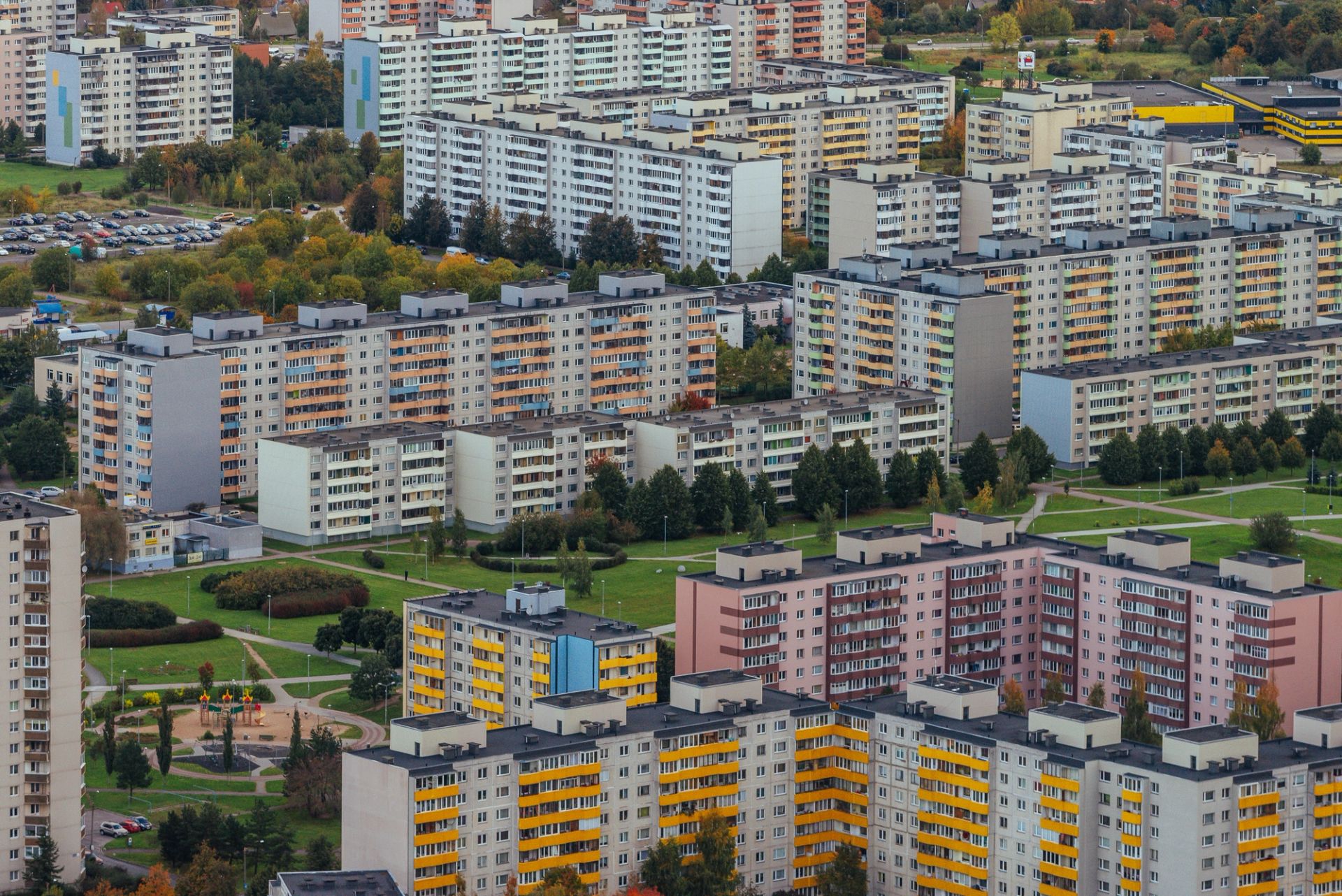
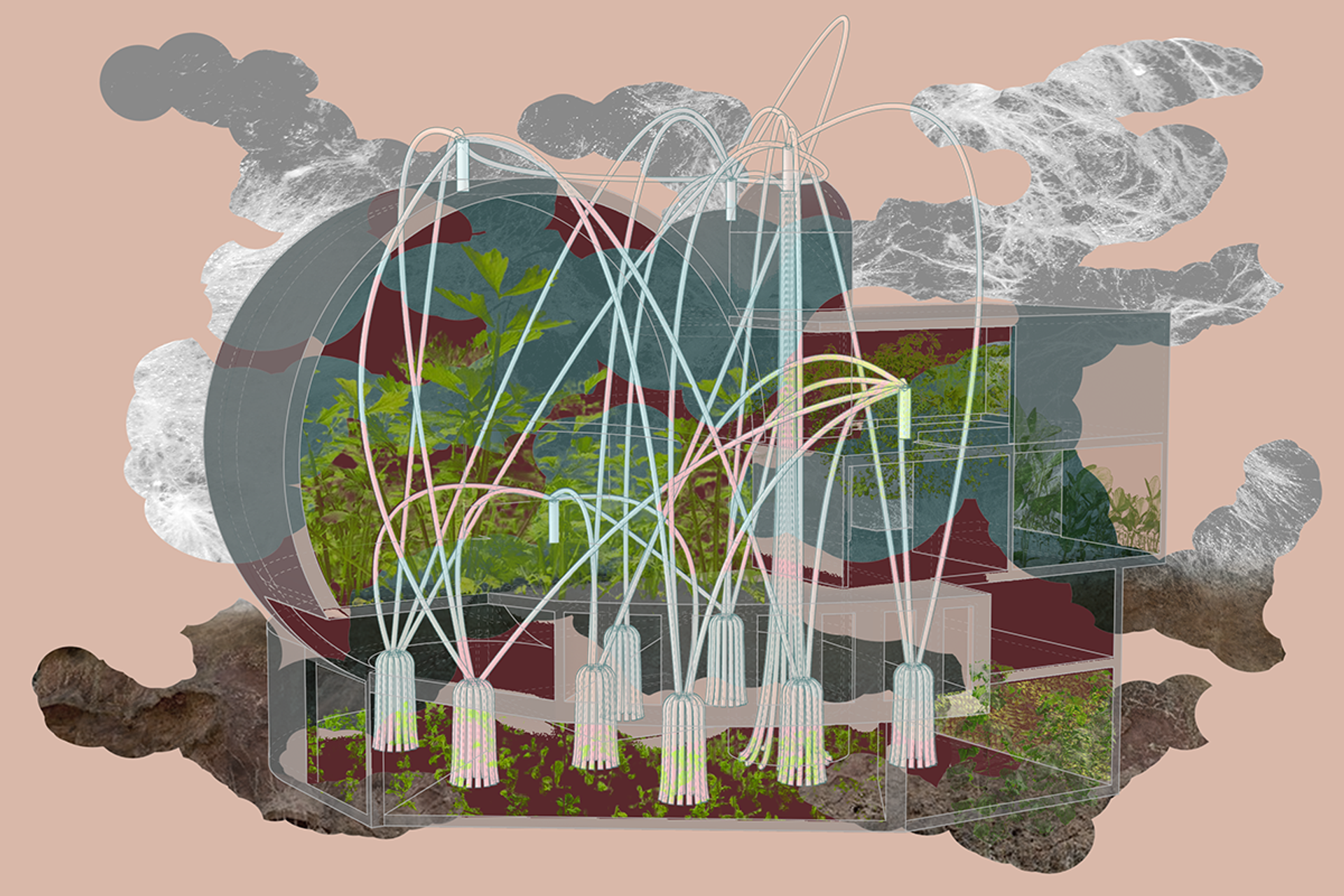
Infrastructural Gardens addresses the informal city’s urban processes within the Colombian context. Especially, this “informal” approach to architecture that Manuel Gausa explains as “a dynamic that releases energies” (p.343, Metapolis, 2003), could drive the interrelation between the community’s Know-hows and territorial complexity to ultimately design these urban clusters. The conventional idea of slums as an attachment to the formal city has undervalued its informal counterpart’s input to the Hybrid city, one with a transformative nature, a high social identity and compact densification. This proposal challenges genericness, land speculation, and political oblivion within these informal hubs in order to create a contemporary Hypercluster.
Interview
KOOZ How would you define 'media architecture' and how does it relate to your project?
Augustin Pol | Catarina Varela | Clémentine Renaud | Django Vranken For us, media architecture is a way of creating communication through, with and by the environment we live in. A media architecture is an architecture creating a link, an interaction, a social life. It can also be defined as a branch of architecture that has communication as an end, and not necessarily the means to that end. We don’t think that its materialization is always dependent on the digital and so we seek with our project to propose that: without resorting to the digital, BRIC proposes that the inhabitants communicate among themselves, on a “face to face interface”. Building all together creates interactions. Those benches are offering places for more than one and its curves makes it easier to share some time with more than a single mate. Our aim is to make people meet each others, to have an environment catalysing it.
KOOZ How do you approach and define the notions of "restorative" and "city"?
Daniel Monroy The contemporary “city” is a complex organism, dominated by capitalistic interest and unarticulated growth, which, over the years, have harmed the symbiosis between humans and non-humans. “Restoring” these physical and intangible bonds from a superficial level can affect the most structural layers built up over time. Thus, a restorative city is an entanglement of the urban evolution (diachronic) with the arising issues (synchronic) of our cities.
Thanat Prathnadi | Nathan Ngo | Liva Sadovska As cities become denser, the friction between profitability and spatial quality becomes apparent. The aggregated development of The Glo-cal Experience ensures the human centered experience of a single module is amplified as the network densifies. Systematic and scalable architectural interventions are vital in restoring our cities.
KOOZ To what extent can extent can media architecture inform the resilience of our cities?
Augustin Pol | Catarina Varela | Clémentine Renaud | Django Vranken This project is about recycling. All benches are made out of recycled plastic bottle caps. The more plastic being collected, the more benches are manufactured and spread over the city. This architecture promotes the idea of recycling to people using it. We think the reuse of material is an essential need that is not yet a reality in our everyday life. We want to communicate on the way we build the city. The construction of our environment could care a lot more about resources sparsity and material circularity. BRIC is about material resilience but not only… Since we’re in the social theme, we’re talking about social resilience: how to entertain and maintain cohesion between people ; how to generate social links and create interactions ; how to invite them to talk to each other. Those relations, exchanges, physical interactions, are an important need of our days. Such a source of resilience may generate solidarity. For instance, Brussels is a cosmopolitan city, but its citizens aren’t connected enough. The public space is a place with a high potential of interaction. Urban installations are a way of generating that instinctively if it is designed in the right way. BRIC promotes sharing and collaboration. Its length, with handles at each end means the best way to carry one of them is to find help from someone else. Those two people become space designers since the two octagonal plugs enable them to articulate the structure as they see fit. Its curved shape enables two people to turn towards each other. Our project aims to be a resilient urban installation where you are not alone and may even want to spend more time together.
Daniel Monroy Societies with strong social inequality have taken advantage of the digital space to communicate and co-create a guerrilla architecture, a rebellious act in the urban realm that shows their social fight to the world. The way the digital world has permeated our social fabric could never be followed by our urban fabric at such a speed, and yet, it reveals to us, designers, these meaningful ways to understand what underprivileged communities reclaim and envision a fairer future for our built environment.
Bio
The Media Architecture Biennale is the world’s premier event on media architecture, urban interaction design, and urban informatics. This year, due to the ongoing global pandemic the Media Architecture Biennale 20 (MAB20) had to be adapted and re-imagined. Therefore, the MAB20 Program will take place online:
- Workshops | June 24th – 29th | via Zoom
- Online Conference | June 30th – July 2nd | via virtual conference platform
Registrations are now open. For more information visit: www.mab20.org