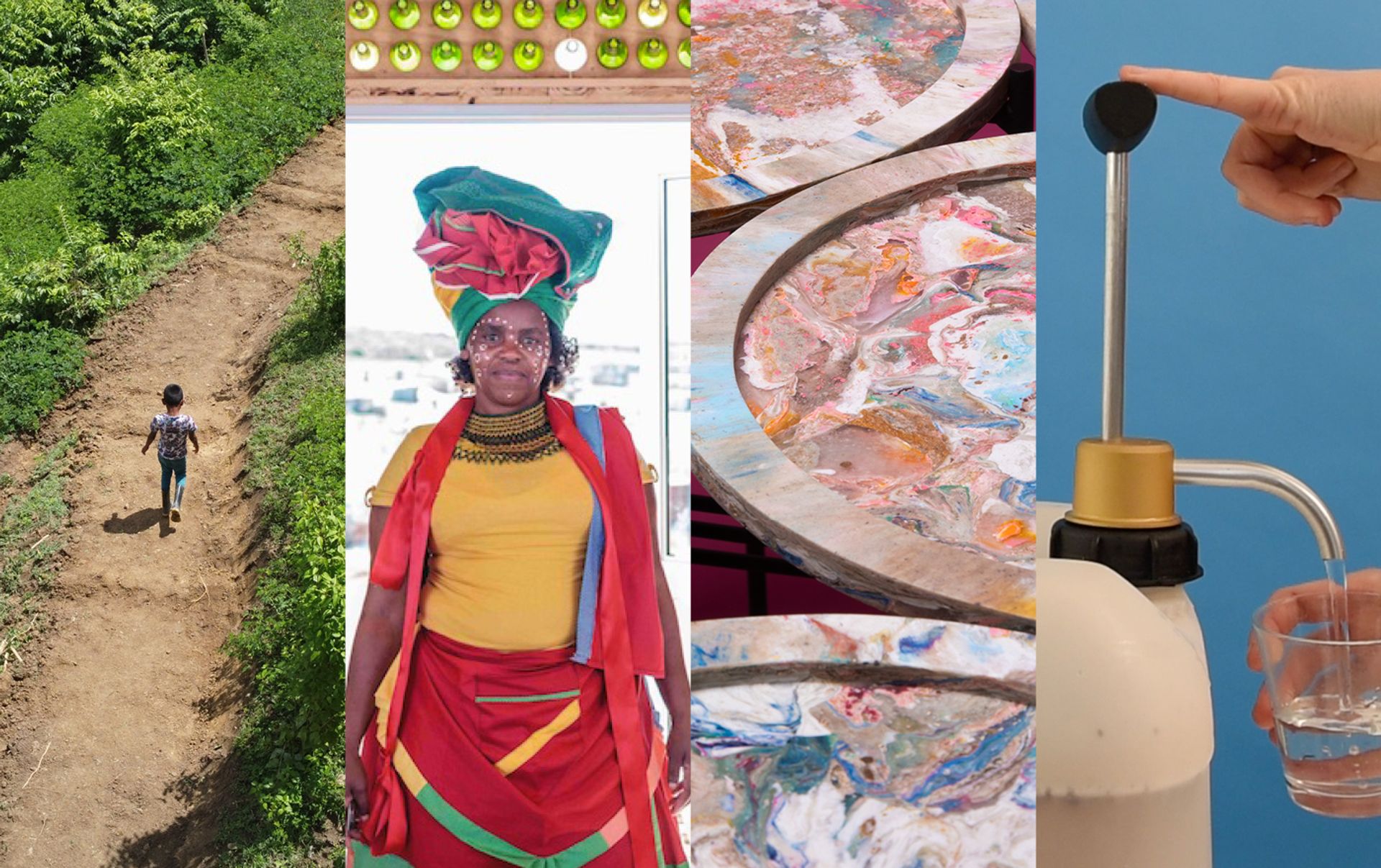
Developed as a collaboration between the teams at What Design Can Do and Creative Industries Fund NL, Creative Climate Collective brings 18 Dutch and African designers and makers to COP27 in Sharm El-Sheikh, Egypt. Advocating for design that advances toward climate action, exchanges knowledge, experiences and ideas to build networks across geographies and disciplines, the project embraces collaboration, creativity and a hands-on mentality as means through which to tackle our contemporary climate crisis and create true climate justice. To this end, the projects presented within the frameworks of the Creative Climate Collective at COP27 are representative of how we can design and build differently, through an approach which is more in tune with our community, our heritage and our planetary ecosystem. In this conversation with Richard van der Laken, co-founder and creative director of What Design Can Do, we inaugurate a series of interviews with the 18 participants on their projects and ambitions whilst discussing the importance of nurturing creative ideas and engaging disruptive voices at the table.
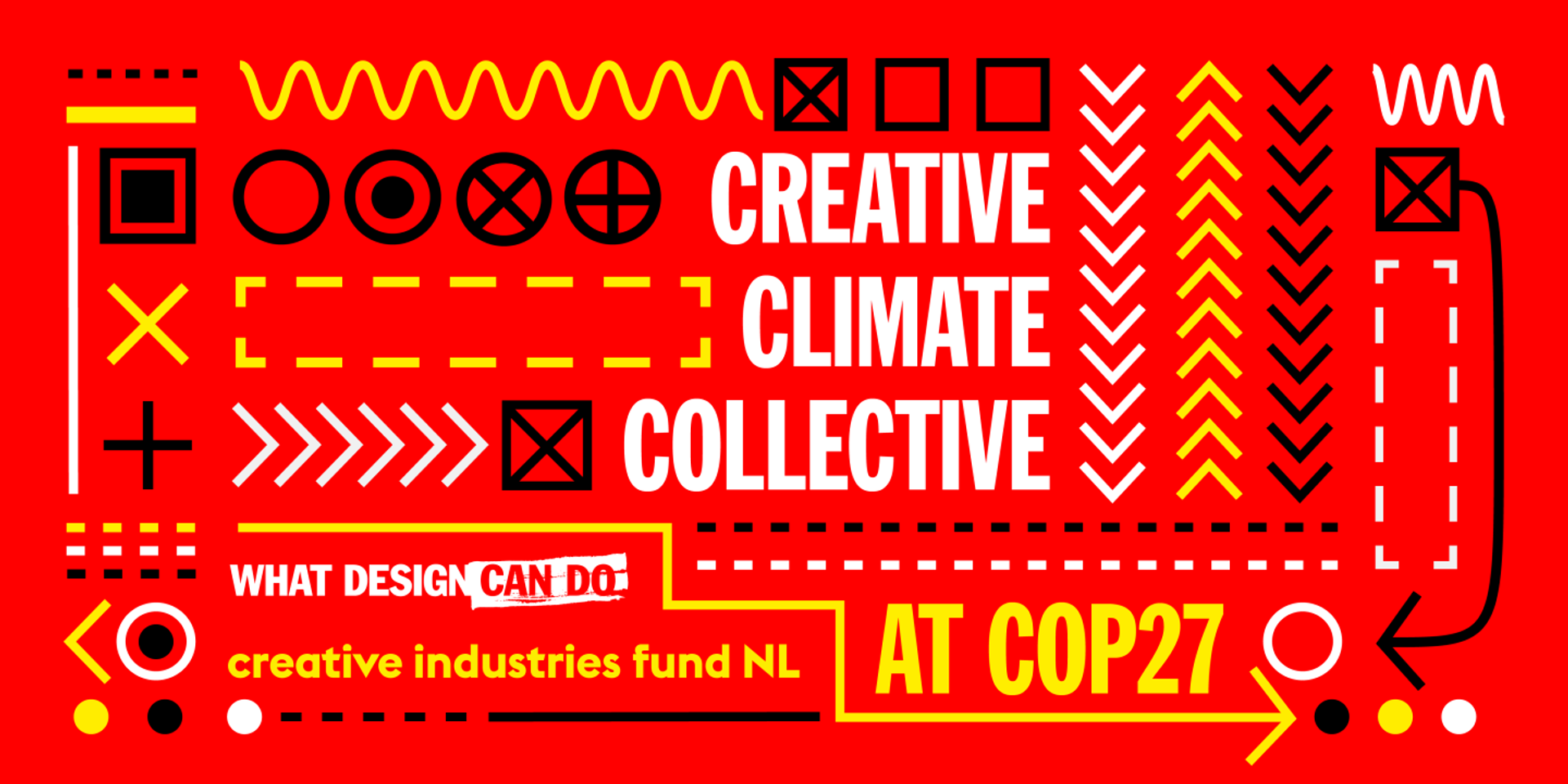
Official graphics of the Creative Climate Collective initiative.
KOOZ It would be great if you could start by introducing the project, ambitions for these and what brought you to participate in COP27?
RL It is no surprise that catastrophic climate change is the single greatest challenge of our time. To address its devastating impacts we need collaboration, creativity and a hands-on mentality - that’s why we initiated the Creative Climate Collective. It consists of a passionate group of makers and designers: eight Netherlands-based designers alongside ten designers from the African continent. The goal of bringing the Creative Climate Collective at COP27 is to connect these inspiring creatives, advocate for design that advances toward climate action, exchange knowledge, experiences and ideas to build networks across geographies and disciplines.
At What Design Can Do (WDCD), our mission is to empower the international creative community to valuably contribute to addressing the major problems of our time. By bringing these creative innovators to COP27 we aim to inspire more conversations and actions that will amplify the role of design in navigating the challenging impacts of climate change.
The goal of bringing the Creative Climate Collective at COP27 is to connect these inspiring creatives, advocate for design that advances toward climate action, exchange knowledge, experiences and ideas to build networks across geographies and disciplines.
KOOZ What Design Can Do will be physically present at COP27 exhibiting the work of 18 Dutch and African creative innovators (Creative Climate Collective) who are collaboratively rethinking and rebuilding our future by design. How does this project understand and explore this gathering as an opportunity to advocate for the role of design within climate action?
RL Year after year we see the same leaders setting the same “ambitious” climate targets with the same outcomes. It is not enough. The climate crisis means that it is time to stop business as usual. We urgently need a range of creative ideas, fresh perspectives and disruptive voices - from around the world - at the table. We believe creative innovators are fundamental in rethinking and actioning systemic and sustainable change.
Creative climate innovators are not prepared to wait any longer for governments to take action. They are already using their fresh perspectives to work on climate solutions in their local context. By providing these innovators with a global platform like COP27, they are able to highlight the role of design to tackle the impacts of the climate crisis.
In order to walk the talk - and create true climate justice - we believe we need more disruptive voices at the table. At WDCD, we see COP27 as an opportunity to advocate for the role of design within climate action and build the exchange of knowledge, experience and networks needed to activate it. That is why we are proud to harness the energy of creatives from seven countries that will showcase how innovation lies at the heart of the climate movement. That is where our hope lies: in creativity, and in collective action.
Year after year we see the same leaders setting the same “ambitious” climate targets with the same outcomes. It is not enough.
KOOZ Where do you see the biggest points of convergence between COP27's debates/set topics and architecture or urban design? How and to what extent will architects contribute to the debate on the climate emergency?
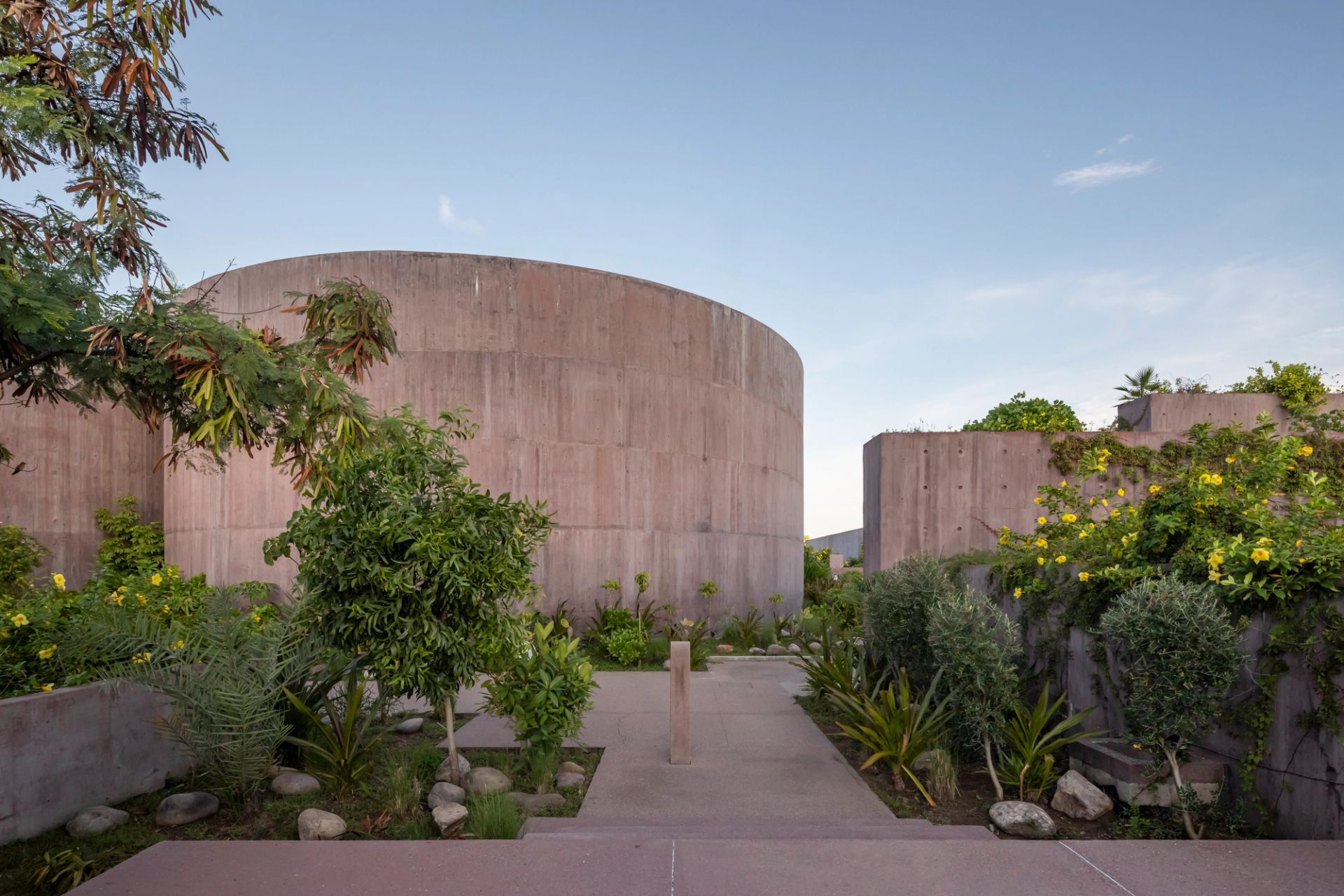
RL The built environment is one of the most important areas to create change. We do not build for a year but for decades. So the decisions that are made now will have an effect on how we live in the coming years to come. And that is very tangible. For example; will we build with concrete or wood? Will we build circular or linear?
I think there are good reasons to be optimistic. First of all architects in general have always been very engaged with the user of the building they design, and also with citizens at large. Architects and city planners all over the world have been embracing the notion and urgency of sustainable building already for years. World famous African architects like Francis Kéré also show that we can build in a different way, in tune with our community, our heritage and in a sustainable way. Architects have been leading the way on many societal and environmental levels. So let’s be inspired by them and get things done.
World famous African architects like Francis Kéré also show that we can build in a different way, in tune with our community, our heritage and in a sustainable way.
KOOZ The growing centrality of African countries in the current debate on climate change is becoming increasingly evident. What do you think will emerge from this extended, non-Western synergy of intents and collaboration? What are your hopes for COP27?
RL This year’s UN climate change conference in Egypt is the first COP on the African continent since 2016, and only the fifth time that COP has been hosted in Africa. The importance of this should not be ignored. It provides us with an opportunity to draw attention to the specific challenges and opportunities associated with climate change in Africa, as well as an opportunity to amplify the work that is already being done within the continent.
We are excited to spotlight the creative work of climate activists and climate innovators from around the world. By bringing together this group of innovators from Egypt, Ghana, Kenya, Mali, Mozambique, the Netherlands and South Africa, we are able to promote flow of ideas and shared learnings from each local perspective. Our hopes for COP27 - and the Creative Climate Collective - is that inspiration and discussions do not stay within the walls of the conference. We want the climate innovators, world leaders and everyone involved to be inspired to put their ideas into action.
Bio
Richard van der Laken is a creative director based in Amsterdam. He met Pepijn Zurburg while studying at the Utrecht School of Art and Sandburg institute, and together they formed De Designpolitie - a renowned visual design agency, graphic design collective Gorilla, and What Design Can Do. Since forming, they’ve worked with many partners from Rabobank to Artis Zoo, won numerous awards, and feature in the permanent collection of galleries such as the Design Museum London and MoMa New York. At WDCD, they’ve created multiple design challenges, publications, and events hosted across Amsterdam, Brazil and Mexico.
What Design Can Do (WDCD) is an international organisation that seeks to accelerate the transition to a sustainable, fair and just society using the power of design. Based in Amsterdam, with hubs in São Paulo, Mexico City, Delhi, Nairobi and Tokyo, WDCD started in 2011 and is initiated, curated and organised by creatives.
Federica Zambeletti is the founder and managing director of KoozArch. She is an architect, researcher and digital curator whose interests lie at the intersection between art, architecture and regenerative practices. In 2015 Federica founded KoozArch with the ambition of creating a space where to research, explore and discuss architecture beyond the limits of its built form. Parallel to her work at KoozArch, Federica is Architect at the architecture studio UNA and researcher at the non-profit agency for change UNLESS where she is project manager of the research "Antarctic Resolution". Federica is an Architectural Association School of Architecture in London alumni.