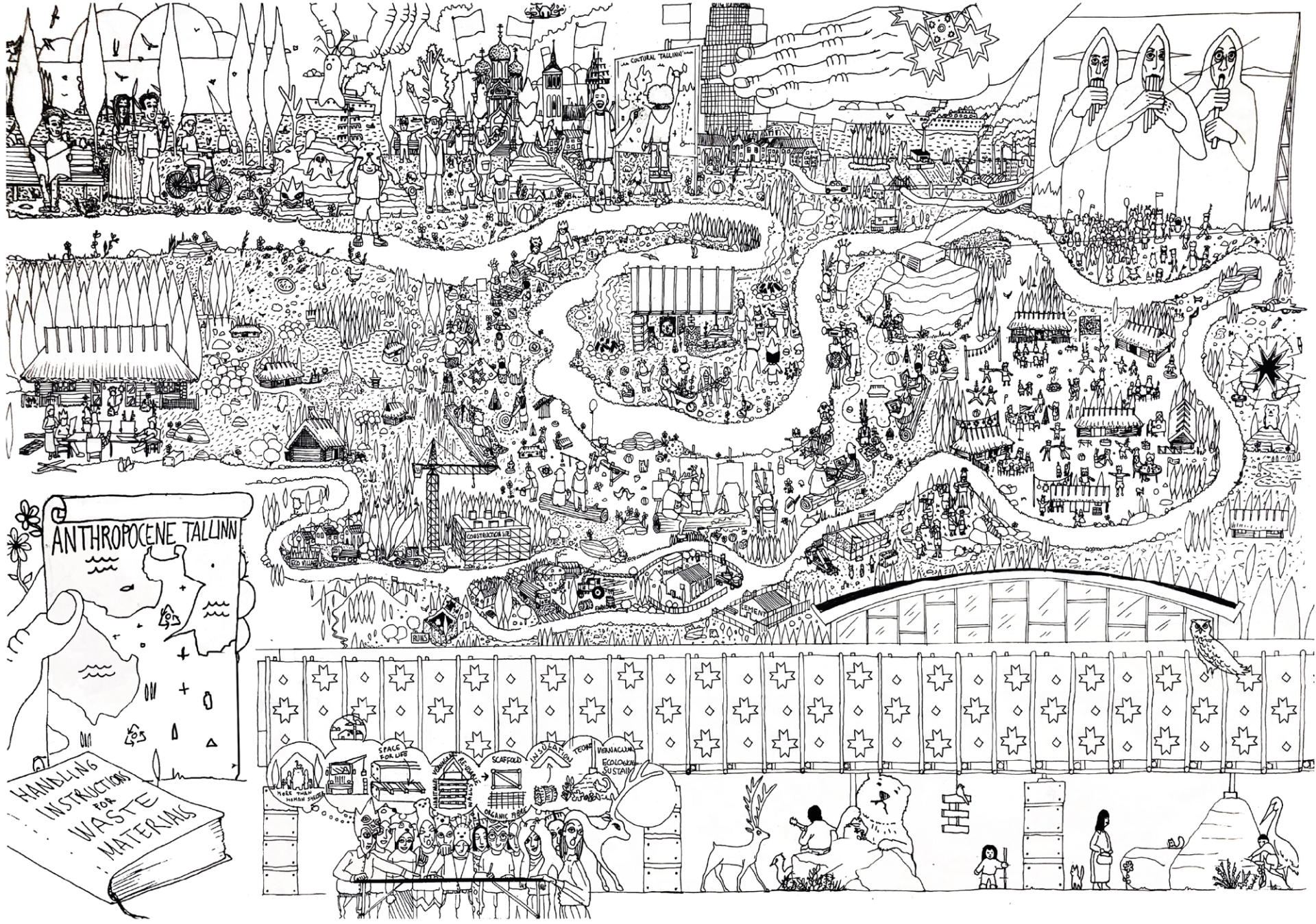
With this project, the studio aspired to state a neo-materialist approach on regenerative architecture, by fostering an ethos of inclusivity and collaboration, embracing a post-extractive mindset concerning building materials, and recognizing the pivotal role of materials within natural ecosystems and therefore becoming-world in coexistence with other species. The design of the Pavilion serves as a testament to the vibrant tapestry of Estonian identity, intertwined with myth, folklore, and traditional forms and represents an attempt to transport Estonian identity imagery with its forms and proportions into the Anthropocene.
The design and construction process of the future canopy is conceived as a collaborative Living-Lab - characterized by expeditions, city-scale mappings, the creation of catalogs and descriptive sheets, material experiments, co-design, and co-execution - with the ambition to create a space at the intersection between a public garden and a canopy for commuters, a space where to immerse in a lush green environment, fostering close interaction between humans and non-humans. The project was the finalist prooposal of the Estonian Pavilion competition launchhed by the Tallinn Architecture Biennale 2024.