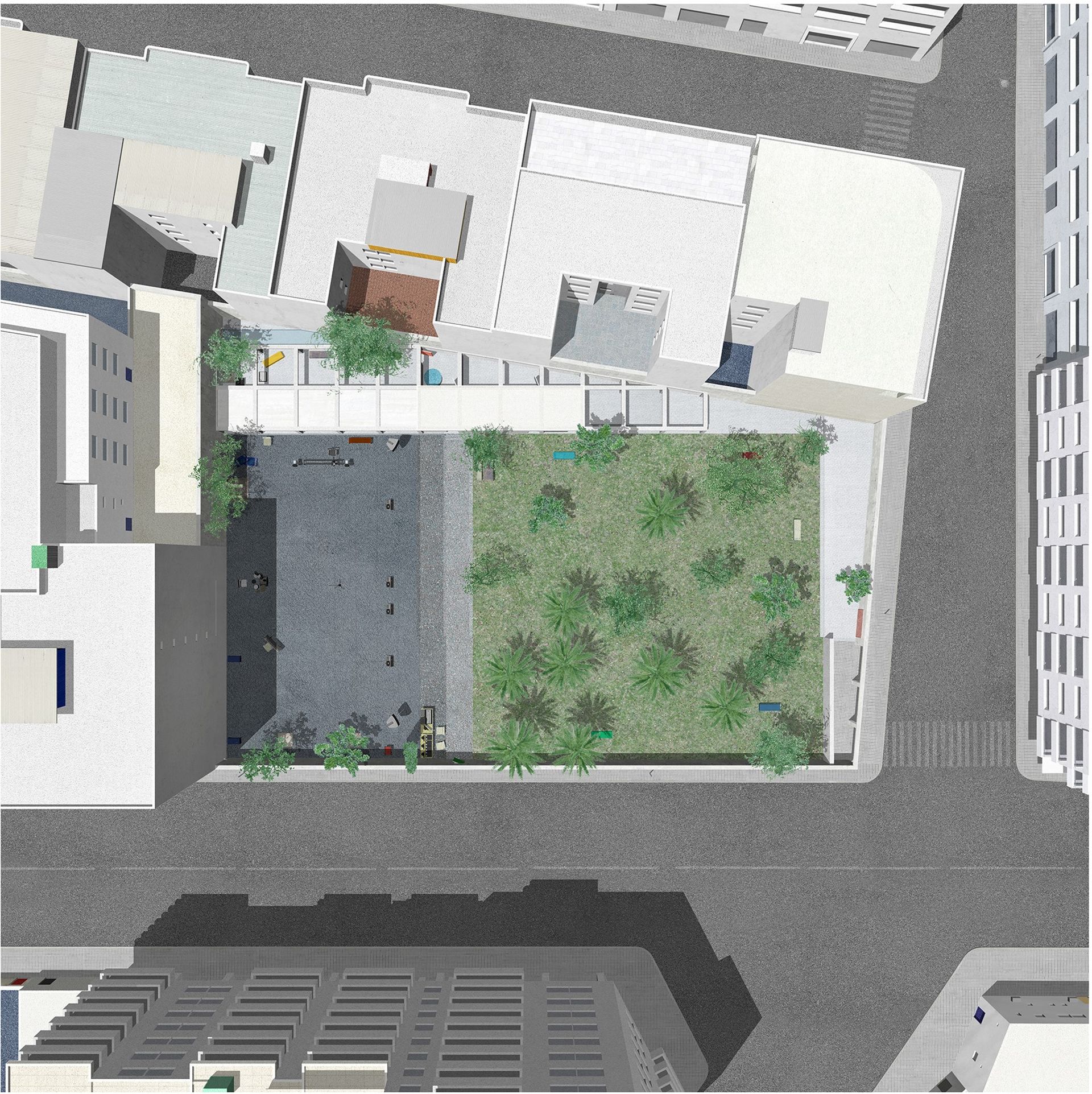
Oases are commonly associated with the idea of refuge and the prospect of escaping necessity. The vulnerability of this microcosm becomes a potent symbol of protection where the idea of irrigation takes a central role, suggesting that the oasian space necessarily results from an anthropic architectural action and relies on continual maintenance. Ines Tazi’s project "An oasis of our own"—developed at the Architectural Association in the diploma unit of Maria Shéhérazade Giudici and Pier Vittorio Aureli—posits that, as an ambivalent paradigm of appropriation, the oasis often becomes a contested place when necessity becomes instrumental to centralised forms of government and to the creation of allegiance the spatial archetypes that have derived from it.