A Fishnet for the Sky: Reclaiming Heritage and Sovereignty
Cheung Qin
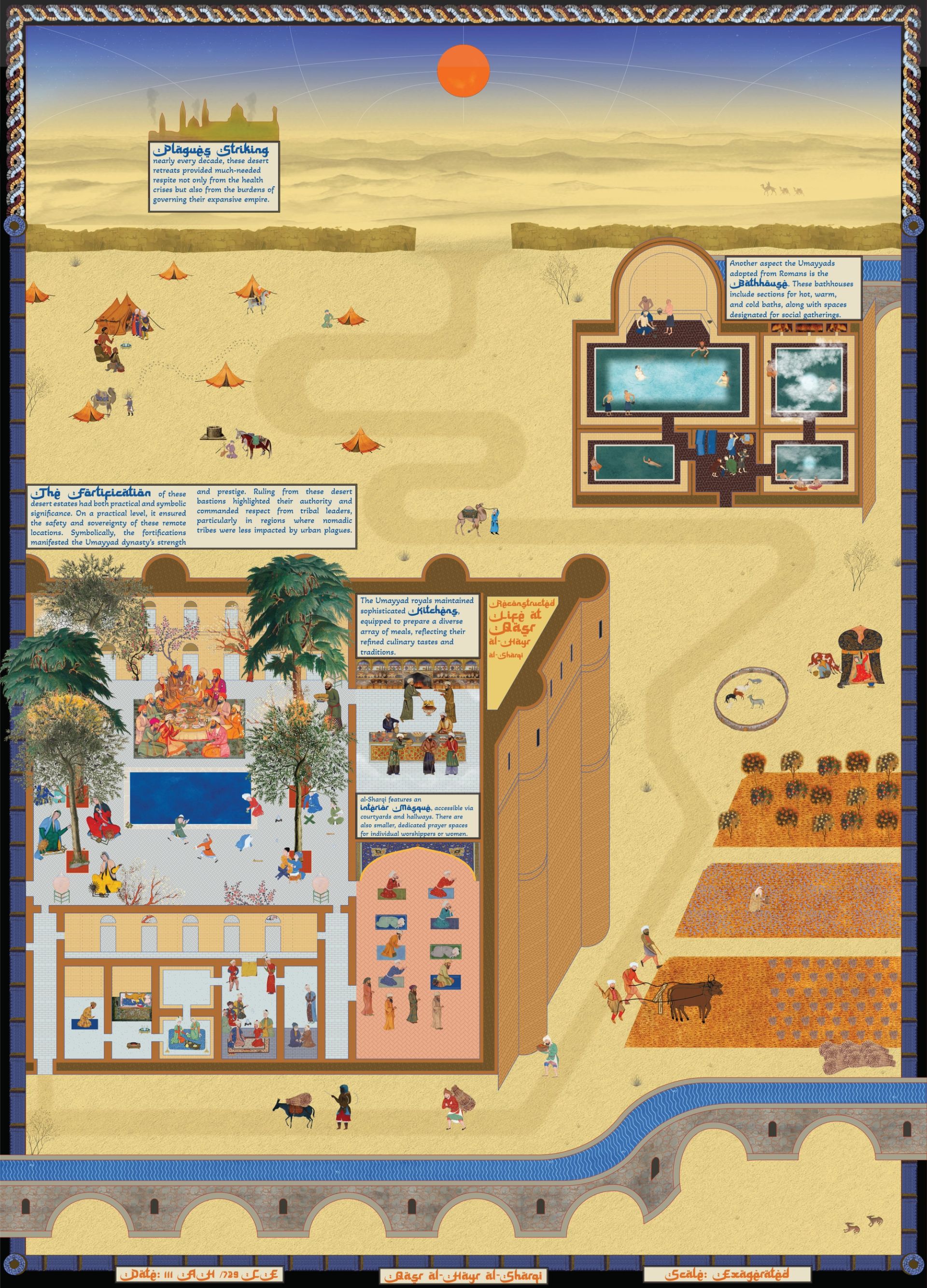
The Umayyad Qusur were not merely pleasure palaces but fortified residential compounds designed for self-sufficiency, security, and symbolic power. Built-in response to recurring plagues and political unrest, these desert estates offered isolation, food and water autonomy, and royal comfort. Historians like Grabar and Northedge argue against over-romanticized portrayals, viewing Qusur as semi-private estates rooted in the tradition of Roman villas and forts. Their fortified forms projected authority while supporting daily life, housing families, staff, and guards. Far from hedonistic escapes, they were strategic retreats—microcosms of governance, resilience, and prestige. This drawing visually speculates these scholarly theories.